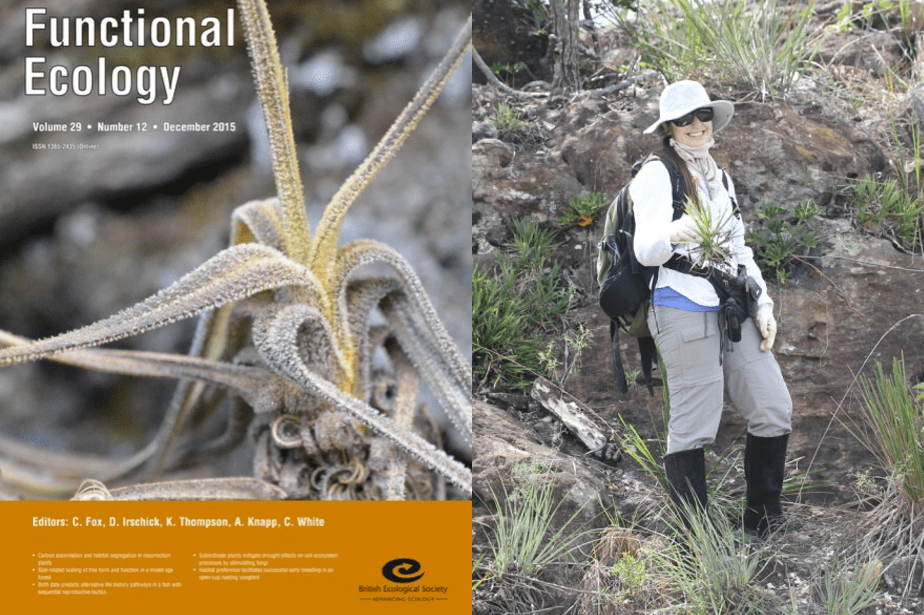
In this week’s blog post, Dr. Suzana Alcantara – a researcher at Universidade Federal de Santa Catarina, Florianopolis, Brazil – discusses the story behind the cover of Volume 29, Issue 12. Suzana is an evolutionary biologist interested in morphological evolution, plant diversification, and biogeography. She is particularly interested in understanding the processes that contribute to the immense diversity of plant species in the Neotropical mountains, at macro- and micro-evolutionary scales, including the dynamic relationship between abiotic aspects and functional ecology. Parallel professional interests also include chemical ecology and floral biology.. This blog is part of our blog series ‘Cover Stories’! Read on to learn about one of our amazing cover images, the research behind it, and the people too.
About the Cover Photo
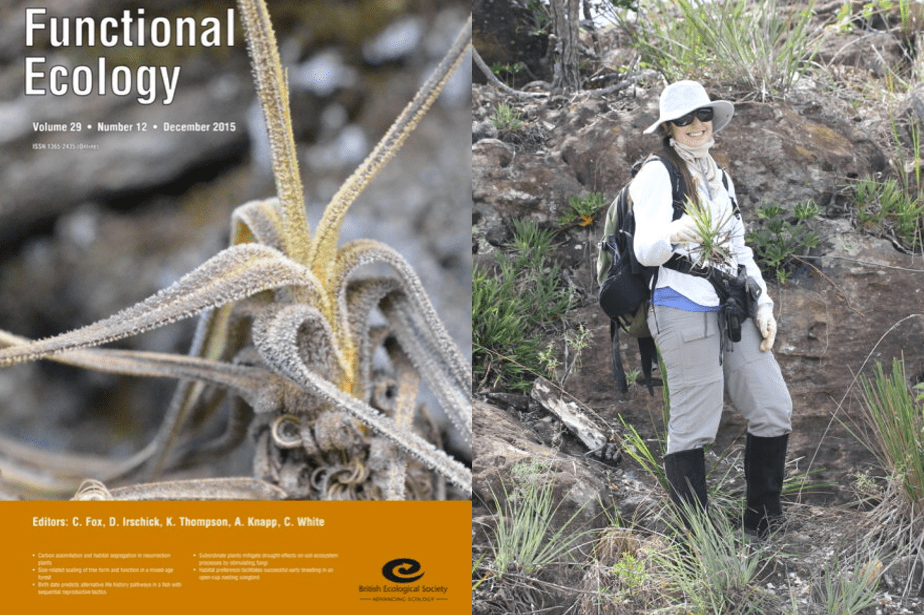
About the cover photo
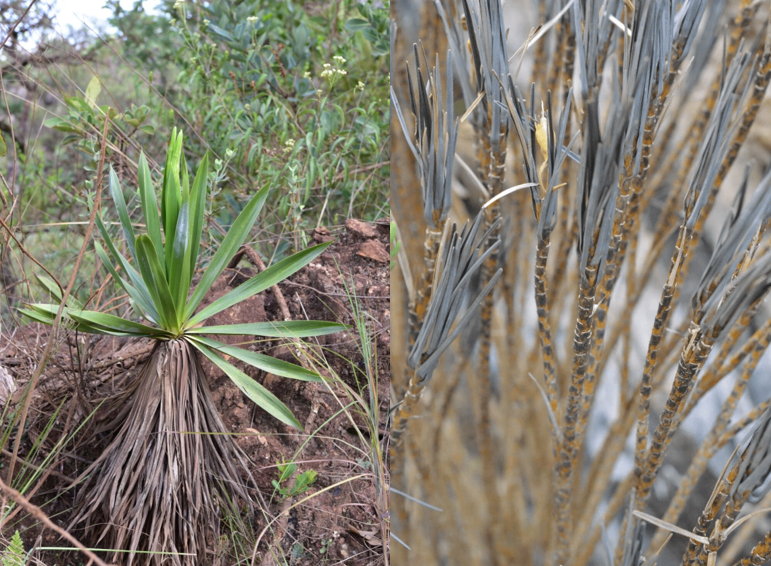
The FE cover photo displays a perennial herb in a desiccated/anabiotic state during the dry season. It is an individual of Vellozia hirsuta, a species endemic to the outcrops of the Espinhaço Range in Southeastern Brazil. Taking photos on top of mountains and open outcrops like this are especially challenging because of constant winds, extreme sunlight and reflective sandy/rocky substrates. During this specific research, much of our fieldwork was conducted before sunrise to record predawn photosynthetic rates, so it was a great opportunity to take good pictures of the plants we were studying in their natural habitat in the morning golden hour.
I was investigating the desiccation-tolerance strategies in species of the most remarkable resurrection plants among the angiosperms, the monocot plant family Velloziaceae. Resurrection plants totally dismantle their photosynthetic apparatus while keeping their leaf tissues intact when desiccated, remaining in a state analogous to anabiosis and being able to rehydrate and “revive” their leaves after rainfall.
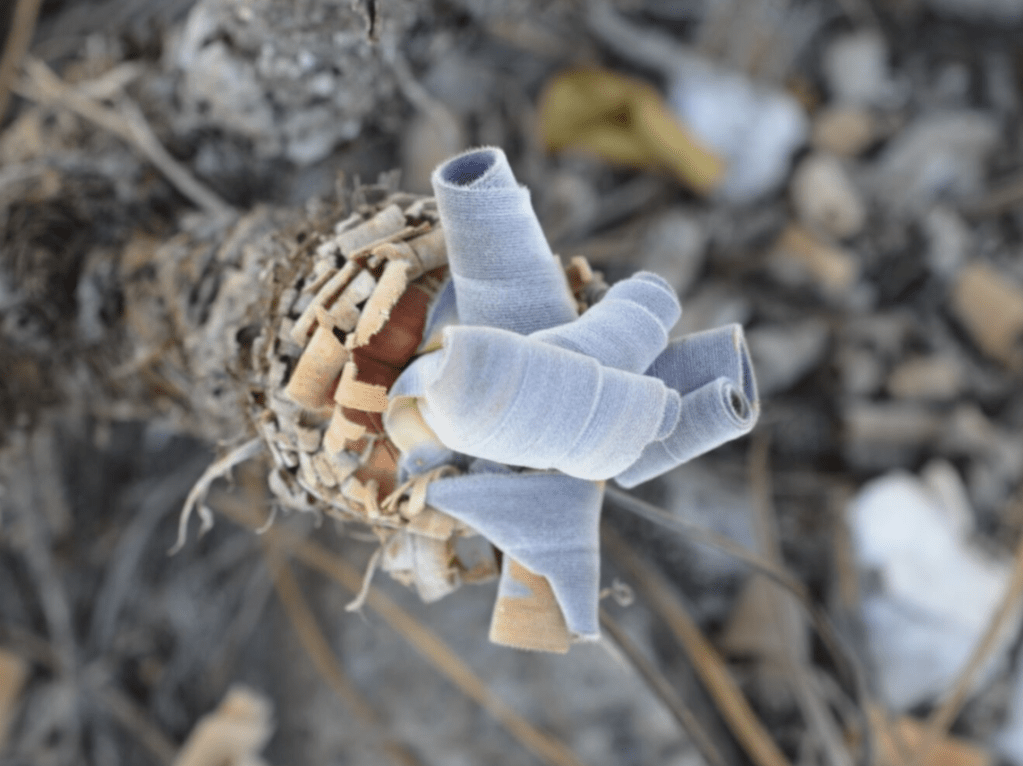
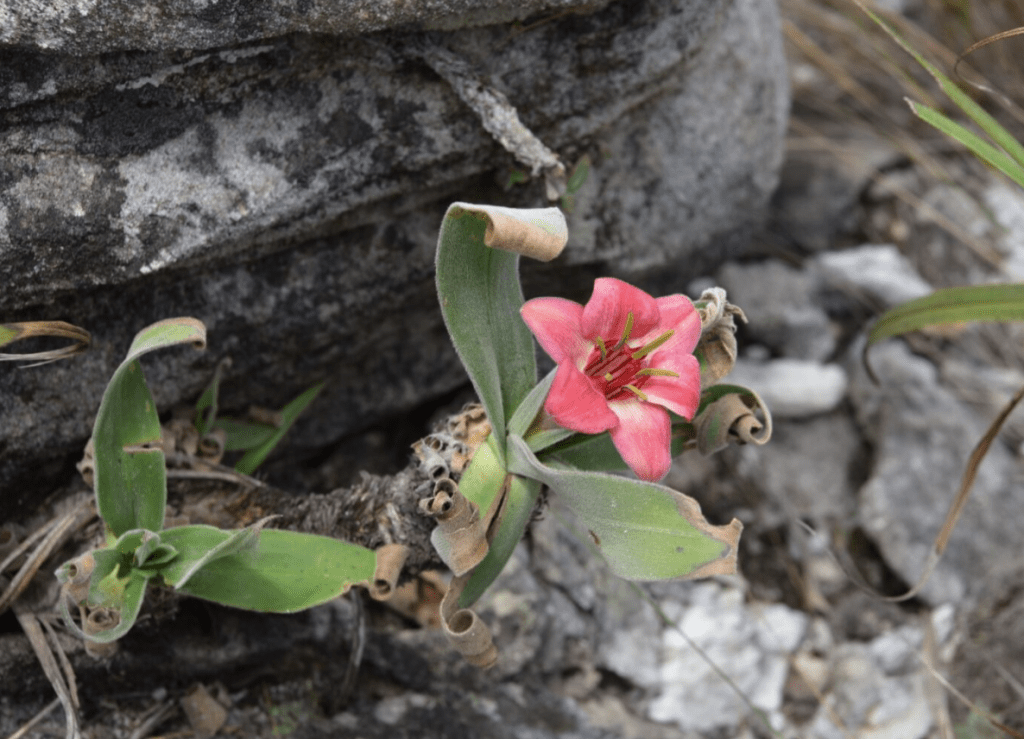
In this paper, we described for the first time the non-desiccation-tolerant strategy that many species of Velloziaceae display in the “campos rupestres” habitat during the dry season, as well as variable desiccation-tolerance physiological mechanisms. These include species that totally lose chlorophyll while desiccated, and others keep it in the leaves but concentrated and protected by antioxidative pigments. We also tested how soil permeability affects the species co-occurrence based on their dry-season strategies.
Fieldwork is always a rewarding part of biological research, although exhausting. The support team and the friendship of collaborators are crucial to make any field campaign successful, especially when there are setbacks (e.g., meteorological/seasonal unexpected conditions, logistic shortcomings such as blocked roads or broken cars, or travel sickness during travel). I have particularly memories of the long car trips with Kamila and Grazi, my coauthors who shared most of the fieldwork and post-field samples processing with me, and the rainy and cold dawns in the field that they both helped to make easier.
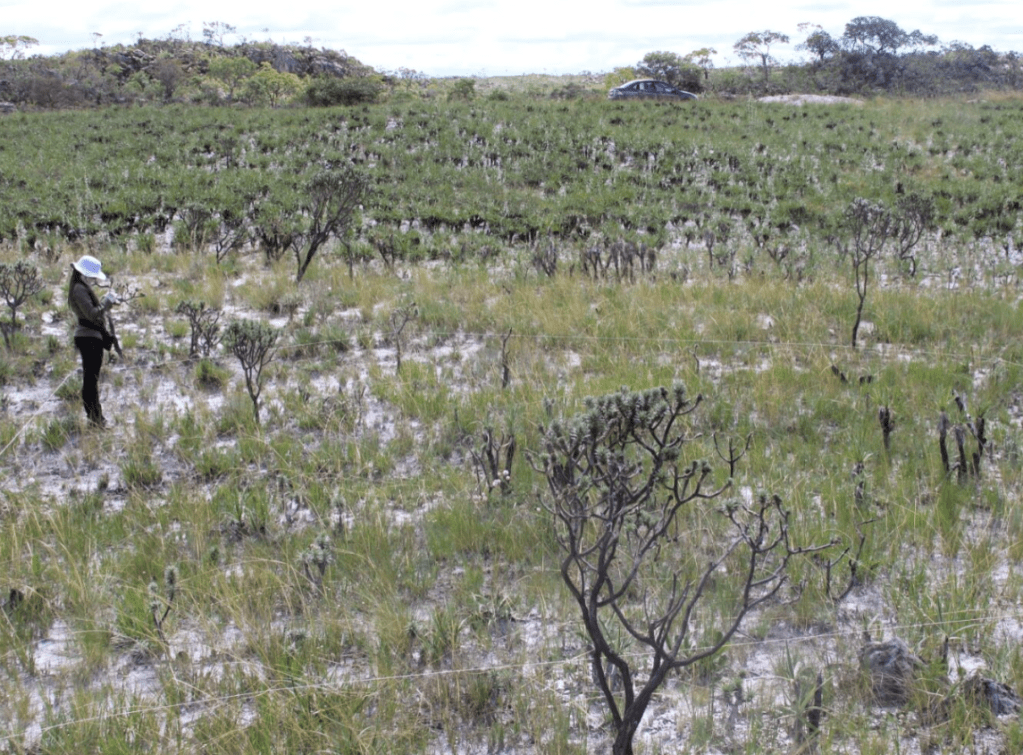
I also keep fond memories of Renato, my post-doc supervisor who passed away five years ago and introduced me to the studies of this plant group and to each of the remote populations we studied in this paper. This paper was a great surprise side-project! It came about because my plan A for my post-doc failed. My original objective was to understand the evolution of floral diversity in the family Velloziaceae, following the main topic I approached in my PhD on a different Neotropical plant group.
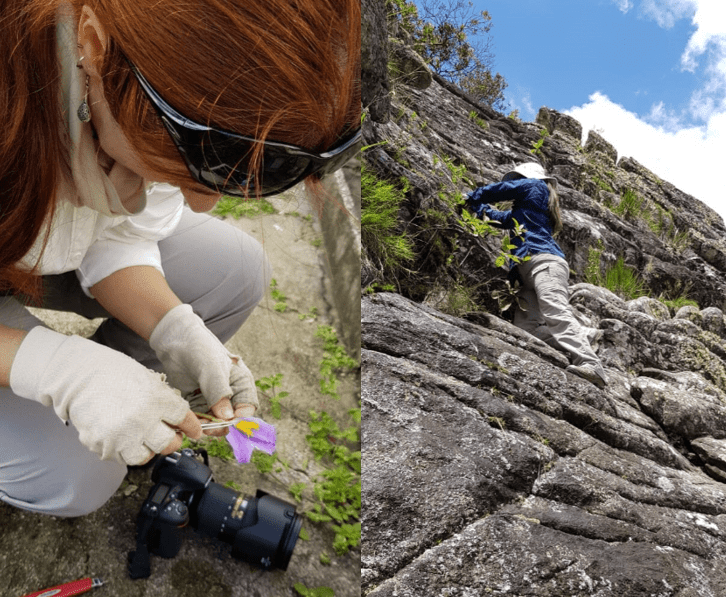
As most species of this group display very delicate flowers, morphological variation needs to be recorded from fresh plants in the field, rather than from regular measurements from herbaria specimens. But I started my monthly fieldwork trips during one of the most severe droughts in the Espinhaço Range areas (2011- early 2013), and I barely found flowering populations in the first two years of field campaigns. Instead, most species displayed totally desiccated populations during the dry season (May to early October), as expected for these plants that were well-known for their resurrection strategy. Surprisingly, however, some species remained green during the 2011 and 2012 dry seasons, which caught my attention and became a very interesting question to investigate. It ended up being the first work published from my post-doc research and was a great lesson on how serendipity can influence a career path; because of this research, I expanded my interests and my network of collaborators, gaining an ecophysiological perspective and the universe of water-usage strategies while conducting my research on plant evolution.
What research have you done since?
One year after the publication of this research, I started a position as an adjunct professor at UFSC, in Southern Brazil, while continuing to investigate the evolutionary biology of that focal group (the family Velloziaceae). I have collaborated and mentored on several other studies, mostly focusing on comparative and evolutionary ecology of plant groups from the Brazilian outcrops and the campos rupestres habitat.
Recently, I also started to coordinate local scientific outreach projects, as an attempt to integrate my research in ecology and evolution into undergraduate teaching activities. Most of my ecological research since then has been focused on niche modeling based on species distribution, instead of fieldwork data acquisition. That was partly due to the specific challenges that the Brazilian academia has recently faced, with budget cuts and general shortcomings imposed during the pandemic years, which made it hard to maintain fieldwork and active research teams.
Thus, in the last decade, I have diversified my research in terms of model systems and techniques, but my main interest remains in morphological evolution and species diversification from an integrative approach. That ends up including investigations about the autoecology of the focal organisms and/or the consequences of their evolutionary history for the assemblage of current plant communities.
About the author
My initial interest in pursuing a major in Biology was (plant) biochemistry, but then I fell for genetics and evolution in my second year of university. My interest in functional ecology and evolutionary stable ecological strategies came naturally, since “very little in evolution makes sense except in the light of ecology” (Begon, Harper & Townsend). I was also lucky to have had influential ecology professors during my undergraduate studies who always encouraged me, as well as supportive mentors throughout my graduate and postdoctoral years.
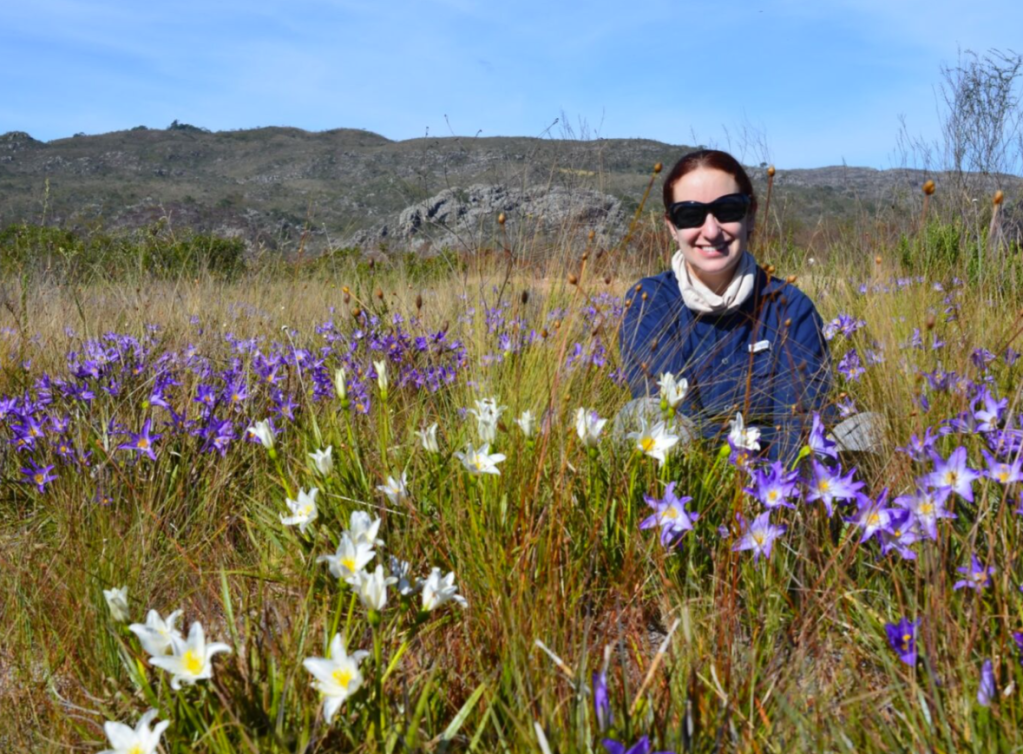
It was only when I became a professor, almost 10 years ago, that I began to experience pervasive sexism at my institution and governmental regulatory agencies, something that had never affected my daily routine in my previous appointments. I didn’t exactly overcome this challenge: the sexism is still the same, but I learned how to manage it by counting on my students and collaborators, especially those in different institutions, to create a research network and keep a strong sense of supportive community.
Moreover, the recent pandemic years were really heavy; they concentrated several personal issues within a 2-year window that were time-and-mind-consuming and had huge effects on delaying my career projects: besides social isolation, I went through a divorce, became a solo mom, lost my mom, my best friend, and one of my closest scientific mentors (the three passed away within 9 months), had a surgery for skin cancer removal, was scammed by a contractor (and am still dealing with financial problems caused by it), all while dealing with false allegations of scientific misconduct perpetrated by a male colleague that put me under investigation by a previous funding agency for most of this period (I was only “cleared” from those allegations in February 2021). I’m still slowly recovering from the productivity gap caused by that time, so I’m not sure I can say I overcame it either.
Despite all that, I am profoundly proud of the many research collaborators and former colleagues I can call friends, who are now mostly spread across the globe. Academia can be a difficult place in many ways, especially because of sexism and unethical behaviors disguised as “competitiveness and efficiency”. But it is also a place where like-minded people recognize each other along the way, and sharing the joys and challenges of science with those who are equally passionate is extremely rewarding.
In my free time, I enjoy photography, easy hikes with my 10-year-old daughter, and long walks on the beach with our dog. I also like cooking and gardening, and I wish I had more time for non-work-related reading. I have a bunch of literary hyperfocuses varying from philosophy to fairy tales and magical realism, passing through linguistics and all kinds of romances (and even a few comics). To count on the many admirable friends I have made along my career, some of whom share my nerdy interests, and to be able to live as a professor in Brazil, while maintaining high-level scientific research and raising my daughter as an independent woman, is for sure my proudest achievement.
I am not sure if I can give any universal advice for young researchers, as I am fully aware of the onerous demands inherent in my career path, but especially for early-career women researchers, I would say: stand up for yourself and find your people. Share any discomfort and unfair treatment you experience with the people you trust and build your safe network inside the scientific community, as well as outside it. Most importantly, do not give up on your interests or research standards just to please people who cannot meet them. People genuinely interested in science, instead of using academic positions to inflate their own egos, will welcome and understand you. Likewise, avoid working for or collaborating with people you perceive as having any sexist, racist, or unethical behavior, even if they offer you shortcuts; not only because you never know when those behaviors will turn against you, but because actively isolating this kind of professional is the fastest and most effective way we have to achieve a more diverse, fair, and ethical academic environment.

