In this ‘Behind the Paper’ blog post, author Meixu Han – a PhD student at Northwest A&F University – shares insights into the paper “Aridity-dependent regulation of water-use efficiency by leaf vein traits across grassland communities“. Meixu Han discusses how grassland ecosystems respond to aridity, the hours of intricate work spent behind a microscope, and the power of persistence in both research and life.
About the paper
Global warming is making many drylands increasingly arid. For grassland plants, water is not only a resource, but also a key factor determining growth, survival, and competition. Inside leaves, the vein network acts as a small but essential transport system that regulates water movement and supports photosynthesis. Previous studies on leaf vein traits have mostly focused on the species or leaf level, but ecosystems do not function through isolated individual plants. Therefore, we wanted to ask: can community-level leaf vein traits help explain ecosystem water-use efficiency, and does this role change with increasing aridity?
We investigated 20 grassland sites across the Mongolian Plateau (MP) and Tibetan Plateau (TP) in China. We measured leaf vein traits from 185 plant species and scaled these traits up to the community level.
The main finding of this study is that grassland ecosystems do not always respond to aridity in a continuous or gradual way. On the Mongolian Plateau, leaf vein traits showed a clear aridity threshold of approximately 0.8. Below this threshold, leaf water transport capacity played an important role in regulating ecosystem water-use efficiency. Above the threshold, in extremely arid areas, aridity itself became the dominant driver of WUE. This turning point was also accompanied by a shift in community composition: plant communities gradually shifted from drought-tolerant perennial species to a greater dominance of drought-escaping annual species.
On the colder Tibetan Plateau, however, leaf vein traits declined linearly with increasing aridity, and no clear threshold was detected. Our study shows that ecosystem responses to aridity are not always smooth or gradual. When environmental stress becomes too strong, the mechanisms controlling water-use efficiency may shift. Identifying these thresholds can help us better predict how grassland ecosystems will respond to future climate change and increasing aridity.
About the research
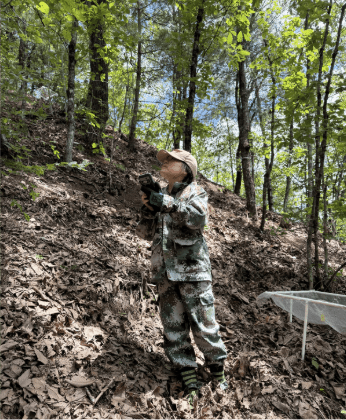
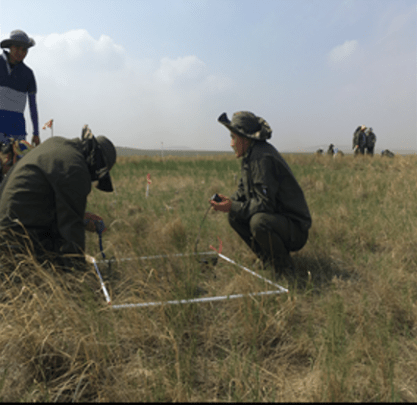
Our fieldwork in 2018 spanned both the Mongolian and Tibetan Plateaus, extending from meadow steppes to desert steppes. Field sampling meant long journeys under intense sunlight—and every leaf had to be quickly collected, kept cool, and transported to the lab for processing as soon as possible.
The truly painstaking work happened in the laboratory. To visualize the leaf vein networks, we had to clear, stain, and photograph leaf sections under a microscope. The vein structures are beautifully intricate, yet extremely fine and complex. To obtain reliable data, our team spent countless hours at the microscope, using image analysis software to measure vein density and vein diameter—a task demanding immense patience and perseverance.
Still, those repetitive, tedious, and lengthy measurements in the lab were all worthwhile. They reminded us that in ecology, some of the most important answers are sometimes hidden in the smallest structures.


About the author
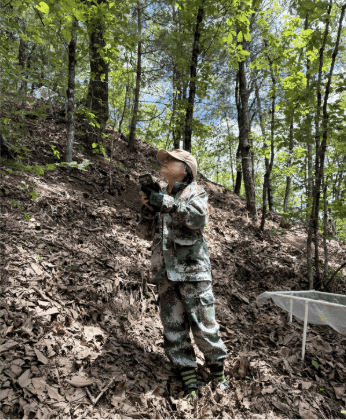
My path into ecology began during my undergraduate studies, when I joined a biological invasion research group and participated in my supervisor’s projects. Rich field experiences and laboratory measurements gradually developed my strong interest in plant ecology.
I am currently a PhD student in Professor Ruili Wang’s group at Northwest A&F University. Our research mainly focuses on plant functional traits, root ecology, and plant physiological ecology. For me, the most fascinating aspect of this study is that it links the tiny hydraulic structures inside leaves with the survival strategies of grassland communities under arid conditions.
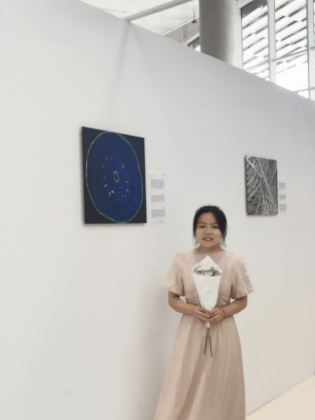
Fieldwork on the plateaus offers spectacular landscapes, but the conditions can also be very harsh. Behind every sample are field collection, laboratory processing, and hours of microscopic measurements. It is precisely this repetitive and careful work that allows us to see how plants adjust their survival strategies in different environments.
Outside research, I am passionate about long-distance running. Running reminds me that, whether in running or during a PhD, what truly matters is not how fast you start, but finding your own rhythm and trusting the power of long-term persistence.

