Climate Change SIG Annual Meeting 2026 | Stella Wimmer on the conditions affecting arthropod communities during deadwood decomposition

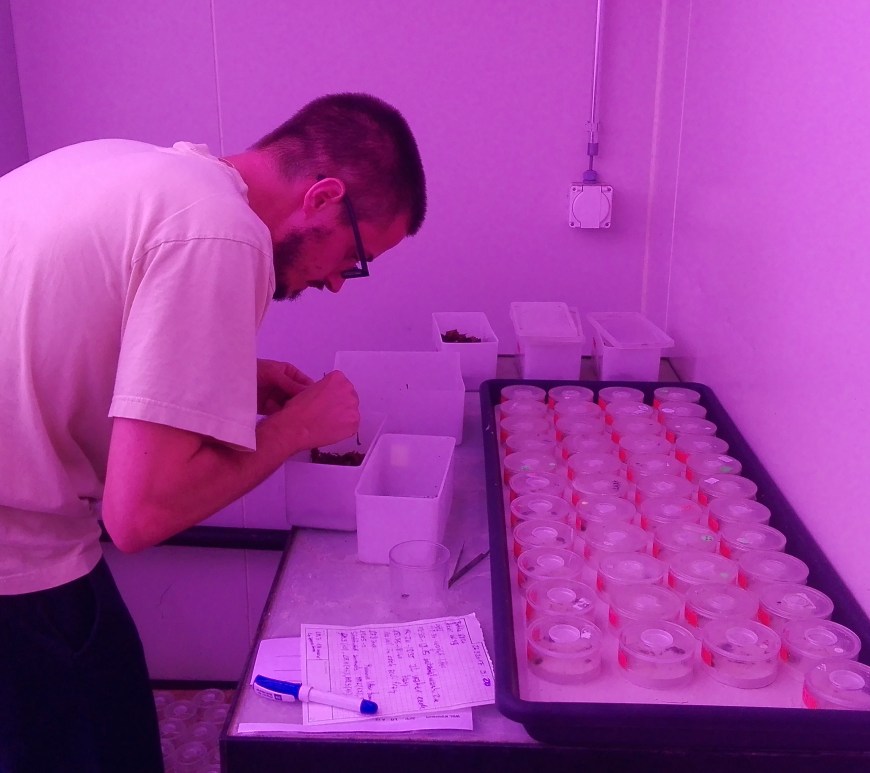
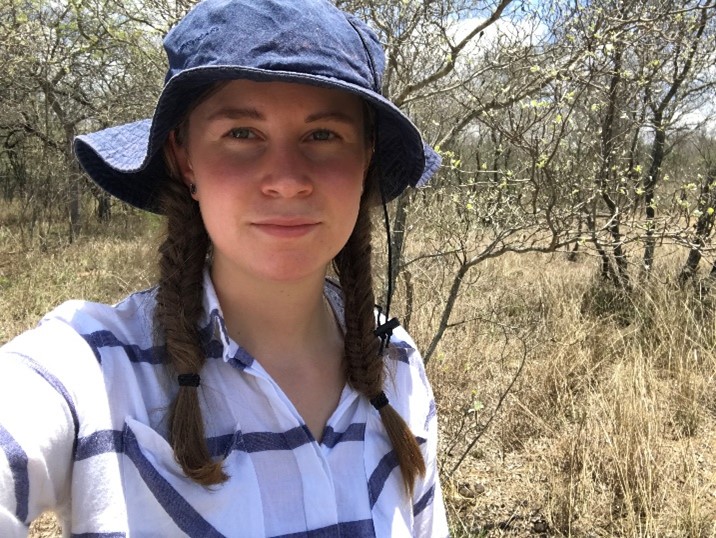
In this blog post, we hear from Stella Wimmer, winner of Functional Ecology’s prize for best presentation by an Early Career Researcher at the BES’ Climate Change and Ecosystem Dynamics Special Interest Group Annual Meeting 2026! Stella discusses the conditions affecting arthropod communities during deadwood decomposition, completing the trip from Germany to the UK by train, and having fun at your first conference! A German … Continue reading Climate Change SIG Annual Meeting 2026 | Stella Wimmer on the conditions affecting arthropod communities during deadwood decomposition
Climate Change SIG Annual Meeting 2026 | Stella Wimmer: die Faktoren aus, die für die totholz-assoziierten Gemeinschaften eine Rolle spielen

Wenn wir über Auswirkungen des Klimawandels auf den Wald sprechen und der Gemeinschaften, die ihn bewohnen, dann sprechen wir meist von Veränderungen in einem großen Maßstab: Erderwärmung, die Veränderung der globalen Niederschlagsregimes, eine zunehmende Häufung der Wetterextreme. Doch diese großen Veränderungen entsprechen nicht zwangsläufig den Bedingungen, die von einer Käferlarve wahrgenommen werden, welche sich im Totholz entwickelt. Für sie mag das Makro-Klima nicht die größte … Continue reading Climate Change SIG Annual Meeting 2026 | Stella Wimmer: die Faktoren aus, die für die totholz-assoziierten Gemeinschaften eine Rolle spielen

Shudong Zhang | Potential lasting effect of opportunistic parasitic fungi on coarse wood decomposition

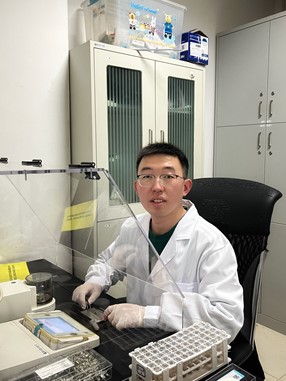
In this ‘Behind the Paper’ blog post, author Shudong Zhang, a postdoctoral researcher at Peking University, discusses his article  ‘Potential lasting effect of opportunistic parasitic fungi on coarse wood decomposition’. He points to the potential lasting influence of plant pathogens on forest carbon cycling, discusses deer disruptions in the field, and shares his love of photography. 1. About the Paper Forests store enormous amounts of … Continue reading Shudong Zhang | Potential lasting effect of opportunistic parasitic fungi on coarse wood decomposition

Alice Walker: Indirect control of decomposition by an invertebrate predator

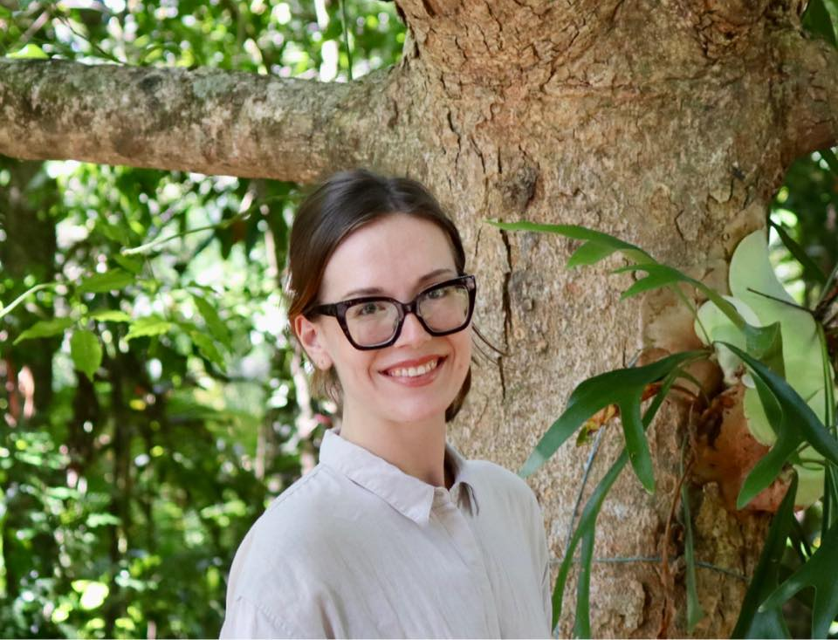
In this new post, Alice Walker, a new ecological researcher at the School of Environmental Sciences, University of Liverpool, UK, discusses her paper: Indirect control of decomposition by an invertebrate predator—recently shortlisted for the 2022 Haldane Prize for Early Career Researchers. About the paper Most people have probably heard of vicious the “battles” that go on between ants and termites, thanks to the 1998 DreamWorks … Continue reading Alice Walker: Indirect control of decomposition by an invertebrate predator

Matthew Krna: Decomposition rates of leaf litter are temperature-independent

In this new post, Matt Krna—then a PhD student at Massey University, New Zealand—discusses his recently published paper in Functional Ecology: Temperature dependency of litter decomposition is not demonstrated under reciprocal transplantation of tussock leaves along an altitudinal gradient. This research follows on from his publication on clarifying carbon sequestration (Krna and Rapson, 2013). In his study of decomposition across a 700 m altitudinal gradient … Continue reading Matthew Krna: Decomposition rates of leaf litter are temperature-independent

Sabine Nooten: Ant body size mediates functional performance and species interactions in carrion decomposer communities

In this blog post, Sabine Nooten, postdoctoral researcher at the University of Würzburg, Germany, presents her latest work ‘Ant body size mediates functional performance and species interactions in carrion decomposer communities‘. She highlights the importance of linking species traits to function in the community and ecological process, and discusses the power of field-based experiments in functional ecology. About the paper Ecological processes are driven by … Continue reading Sabine Nooten: Ant body size mediates functional performance and species interactions in carrion decomposer communities

Bin Wei: External nitrogen inputs inhibit plant litter decomposition in an alpine steppe

In this new post, Bin Wei, a Ph.D. student from the Institute of Botany, Chinese Academy of Sciences, China, discusses his recently published paper, “Decreased ultraviolet radiation and decomposer biodiversity inhibit litter decomposition under continuous nitrogen inputs.” About the paper Anthropogenic nitrogen (N) inputs could alter key processes in terrestrial ecosystems. Of them, litter decomposition is a key process which functions as the main pathway … Continue reading Bin Wei: External nitrogen inputs inhibit plant litter decomposition in an alpine steppe

Manuela Abelho

Manuela Abelho: fallen leaves and feeding streams

Manuela Abelho
Manuela Abelho

The journey is as important as the destination:  autumn-leaves as the main food source for stream communities

In this Insight, Manuela Abelho discusses her recent paper, Litter movement pathways across terrestrial–aquatic ecosystem boundaries affect litter colonization and decomposition in streams.

Continue reading “Manuela Abelho: fallen leaves and feeding streams”

Francois-Xavier Joly: decomposition, detritivores and filling in the gaps.

FXJolyDr Francois-Xavier Joly  is a Postdoctoral Research Assistant at the University of Stirling, Scotland. He was recently shortlisted for Functional Ecology’s Haldane Prize for Early Career Researchers.

 In this Insight, he talks about his shortlisted paper, Litter conversion into detritivore faeces reshuffles the quality control over C and N dynamics during decomposition, as well the best – and worst – parts of being an ecologist.

Continue reading “Francois-Xavier Joly: decomposition, detritivores and filling in the gaps.”