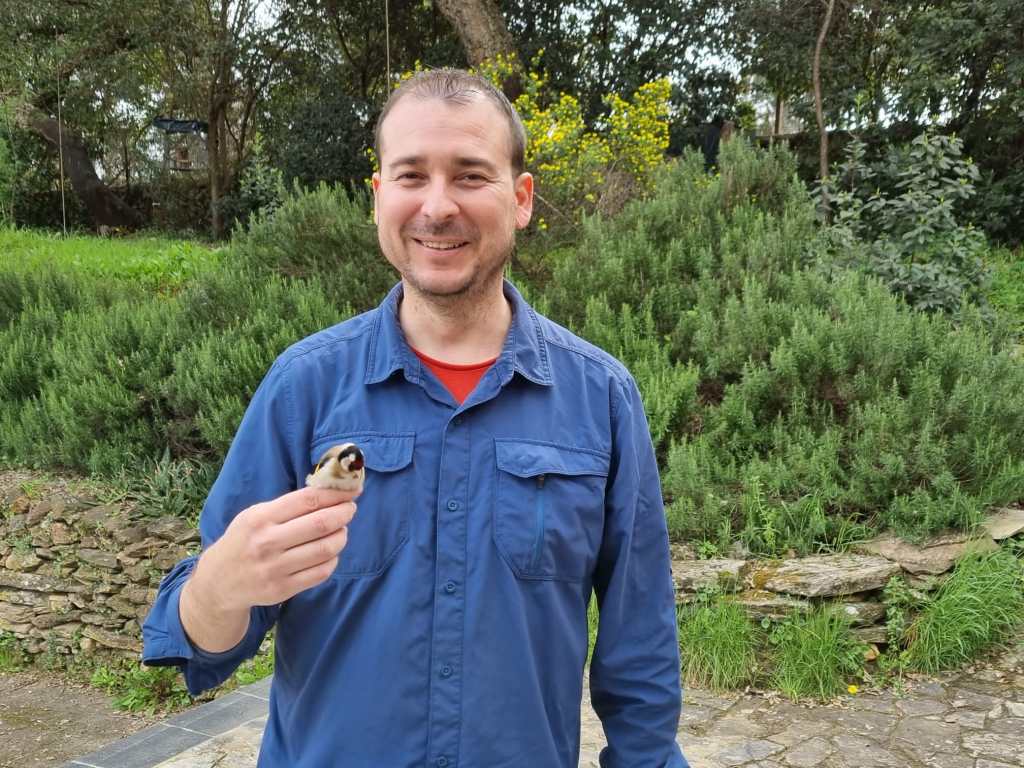
In this week’s blog post, we’re trying (and failing) to escape the heat this summer! Read about the fascinating findings from Erick González-Medina’s paper “Cumulative heatwave stress disrupts thermal homeostasis and plumage structure in a Mediterranean passerine”. In his blog post, Erick shares insights into the delicate physiological balance that birds must maintain to stay cool, and the oxidative and morphological costs thermal regulations can have on our feathered friends. Outside of research, Erick also shares his journey as an academic, highlighting an important mindset to carry in academia: science is collective work, built on trust, patience and shared effort!
A Spanish translation of this blog post is available here.
About the paper
In southwestern Iberia, summer increasingly feels like a sequence of extreme heat episodes, with only brief windows of relief between one heatwave and the next. For a small bird, this is an unforgiving regime. Birds maintain high body temperatures, have very active metabolisms and cannot sweat. When the air becomes too hot, they face a difficult physiological trade-off: dissipate heat or conserve water, both are essential for survival.
One way birds cope with extreme heat is through facultative hyperthermia. In simple terms, they allow their body temperature to rise in a controlled way for a limited period, which can help delay the water loss associated with mechanisms such as panting. This is an effective short-term response, but we still know surprisingly little about what happens when heatwaves are not isolated events, but repeated episodes that return again and again, leaving little time for recovery.
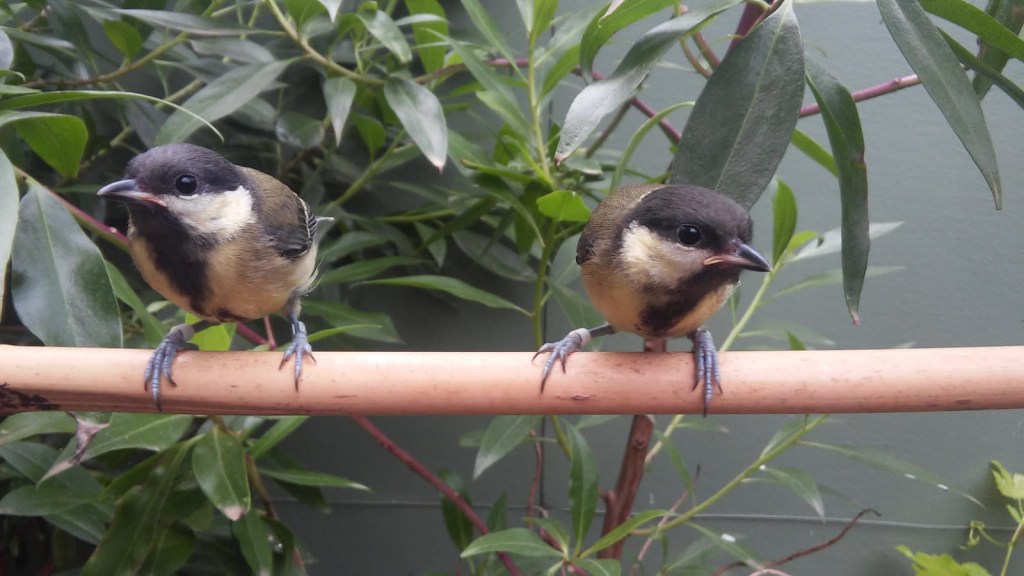
In this study, we asked whether small Mediterranean passerines, such as the Great tit (Parus major), can maintain thermal balance under repeated heatwaves, and what costs they may pay for doing so. To answer this, we exposed Great tits to four consecutive simulated heatwaves under controlled conditions. Each wave lasted five days, with maximum daytime temperatures increasing progressively from 39 °C to 42 °C. These temperatures were chosen to mimic the summer thermal extremes recorded in our study area.
The first thing we observed was that the birds did not lose control of their body temperature. Instead, they adjusted the way they regulated it. Heat-exposed individuals consistently maintained a slightly higher body temperature, about 0.2 °C above that of control birds. The pattern of their hyperthermic episodes also changed. They did not simply experience more events; they changed when and how those events occurred. In other words, their thermoregulation did not collapse, it reorganized.
This adjustment came at a cost: heat-exposed birds accumulated more oxidative damage and showed lower antioxidant capacity. Heat also altered the feathers that grew during the experiment. Contour feathers are made up of small branching structures called barbs and barbules, which largely determine how compact a feather is, how well it insulates, how it reflects light and how it maintains its structure. In heat-exposed birds, these new feathers were less densely structured: both barbs and barbules occurred at lower densities in the plumulaceous and pennaceous regions than in feathers from control birds. In other words, they grew with a looser feather structure. They were also brighter and reflected more light in the ultraviolet and red parts of the spectrum. In contrast, other traits, such as body mass and feather corticosterone, did not change. This shows that the costs of heat are not expressed uniformly across the organism: some traits remain stable, while others reveal clear signs of thermal stress.
The main message is clear and unsettling: surviving a heatwave does not mean emerging from it unscathed. Great tits showed rapid plasticity in thermoregulation and feather development, but they also accumulated physiological costs and changes in feather structure. For small Mediterranean birds, and potentially for small birds in other regions too, resilience to climate change will not depend only on whether they survive an extreme event, but also on the costs they carry with them afterwards.
About the research
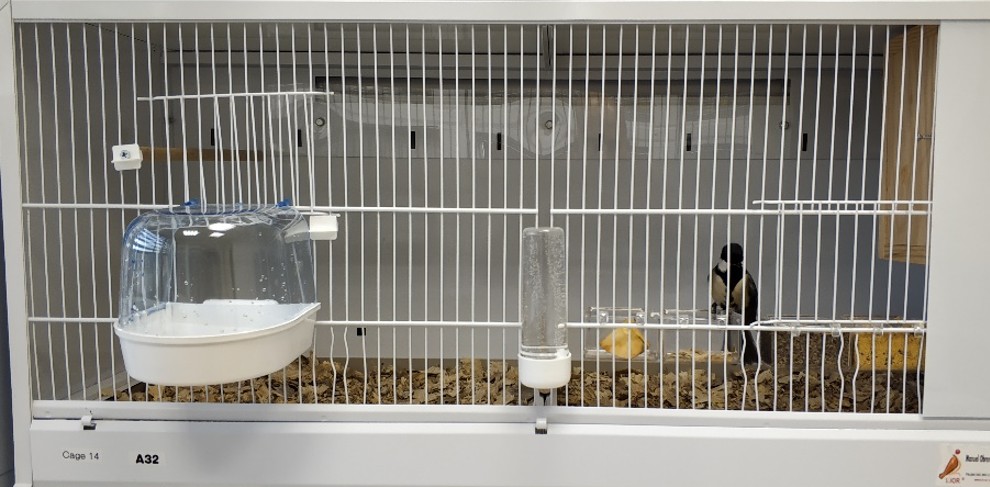
We designed this experiment to reproduce, under controlled conditions, the kind of repeated thermal stress that small birds increasingly face in Mediterranean environments. We worked with 27 great tits from a population near Badajoz, in Southwestern Iberia. Twenty-three were collected as nestlings from nest boxes, and another four were captured as free-living fledglings in the same area. After hand-rearing the nestlings and keeping all birds in outdoor aviaries under natural photoperiod and local weather conditions, we randomly assigned them to two groups: 13 birds to the heatwave treatment and 14 to the control group.
To understand how the birds responded at different biological levels, we combined several approaches. Across June and July 2019, we continuously recorded their body temperature using temperature-sensitive PIT tags implanted subcutaneously. This allowed us to follow their thermoregulation during the heatwaves without disturbing them during the most critical hours of the day. We also took blood samples before and after the experiment to measure oxidative damage and antioxidant capacity. In addition, we analyzed feathers collected before the treatments and after the summer molt to study corticosterone, microstructure and reflectance.
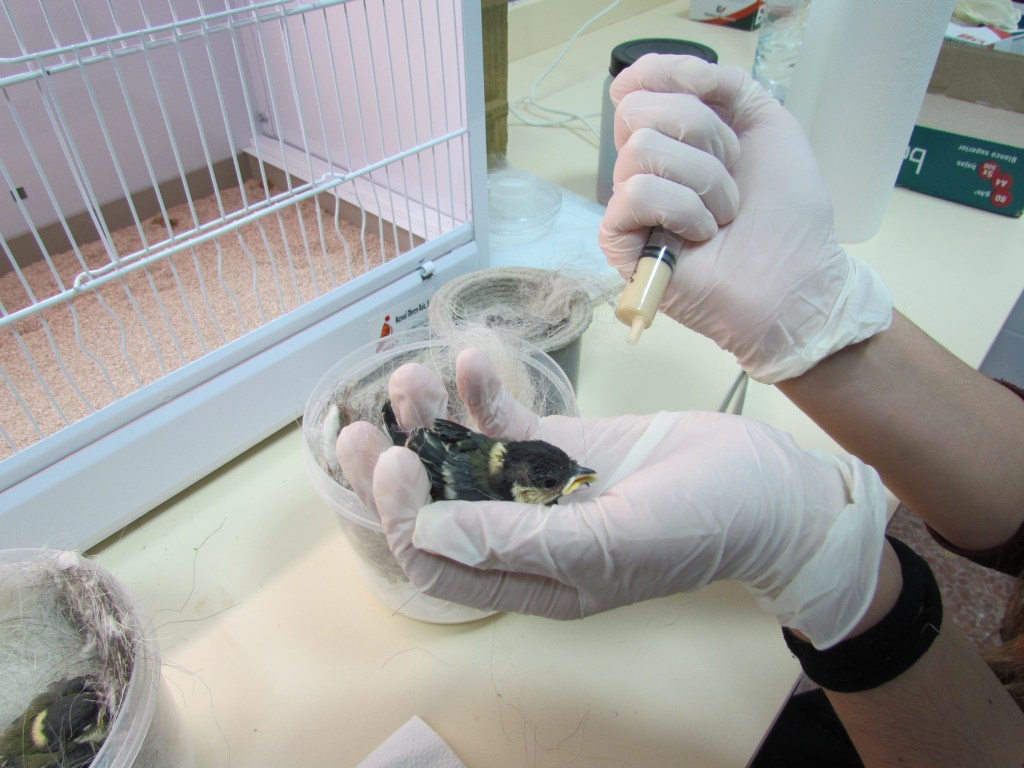
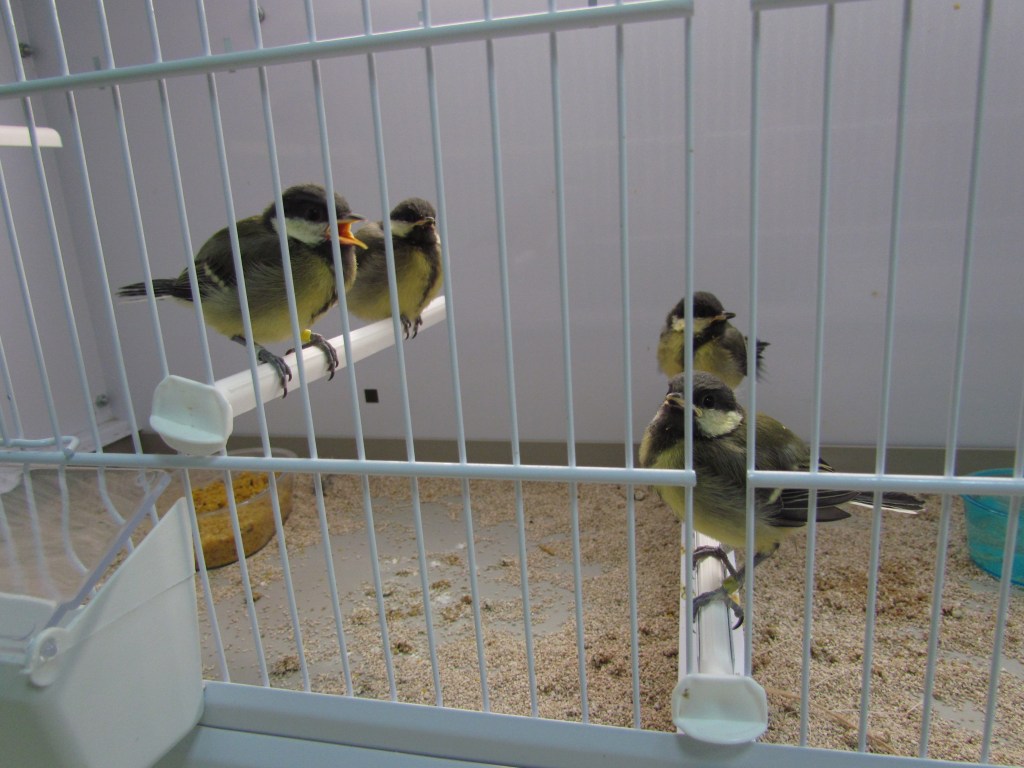
One of my strongest memories from this project is watching my colleague Nuria Playà-Montmany hand-feed the Great tit nestlings during their first days in our care. Raising them was an enormous, demanding and delicate task. We had to be constantly attentive, making sure they ate well, grew properly and survived those vulnerable early days. Seeing them flying in the aviaries weeks later was a huge reward. Even more special was the end of the study, when we were able to release them back at their original capture sites. Wherever they are now, those individuals helped us better understand how heatwaves affect wild birds, and for that we are deeply grateful to them.
As in any experiment with live animals, this study also had limitations. The main one was the equipment available. Because we did not have enough antennas to record body temperature in both groups at the same time, we prioritized tracking the experimental birds during the heatwaves and recorded the controls during separate periods. This meant that the recovery intervals between waves could not be directly compared between groups. We also lost the body temperature data from the first heatwave due to an antenna failure. Rather than push the analyses beyond what the data could support, we focused only on the waves for which we had robust and comparable records.
The results surprised us in two ways, the first concerned hyperthermia. We expected repeated heat exposure to produce more hyperthermic episodes, but that was not exactly what happened. Heat-exposed birds maintained a higher baseline body temperature, but, when compared with their own individual thresholds, showed a lower probability of hyperthermic events. Moreover, when those events did occur, they tended to be shorter, especially during the most intense heatwave. This suggests that the birds were not overheating passively, but actively modifying the way they regulated their temperature.
The second surprise came from the feathers; heatwaves did more than change plumage colour; they also altered how feathers were built. In the experimental birds, barbule density decreased by between 15% and 21%, depending on the feather region. Although this is a microscopic change, it may be important, because barbs and barbules largely determine the structure, insulation and optical properties of the plumage.
Feathers grown under heat exposure were also brighter and showed greater reflectance in the ultraviolet and red ranges, in a direction we had not anticipated. We still do not know whether these changes affect thermal insulation, heat load or visual signaling. They do, however, open an intriguing possibility: heatwaves may leave a structural and optical signature in the plumage, a record that birds carry with them long after the heat episode itself has ended.
The next step is to understand what these signatures mean under natural conditions. Can less dense feathers compromise insulation during winter? Can accumulated oxidative damage during summer affect reproduction or survival the following year? And how do other species, with different cooling strategies, ecological histories and evolutionary trajectories, respond to the same challenge? Answering these questions will be key if we want to know which birds will be able to keep pace with climate change and which are closer to their limits.
About the author
I am currently a professor in the Department of Biodiversity, Ecology and Evolution at the Complutense University of Madrid. Reaching this point has taken many years of effort, uncertainty, change and learning, so this position feels like an important milestone in my scientific career. The work behind this paper, however, began during my postdoctoral period at the University of Extremadura, in close collaboration with colleagues from the Conservation Biology and Ecology in the Anthropocene research group.
My interest in animals started very early. My mother often says that, as a child, I could spend hours sitting in our backyard watching the behaviour of ants. I think that curiosity never really went away. I was always fascinated by animals and by the places they inhabit, and over time I discovered that birds were my true passion.
My first real research experience came during my biology degree, when I worked with Snowy Plovers (Anarhynchus nivosus) in Ceuta, on the coast of Sinaloa, Mexico, studying their reproductive biology. That project showed me how remarkable nature can be when it comes to raising offspring. Watching those small shorebirds rear their chicks in open, exposed and often challenging landscapes left a deep mark on me. It also taught me the demanding side of fieldwork: the long days, the sleepless nights, the patience and the perseverance required to study wild animals in the field.
After that period, my path led me towards seabirds. In Mexico, I worked with Blue-footed boobies (Sula nebouxii) and began to understand birds as organisms constantly balancing energetic, environmental and reproductive demands. Later, through collaborations with colleagues from the University of Extremadura in Spain, I became involved in their research line on avian ecophysiology and thermoregulation. I am especially grateful to them, because they welcomed me not only as a collaborator, but also as a friend and as part of their scientific family, almost as an honorary Extremeño. I am also deeply grateful to my mentors in Mexico, Dr A. Castillo-Guerrero, Dr G. Fernández and Dr E. Mellink, who first helped shape my passion for bird science.
My current scientific obsession is understanding the physiological limits that allow birds to persist in increasingly extreme environments. I am especially interested in thermal tolerance across species, and in how those limits can help us predict which species may be more vulnerable or more resilient to climate change. At the same time, I am currently developing a project on invasive alien birds, asking whether ecophysiological traits such as thermal tolerance, metabolism, immune responses and reproductive physiology can help explain why some species manage to establish and spread successfully in novel environments.
What I enjoy most about this field is that it connects precise physiological measurements with broad ecological questions. A small change in body temperature, an alteration in oxidative balance or a microscopic difference in feather structure can tell us a great deal about how animals interact with their environment. That connection between mechanism and ecology is what keeps me hooked on avian ecophysiology.
Outside research, I enjoy spending time in nature and travelling whenever I can, discovering different cultures, foods, traditions and, of course, encountering species I have never seen before. But, to be honest, one of my greatest passions is Mexican food. So, whenever I need a break from the pace of life in Madrid, I usually escape to a Mexican restaurant. For me, it is a small refuge where I can reconnect with something I deeply miss from my country.
Like many scientific careers, mine has not followed a straight line. Moving between countries, adapting to new institutions, competing for funding and building a research line across different systems all bring challenges. But those experiences have also shaped the way I understand science: as collective work, built on trust, patience and shared effort.
If I could give one piece of advice to my younger self, it would be this: have a direction, but do not try to plan every step too rigidly. Science almost never follows a straight line. Trust the questions that return to you again and again, trust the people who help you grow, and allow unexpected collaborations to transform your path. Sometimes the best parts of a scientific career are not the ones we plan, but the ones that appear while we keep moving forward.