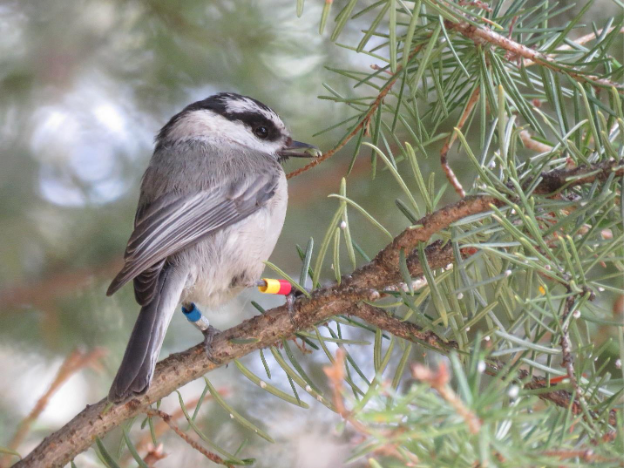
James Mouton: Red-breasted nuthatches smear sap around their nest entrances to protect against predators

James and team tap into the behavioural dynamics of red-breasted nuthatches and their use of conifer resin (sap). In their paper “Behavioural co-option of plant secondary compounds by a cavity-nesting bird is an adaptation against competition and predation”, James studies the how and why of nuthatch nesting behaviour and their apparent love for sticky, smelly conifer resin! On top of a delightful explanation on the … Continue reading James Mouton: Red-breasted nuthatches smear sap around their nest entrances to protect against predators

Mariana Campagnoli: What characteristics make frugivores good seed dispersers in a diverse neotropical savanna?

In our latest post, Mariana Campagnoli gives us a bite of the fascinating fruit to seed dispersal system of the Cerrado ecosystem in Brazil. Through their latest paper “Plant and frugivore species characteristics drive frugivore contributions to seed dispersal effectiveness in a hyperdiverse community”, Mariana describes the delicate relationship between fruit and frugivore, and reminds us of how important seed dispersal services are for many … Continue reading Mariana Campagnoli: What characteristics make frugivores good seed dispersers in a diverse neotropical savanna?

Mariana Campagnoli: Quais características tornam animais frugívoros bons dispersores em uma diversa savana Neotropical? (Portuguese) 

Em nosso último post, Mariana Campagnoli nos dá uma mordida no fascinante sistema de dispersão de frutas para sementes do ecossistema do Cerrado no Brasil. Por meio de seu último artigo “Características de espécies de plantas e frugívoros impulsionam contribuições de frugívoros para a eficácia da dispersão de sementes em uma comunidade hiperdiversa”, Mariana descreve o delicado relacionamento entre frutas e frugívoros e nos lembra … Continue reading Mariana Campagnoli: Quais características tornam animais frugívoros bons dispersores em uma diversa savana Neotropical? (Portuguese) 

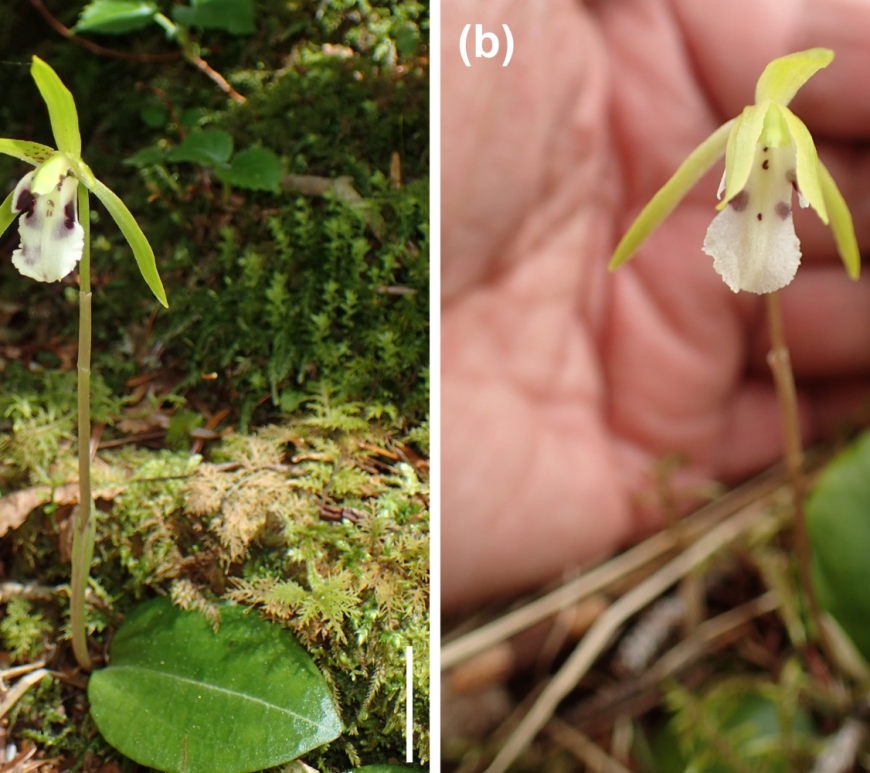
Unveiling the Hidden Partnerships of Rare Orchids: A Journey into Symbiotic Mysteries

In our new post Kenji Suetsugu, professor at Kobe University (Japan), presents his work ‘Mycorrhizal specialization toward each distinct Oliveonia fungus in two closely related photosynthetic Dactylostalix orchids’. He talks about the symbiotic relationships between orchids and mycorrhizal fungi, shows his surprise when finding unexpected results and highlights the need to combine multiple techniques to unveil the secrets of nature. Have you ever wondered how … Continue reading Unveiling the Hidden Partnerships of Rare Orchids: A Journey into Symbiotic Mysteries

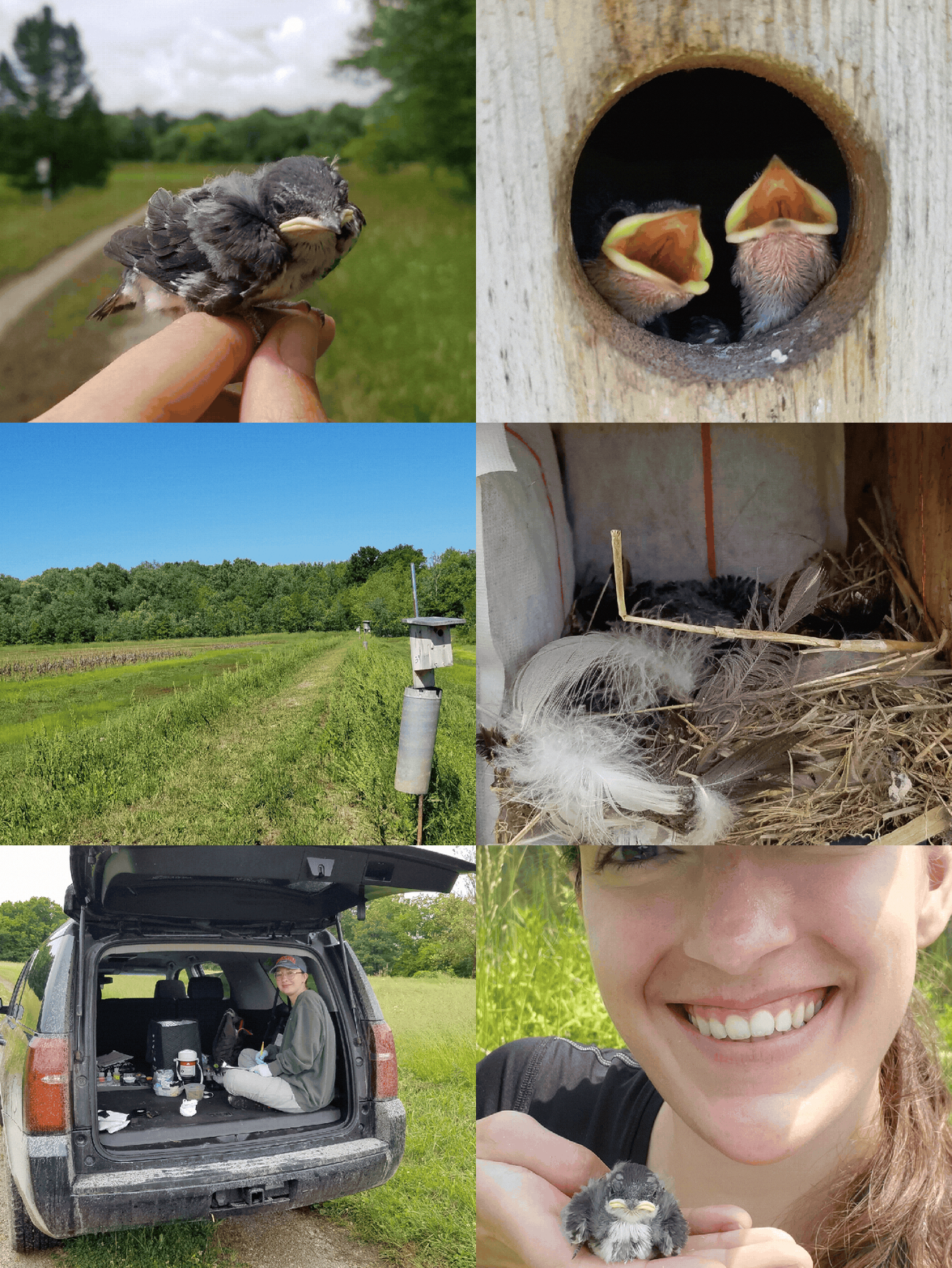
Mary Woodruff: How do nestling birds cope with heat?

In this new blog post, Mary Woodruff presents her recent work ‘Heat alters diverse thermal tolerance mechanisms: An organismal framework for studying climate change effects in a wild bird‘. She explains the importance of understanding thermal tolerance for conservation decision-making in the face of climate change, discusses the challenges of collecting data from nestling birds, and shares the factors she believes contribute to excellent research. … Continue reading Mary Woodruff: How do nestling birds cope with heat?

Carly Stevens: Exploring Great Britain’s limestone pavements 

In this blog post Carly Stevens, professor at University of Lancaster, presents her work ‘Large changes in vegetation composition seen over the last 50 years in British limestone pavements’. She shares her motivation behind surveying all limestone pavements in Great Britain, presents the conservation challenges faced by this habitat, and encourages every ecologist to go into the field to collect data.     About the paper  Limestone … Continue reading Carly Stevens: Exploring Great Britain’s limestone pavements 

Laura Riggi: Strip cropping improves plant defenses against herbivorous insects via the soil  

In this post Laura Riggi from University of Wageningen (Netherlands) presents her work ‘Strip-cropping legacy enhances potato plant defence responses to aphids via soil-mediated mechanisms’. She talks about the importance of diversity for agriculture, discusses the connections between above- and belowground organisms, and shares how her love for arthropods guided her to made agriculture more sustainable.   About the research Intensive agriculture focuses on growing a … Continue reading Laura Riggi: Strip cropping improves plant defenses against herbivorous insects via the soil  

Yunpeng Luo: Leaf phenology may be physiologically regulated by carbon sink-source dynamics & non-structural carbohydrates

In this post Yunpeng Luo, an ecologist at The Swiss Federal Institute for Forest, Snow, and Landscape WSL, shares insights from his recent work “Internal physiological drivers of leaf development in trees: Understanding the relationship between non-structural carbohydrates and leaf phenology”. He highlights that plants’ carbon sink-source activities and concentration of non-structural carbohydrates could be the key eco-physiological drivers that influence the plant phenology. Additionally, … Continue reading Yunpeng Luo: Leaf phenology may be physiologically regulated by carbon sink-source dynamics & non-structural carbohydrates

Rutger Wilschut & Hannah Ruppert: Contrasting responses of naturalized alien & native plants to native soil biota & drought 

In this new post Rutger Wilschut and Hanna Ruppert from University of Wageningen present their work ‘Contrasting responses of naturalized alien and native plants to native soil biota and drought’. Here they discuss how origin has important implications for biotic interactions, show the key role of soil biota for plants, and share their experiences which led them to pursue lives as ecologists.  About the paper … Continue reading Rutger Wilschut & Hannah Ruppert: Contrasting responses of naturalized alien & native plants to native soil biota & drought 

Carlos Matallana-Puerto ¡Los tricomas resbaladizos influyen en el éxito reproductivo de las flores trampa! (Español)

En este nuevo post, Carlos Matallana-Puerto, doctorando de la Universidade Estadual de Campinas (Brasil), presenta su trabajo “Sex, flies, and flower trap: trapping trichomes and their function in polination“. Habla de la importancia de los rasgos funcionales que se pasan por alto, comparte algunos trucos para utilizar el algodón en la investigación y anima a los jóvenes ecólogos a trasladarse al extranjero para seguir su … Continue reading Carlos Matallana-Puerto ¡Los tricomas resbaladizos influyen en el éxito reproductivo de las flores trampa! (Español)