Insights: Tyler Refsland

In Insights we discover the story (and the people) behind a recent publication in Functional Ecology: what inspired the authors to do the research, how did the project develop and what wider impact might the work have?


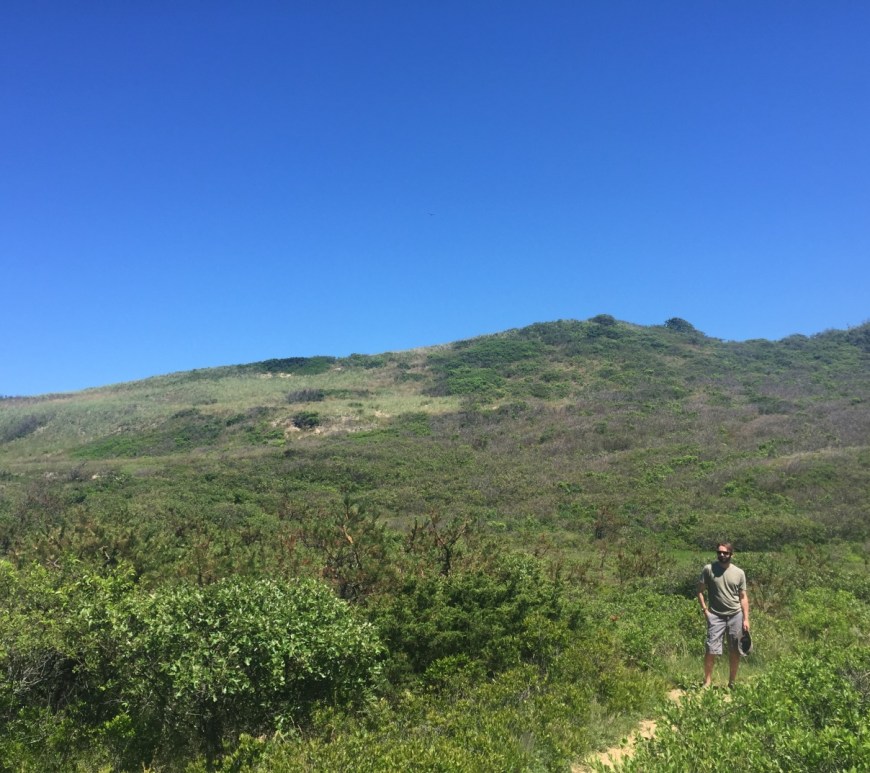
RefslandIn this week’s Insights, Tyler Refsland from the University of Illinois Urbana-Champaign, USA, talks about his paper titled: ‘Fire increases drought vulnerability of Quercus alba juveniles by altering forest microclimate and nitrogen availability’. Refsland and his colleague, Jennifer Fraterrigo present the results of an experiment where they imposed drought on natural and juvenile oak juvenile to disentangle the mechanisms underlying the effects of fire tree responses to drought. While postfire rerouting can temporarily improve water relations, fire exacerbates drought-driven declines in growth by both promoting a warmer microclimate and intensifying nitrogen limitation. Based on their results, Refsland & Fraterrigo postulate that the effect of fires ripple into the future by changing microclimate and resource condition, which could ultimately limit tree recruitment.

Continue reading “Insights: Tyler Refsland”
Régis Céréghino

Insights: Régis Céréghino

In Insights we discover the story (and the people) behind a recent publication in Functional Ecology: what inspired the authors to do the research, how did the project develop and what wider impact might the work have?

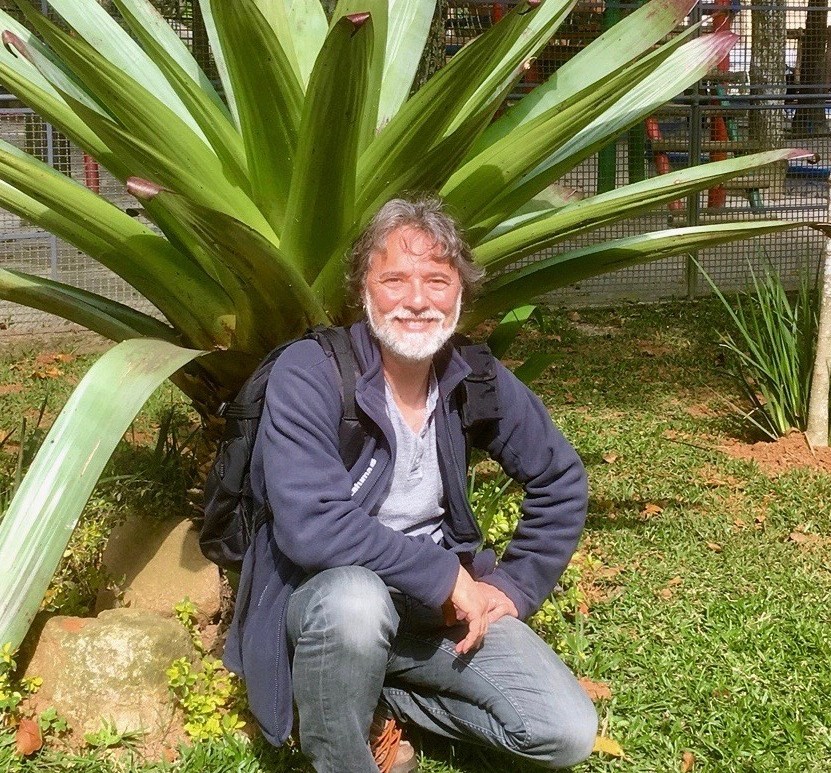
In this week’s Insights, Régis Céréghino, from the Laboratoire Ecologie Fonctionelle et Environnement (EcoLab) at the Université Paul Sabatier Toulouse III, France, talks about his papers on his work on food webs in Tank Bromeliads (Constraints on the functional trait space of aquatic invertebrates in bromeliads; Functional traits and environmental conditions predict community isotopic niches and energy pathways across spatial scale; Ecological mechanisms and phylogeny shape invertebrate stoichiometry: a test using detritus-based food webs across Central and South America)

Continue reading “Insights: Régis Céréghino”

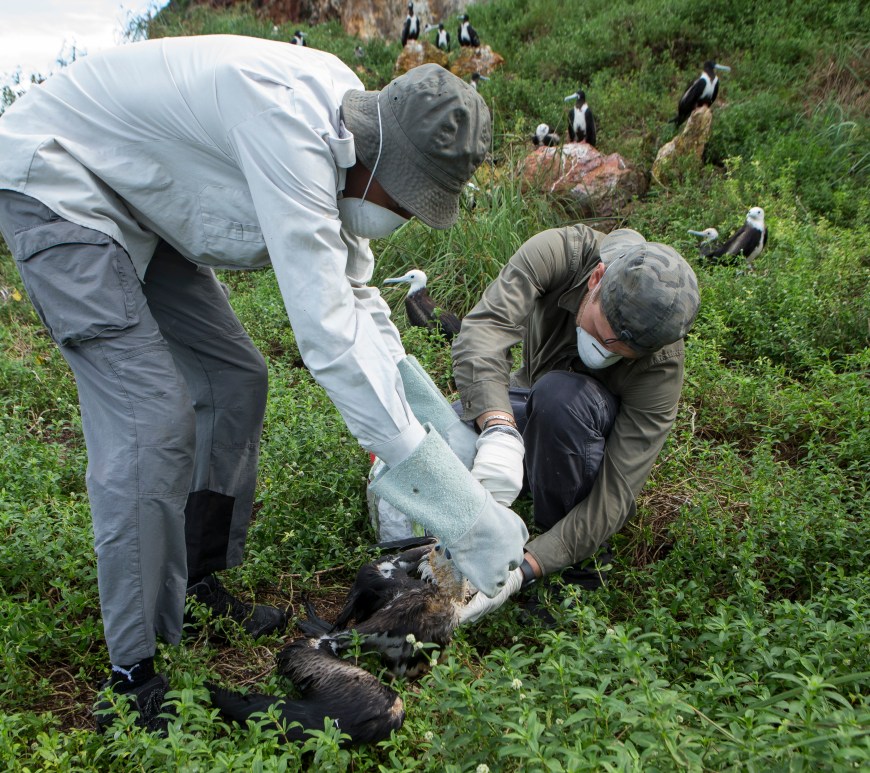
Manrico Sebastiano (on the right) during the manipulation of a sick frigatebird chick to administer antioxidants.Picture taken by Nicolas Defaux

Insights: Manrico Sebastiano

In Insights we discover the story (and the people) behind a recent publication in Functional Ecology: what inspired the authors to do the research, how did the project develop and what wider impact might the work have?

In this week’s Insights, Manrico Sebastiano from the University of Antwerp (Belgium) talks about his paper on the mechanisms that underlie the impact of viral disease. These mechanisms are relatively unknown and studies tend to focus on a few conventional laboratory species. Sebastiano and his colleagues have set-out to study the effects of resveratrol on viral infections in the free-living Magnificent frigatebird.

Continue reading “Insights: Manrico Sebastiano”

Insights: Jitka Klimešová

In Insights we discover the story (and the people) behind a recent publication in Functional Ecology: what inspired the authors to do the research, how did the project develop and what wider impact might the work have?

In this week’s Insights, Jitka Klimešová, Head of Trebon’s section of the Institute of Botany of the Czech Academy of Sciences, talks about how she integrates coarse and ‘non-acquisitive’ root traits to achieve a more comprehensive and realistic view of belowground plant and ecosystem functioning. This was the focus of her recent review paper, Belowground plant functional ecology: Towards an integrated perspective (Klimešová et al, 2018).

Continue reading “Insights: Jitka Klimešová”

Insight: Ciska Veen

In Insights we discover the story behind a recent publication in Functional Ecology: what inspired the authors to do the research, how did the project develop and what wider impact might the work have?

In this week’s Insights, Ciska Veen (@ciskaveen), from the Netherlands Institute of Ecology, and the Swedish University of Agricultural Sciences, talks about her paper on how successional gradients in three contrasting habitats affect home-field advantage and potential leaf litter decomposition.

Continue reading “Insight: Ciska Veen”

Rebecca Koch (right) and a cockatoo (left).

Insights: Rebecca Koch

In Insights we discover the story – and the people- behind a recent publication in Functional Ecology. What inspired the authors and how did the project develop leading to the final publication? And what are the implications of their research for the scientific community and society in general? In this week’s Insights, Rebecca Koch, post-doc from Monash University, Australia talks about her work and her recent Review paper with Geoffrey Hill, on the resource trade-off hypothesis in avian ornamental coloration.

Continue reading “Insights: Rebecca Koch”

Wilco Verberk

Insights: Wilco Verberk

In Insights we discover the story behind a recent publication in Functional Ecology: what inspired the authors to do the research, how did the project develop and what wider impact might the work have?

This week, Bjorn talks with Wilco Verberk about his recent paper, Thermal limits in native and alien freshwater peracarid Crustacea: The role of habitat use and oxygen limitation. Wilco is affiliated with the Radboud University in the Netherlands, where he works in the Department of Animal Ecology and Ecophysiology. With his Dutch-German research team, Wilco’s paper is the result of an impressive laboratory experiment that aimed to study the heat tolerance of four native and four alien crustaceans under different levels of oxygenation. Wilco’s work was the result of a Marie-Curie Fellowship, funded though the European Research Council.

Continue reading “Insights: Wilco Verberk”

Fieldwork. © Martijn Vandegehuchte

Insights: Martijn Vandegehuchte

In Insights we discover the story behind and beyond a recent publication in Functional Ecology. What inspired the authors to do the research, and how did the project develop leading to the final publication? What implications might their results have on the scientific community and on society?

This week, Bjorn talks to Martijn Vandegehuchte about his paper, Mammalian herbivores affect leafhoppers associated with specific plant functional types at different timescales (plain language summary here.) Martin recently moved from WSL (the Swiss Federal Institute for Forest, Snow and Landscape Research) to Ghent University in Belgium. With his colleagues in Switzerland, Martijn studied multitrophic herbivory interactions in the Swiss National Park.

Continue reading “Insights: Martijn Vandegehuchte”

Insights: Angela Prendin

In Insights we discover the story behind a recent publication in Functional Ecology: what inspired the authors to do the research, how did the project develop and what wider impact might the work have?

DSCN2192This week Bjorn talks to Angela Prendin about her article,  Axial xylem architecture of Larix decidua exposed to CO2 enrichment and soil warming at the tree line. Angela is affiliated with the Department of Land, Environment, Agriculture and Forestry (TESAF) of the University of Padova, Italy. With her collaborators at the Swiss Federal Institute for Forest, Snow and Landscape Research (WSL), she studied the xylem architecture of Larch in response to CO2 fertilisation and soil warming. You can also read the free plain language summary here: The treetop is the hotspot determining growth in larch trees

Continue reading “Insights: Angela Prendin”

Insights: Anamarija Žagar

In Insights we discover the story behind a recent publication in Functional Ecology. What inspired the authors to do the research and how did the project develop before the publication? and what wider impact might their work have?

This week, Anamarija Žagar talks to Bjorn about her paper on the performance of two co-existing lizards in Slovenia and the role of functional and morphological traits. Anamarija currently works at the National institute of Biology in Slovenia, and is also affiliated as a research associate to the CIBIO Research Centre in Biodiversity and Genetic Resources at the University of Porto in Portugal.

Continue reading “Insights: Anamarija Žagar”