Lisieux Fuzessy | Beyond coevolution: The flexible rules of fruit-frugivore interactions 

Have you ever wandered through a tropical forest and observed the incredible variety of fruits it contains? From tiny berries to very large, hard-shelled pods, this fruity menu supports a vast array of animals, like bats, birds, monkeys, and more. In exchange for food, these animals disperse the seeds, facilitating forest regeneration. This mutualistic relationship is the engine of tropical forest resilience and diversity. A … Continue reading Lisieux Fuzessy | Beyond coevolution: The flexible rules of fruit-frugivore interactions 

Barbara Bignon | In good form: Morphological adaptations to burrowing lifestyles in cockroaches

In this blog post, we’re looking at a familiar (and often un-welcomed) six-legged friend – the cockroach! Discussing the recently published paper: “In good form: morphological adaptations to burrowing lifestyles in cockroaches (Dictyoptera: Blattodea)“, author Barbara Bignon helps challenge our perspective on roaches by exploring where they like to hang out! By focusing on the ecomorphological correlations of where cockroaches are recorded, Barbara shares fascinating … Continue reading Barbara Bignon | In good form: Morphological adaptations to burrowing lifestyles in cockroaches

Kenji Suetsugu | Deadwood is not dead: a carbon gateway for orchid seedlings on dark forest floors 

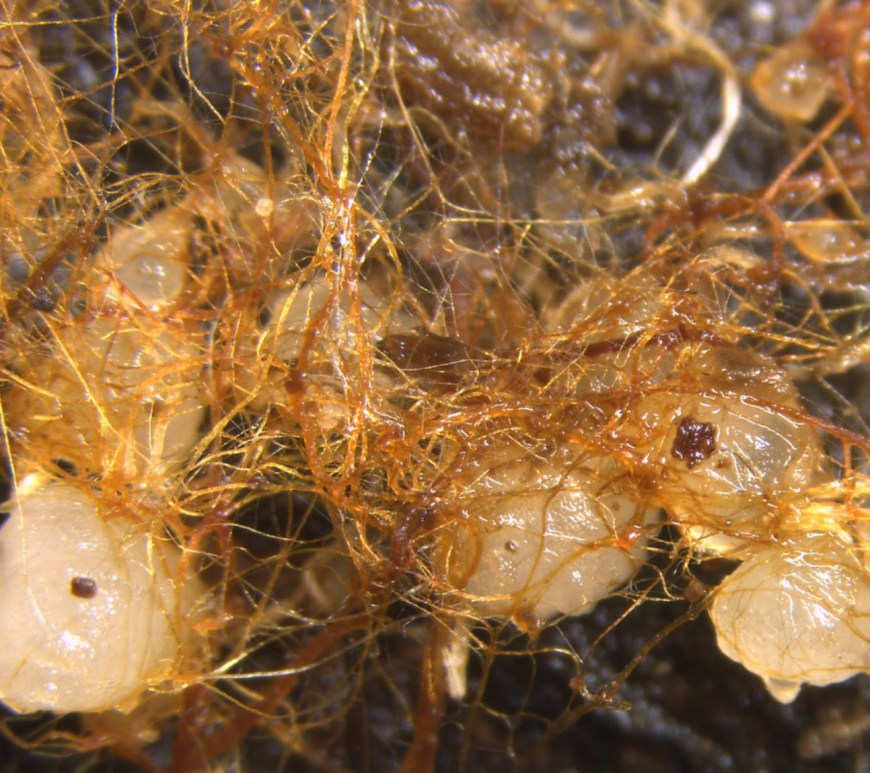
In our new post, Kenji Suetsugu, professor at Kobe University (Japan), discusses his research article ‘The nexus of decay and birth: Ecological and evolutionary significance of wood-decaying fungi in green Calypsoinae orchid germination‘. Kenji’s research presents new work on green Calypsoinae orchids and the wood-decaying fungi that power their beginnings.   About the paper Why Do Orchids Sprout Beside Rotting Logs?  Have you ever wondered why … Continue reading Kenji Suetsugu | Deadwood is not dead: a carbon gateway for orchid seedlings on dark forest floors 

Mario Vallejo-Marín | The buzz of pollination and how plants stave off greedy bees 

In this week’s blog post, we’re learning all about buzz pollination between Bombus terrestris and Solanum rostratum! Author Mario Vallejo-Marín explains one of the most striking examples of evolutionary convergence in floral form – buzz pollinated flowers: “Gradual pollen release in a buzz-pollinated plant: Investigating pollen presentation theory under bee visitation”.   1. About the Paper In this paper, we used nectarless, buzz pollinated flowers, … Continue reading Mario Vallejo-Marín | The buzz of pollination and how plants stave off greedy bees 

Ricardo Sánchez Martín | Functional generalism in plant-hummingbird interactions: causes and consequences from a plant perspective

In this week’s blog post, we’re learning all about the causes and consequences of functional generalism! Author Ricardo Sánchez Martín explains the fascinating fit between hummingbirds and the plants they pollinate: “Functional generalism in plant-hummingbird interactions: causes and consequences from a plant perspective”. 1. About the Paper Scientists have long been fascinated by the apparent tight fit between hummingbirds and the flowers they pollinate: long-billed … Continue reading Ricardo Sánchez Martín | Functional generalism in plant-hummingbird interactions: causes and consequences from a plant perspective

Meet the editor: Eric Riddell

In this blog post, we hear from Associate Editor Eric Riddell, Assistant Professor at University of North Carolina.  Why did you choose to study your particular research area? I often say that ecophysiology chose me rather than the other way around. I have always been drawn to questions about how organisms respond to environmental change, and answering those questions requires studying how organisms function in their … Continue reading Meet the editor: Eric Riddell

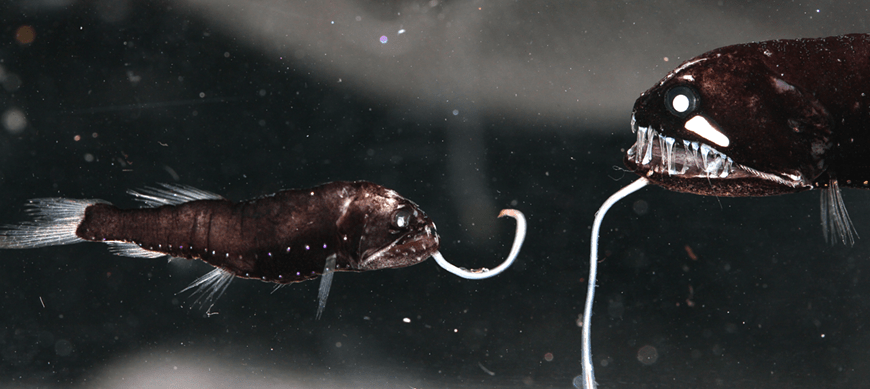
Vision in Challenging Environments – from Darkness to Dazzling Light

Zuzana Musilova and Sara Mae Stieb When animals look out into their world, they don’t all see the same thing. For some, light is abundant, even overwhelming. For others, it is vanishingly scarce. Vision is one of the most adaptable sensory systems, and in this Special Feature we explore how it is shaped and challenged by environments at their most extreme. Too little light From … Continue reading Vision in Challenging Environments – from Darkness to Dazzling Light

Rafael Dias: The spatial scaling of multiple dimensions of functional diversity in habitat islands

In this blog post, author Rafael Dias delves into the world of avian abundance and richness, with a ‘Behind the Paper’ look at his research article “The spatial scaling of multiple dimensions of functional diversity in habitat islands“. Rafael explains why small places can matter in big ways for functional diversity, shares the logistics of organizing cross-country research efforts, and discusses balancing research, teaching and … Continue reading Rafael Dias: The spatial scaling of multiple dimensions of functional diversity in habitat islands

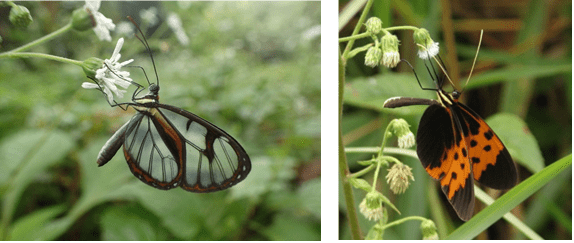
Violine Ossola: Clearwing butterflies are cool! Impact of wing transparency on heating capacities along altitudinal gradients in tropical butterflies 

In this week’s blog post we’re getting transparent about temperature regulatory processes in clear wing butterflies! Violine Ossola and team explore the sensitivities around thermal regulation in the neotropical tribe of butterflies known as Ithomiini. In their paper, “It’s cool to be clear:  transparency induces a thermal cost in clearwing butterflies”, they describe how clearwing and opaque butterflies tackle temperature gradients via different behavioural and … Continue reading Violine Ossola: Clearwing butterflies are cool! Impact of wing transparency on heating capacities along altitudinal gradients in tropical butterflies 

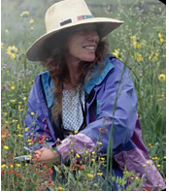
Meet the Editor: Alison K Brody

In this blog post, we hear from Associate Editor Alison Brody, Emeritus Professor of Biology at the University of Vermont. Walking along a trail at the Rocky Mountain Biological Laboratory in Gothic, Colorado, USA, a foul, rotten smell caught my attention. I looked around to find the source and noticed a large plant – Heracleum maximum (Apiacea) also called “Cow Parsnip” – covered in flies which … Continue reading Meet the Editor: Alison K Brody