
In this ‘Behind the Paper’ blog post, author Libin Zhou – an Associate Professor at the Nanjing Institute of Geography and Limnology – discusses the paper “Nutrient enrichment destabilizes aquatic food webs through synchronization within and across trophic levels“, which was recently published in Functional Ecology. Libin Zhou explains how nutrient enrichment destabilises aquatic communities, working with data from Lake Taihu, and the ups-and-downs of working on “big picture” ecological questions.
About the Paper
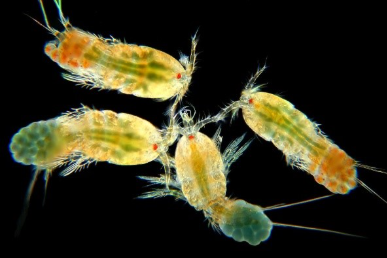
Lakes are among the most productive and biodiverse ecosystems on Earth, yet they are under mounting pressure from human activities. One of the most pervasive threats is nutrient enrichment, the excess loading of phosphorus and nitrogen from agriculture, urban runoff, and sewage into water bodies. While it has long been known that nutrient pollution can trigger algal blooms and degrade water quality, how exactly it destabilizes entire food webs, from microscopic algae up to the zooplankton that graze on them, has remained surprisingly unclear. Our paper tackles this question head-on. We asked: when a lake gets “too rich” in nutrients, what actually goes wrong with the ecological community at longer time scales? And more importantly, through which pathways nutrients stabilize or destabilize phytoplankton-zooplankton communities?
The key insight from our work is that nutrient enrichment destabilizes aquatic communities through synchronization, it causes species and trophic levels to fluctuate in lockstep, rather than independently. Think of it like a financial portfolio: a diverse portfolio of stocks that move independently is far more stable than one where all stocks crash together. Ecosystems work the same way. When species within a trophic level (i.e., different phytoplankton species) fluctuate asynchronously, with some going up while others go down, the total community biomass remains relatively stable. But when nutrients push them all to boom and bust simultaneously, that buffering capacity collapses.
We found two complementary destabilizing pathways. First, within trophic levels: high nutrient concentrations reduced population asynchrony, species within the same trophic level (both phytoplankton and zooplankton) began fluctuating more in sync with each other, eroding the “portfolio effect” that normally stabilizes communities; and second, between trophic levels: elevated nutrients boosted phytoplankton biomass, which in turn tightened the coupling between phytoplankton and zooplankton dynamics. Instead of producers and consumers fluctuating somewhat independently (which buffers total ecosystem variability), they began rising and falling together, a phenomenon we call reduced cross-trophic asynchrony. Together, these two pathways paint a mechanistically rich picture of how nutrient pollution destabilizes ecosystems, one that goes well beyond the classic “paradox of enrichment” narrative of simply amplifying population oscillations.
The broader message is both clear and timely: nutrient management is not just about preventing unsightly algal blooms, it is also about preserving the asynchronous, complementary dynamics among species and trophic levels that make ecosystems resilient. As climate change further alters nutrient cycles globally, understanding these mechanisms will be essential for effective conservation and lake management.
About the Research
Our study drew on two complementary datasets. The first was a 10-year time series (2013–2022) from 32 monitoring sites across Lake Taihu, China’s third-largest freshwater lake, covering 2,338 km² in the densely populated Yangtze River Delta. Lake Taihu is notorious for its severe eutrophication and recurring cyanobacterial blooms, making it an ideal natural laboratory for studying nutrient effects across a strong environmental gradient. The second dataset compiled records from 30 independent lakes spanning Europe, Asia, and North America, ranging from pristine oligotrophic systems to heavily enriched ones. This allowed us to test whether the patterns observed in Lake Taihu were idiosyncratic to one system or reflected a general ecological principle.
A key methodological innovation in our work was extending the biodiversity-stability partitioning framework, originally developed for single trophic levels, to multi-trophic communities. We mathematically decomposed the stability of the entire producer-consumer community into within-trophic stability, reflecting how stable each trophic level is on its own, and cross-trophic asynchrony, capturing how independently the trophic levels fluctuate relative to each other. This decomposition allowed us to pinpoint where in the food web destabilization originates, rather than simply observing that “things got more variable”.
One result that surprised us was the role of phytoplankton biomass in mediating cross-trophic asynchrony. We initially hypothesized that the proliferation of Microcystis, a toxic, inedible cyanobacterium that dominates Lake Taihu during summer blooms, would decouple phytoplankton and zooplankton dynamics by providing poor-quality food, thereby increasing cross-trophic asynchrony. Instead, our structural equation models revealed that it was total phytoplankton biomass, not Microcystis dominance, that drove the synchronization between trophic levels. Another unexpected finding was that the positive relationship between nutrient enrichment and phytoplankton diversity, which contrasts sharply with the well-documented diversity loss seen in nutrient-enriched terrestrial plant communities, played a role in the story. In aquatic systems, the rapid generation times and high dispersal rates of phytoplankton may allow diverse communities to persist before competitive exclusion takes hold. This highlights how ecological mechanisms can differ fundamentally between terrestrial and aquatic ecosystems.

About the Author
I have always been drawn to the complexity of aquatic ecosystems: why certain species dominate, how nutrients shape food webs, and how ecological stability emerges from the interplay of species interactions. That curiosity naturally led me into freshwater ecology. After completing my PhD in Ecology at the Netherlands Institute of Ecology (NIOO-KNAW), I moved to Peking University (PKU) for a postdoctoral fellowship in the theoretical ecology group. In 2024, I started my new position as an Associate Professor joined the Nanjing Institute of Geography and Limnology, Chinese Academy of Sciences (NIGLAS). Right now, I am deeply fascinated by the question of how ecosystems respond to environmental changes along different axes, spanning different scales along functionality, time, and stressor complexity. Stressors like nutrient enrichment, warming, and salinization are often studied in isolation, but in the real world they act together, often in surprising and counterintuitive ways. The more I dig into this, the more I realize how much we still don’t know about the non-linear, cross-scale dynamics of real ecosystems.
Outside of work, I love spending time doing sports, especially basketball, a passion I have carried for over 20 years. I also enjoy cooking and exploring different cuisines, which I think of as its own kind of experimental science. After years of living and working across China and Europe, and back again, I’ve developed a deep appreciation for different cultures, and I try to carry that openness into how I approach science and collaboration.
Navigating an international research career (moving between countries, funding systems, and academic cultures) is genuinely challenging, especially at an early stage. Building a research group from the ground up required not only scientific vision but also a great deal of patience and resilience. Securing funding, establishing collaborations, and finding the right students all take time. I’ve also experienced the particular pressure that comes with working on “big picture” ecological questions that don’t always fit into short funding cycles. But I’ve been fortunate to have wonderful mentors and collaborators along the way, and I believe that persistence, and a genuine love for the questions, ultimately carries you through.

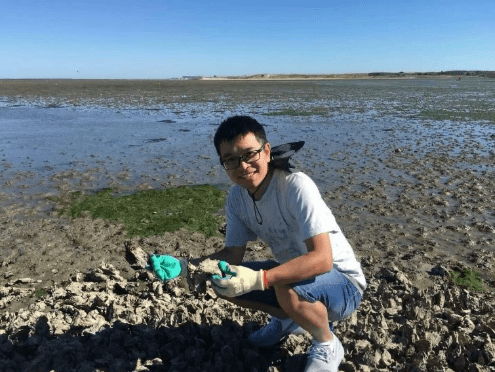
The author, Libin Zhou (Credit: Libin Zhou)

