
In this week’s blog post, the old saying remains the same; we are products of our environments! From their paper: “Functional trait interactions in a human-dominated world: Urbanization and reproduction in Eurasian red squirrels”, author Maria Vittoria Mazzamuto examines reproductive behavioural traits in Eurasian red squirrels to understand how they have adapted from forest to urban landscapes. The authors undertook a three-year project assessing female reproductive rates and linking them to behavioural traits, like exploration or sociability. Maria shares not only fascinating (and surprising) results from their work, but also some solid advice: embrace uncertainty as you navigate the challenges in academia!
About the paper
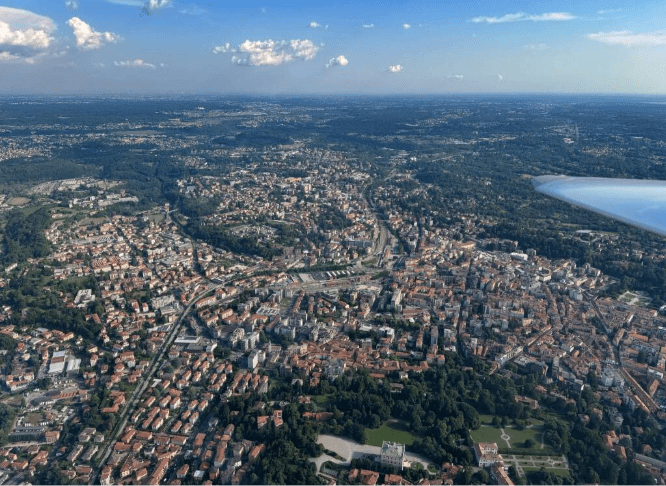
Cities are changing how animals live, often in ways that are not so easy to predict. We know that wildlife can adjust their behavior and physiology, but it is still not clear how different traits actually come together to influence something as fundamental as reproduction.
In this study, we looked at female Eurasian red squirrels across a gradient of forest to urban parks in northern Italy, asking a fairly simple question: Do traits like body mass and behavior matter in the same way everywhere, or does the environment change their role?
Some of the results were expected, but others were not. Heavier females were more likely to reproduce, which is something we already see in many species. But what was surprising is that this did not mean higher reproductive success in cities. Even though squirrels in urban and suburban areas tended to be slightly heavier, they reproduced less than those in natural habitats. This suggests that being in a good condition in a city might not reflect real advantages, or at least not the ones that matter for reproduction.
We also thought behavior would play a role. Traits like exploration or sociability are often linked to how animals deal with new or challenging environments, so it seemed reasonable to expect some effect, especially in urban areas. Behavior did differ between habitats, but in the end, it did not explain variation in reproductive success.
For me, that was one of the most interesting take-home messages! It was essentially that not all traits that vary, actually matter for fitness. It really depends on the context in which they are expressed!
About the research
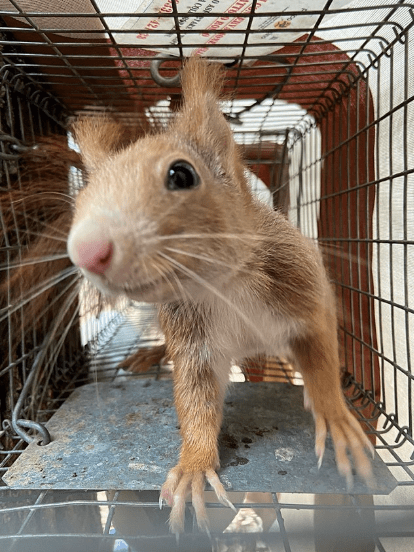
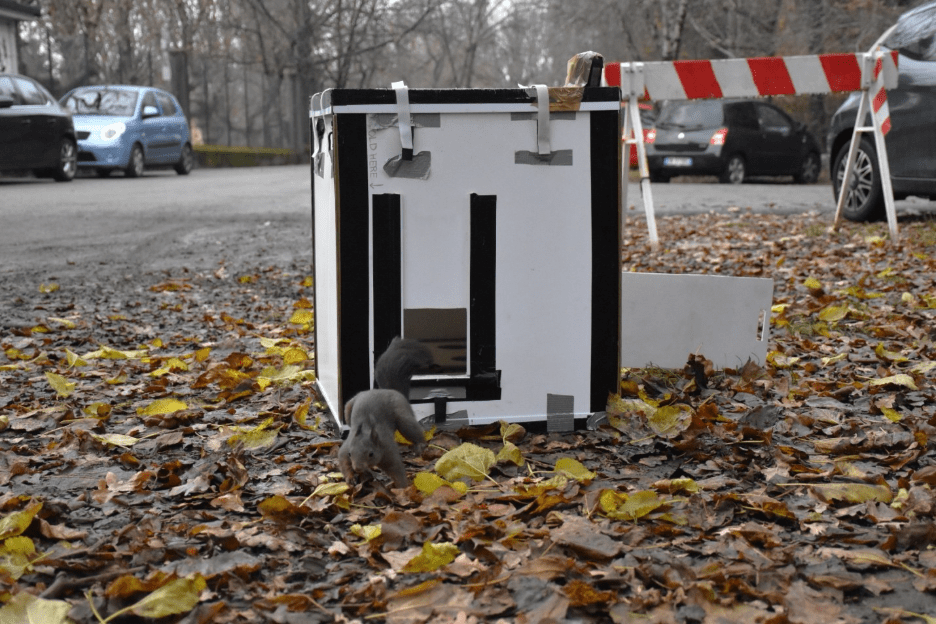
This project took place over three years and across quite different environments: forests to suburban areas and city parks. We followed female red squirrels using live trapping, collecting information on body mass and reproductive condition, and we also ran behavioral tests to understand personality traits like activity, exploration, and sociability.
Fieldwork like this always looks straightforward on paper, but, in reality, it rarely is. Recapturing the same individuals across seasons can be unpredictable, and keeping methods consistent across sites takes a lot of coordination. On top of that, running behavioral tests in the field adds its own layer of complexity.
That said, having the right people around you makes a huge difference. This work would not have been possible without Claudia Tranquillo and Lucas Wauters, who, among other roles, also coordinated the fieldwork. When you have a good team, even the more demanding parts of fieldwork become manageable, and often even enjoyable.
What I found most interesting in the end is how much the results pushed against our expectations. We tend to assume that traits like behavior or body condition should translate quite directly into fitness advantages, especially in human-modified environments. But that was not really the case here, and it is a good reminder that these relationships are often more subtle and context dependent than we think.
About the author

I am currently a post-doc at the University of Turin and will soon move to the University of Insubria as an Assistant Professor. Getting into ecology was not planned. During my biology degree I was initially set on human health, but in my final semester I took courses in zoology, ecology, ethology and botany, and something just clicked. I remember realizing how everything in nature is connected, constantly changing, and that we are part of it too.
Since then, I have been working in wildlife ecology, conservation and management and currently, I’m working with a team at the University of Turin and the University of Insubria, combining ecological research with applied conservation work. More recently, thanks to a nationally funded project called “Wildlife in the Anthropocene: behavioral, genetic and physiological responses to urbanization in two mammal species”, we have been focusing on wildlife in urban environments, which keeps raising new questions the more we explore it!
Like many people in academia, I have had to deal with funding limitation, which can shape how far you can take an idea. At the same time, I am really excited about this next step in my career, because it will finally allow me to build more long-term research and also share this passion with students. Over time I have realized that progressing in academia is not always the same experience for everyone. I am a mother and still early in my career. In this stage, everything is expected to move fast but balancing research and family is not always straightforward. This is not because people are unsupportive, but because the system does not always fully account for the realities of caring for young children. This is ultimately something you learn to navigate, and it shapes how you see your work and your priorities.
If I could give one piece of advice to my younger self, it would be “embrace uncertainty more“. Research, like life, rarely follows a straight path, and often it is the unexpected results that turn out to be the most interesting!

