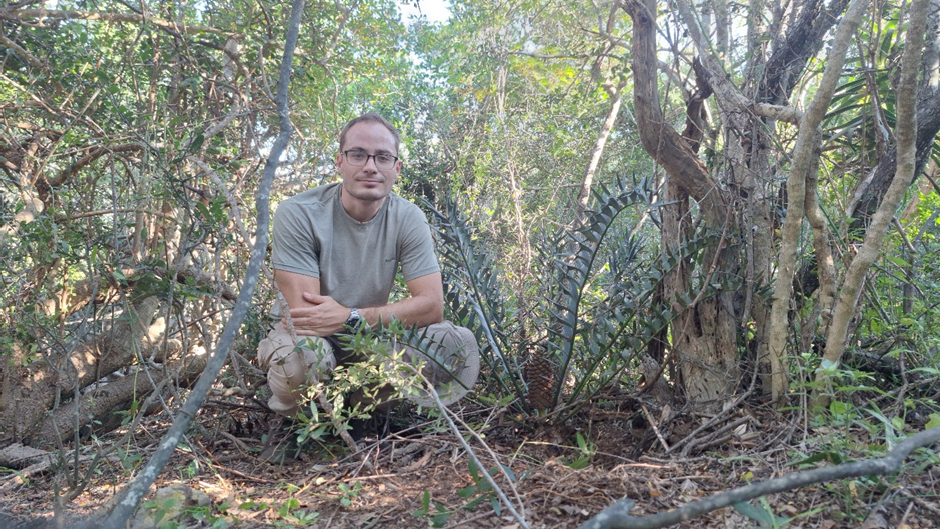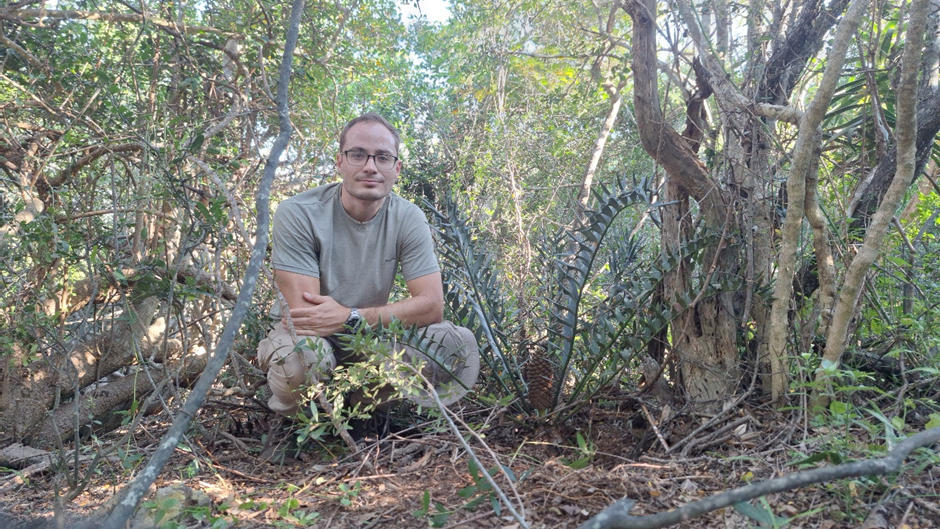
In this ‘Behind the Paper’ blog post, author Paul Jans van Rensburg – a postdoctoral at Stellenbosch University – discusses his article “Pollinator diversity and host specificity in threatened Encephalartos cycads and their implications for co-extinction and species recovery“, which was recently published in Functional Ecology. Paul discusses the loss of specialised pollinators and its implications, the importance of beetle pollinator taxonomy, and his long-standing interest in plant-insect interactions and conservation biology.
About the paper
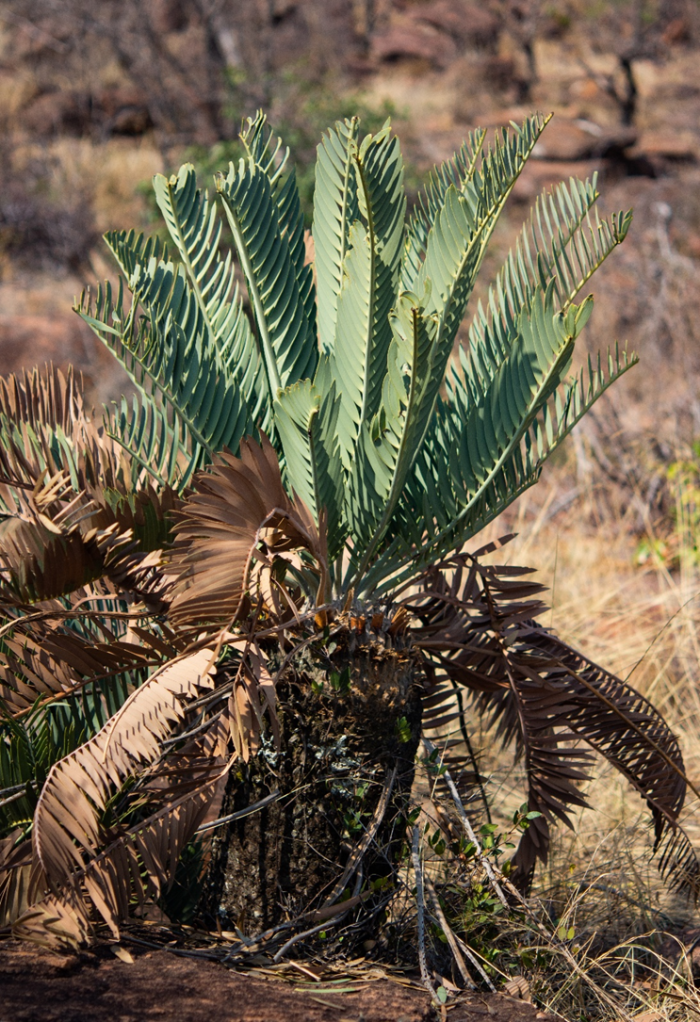
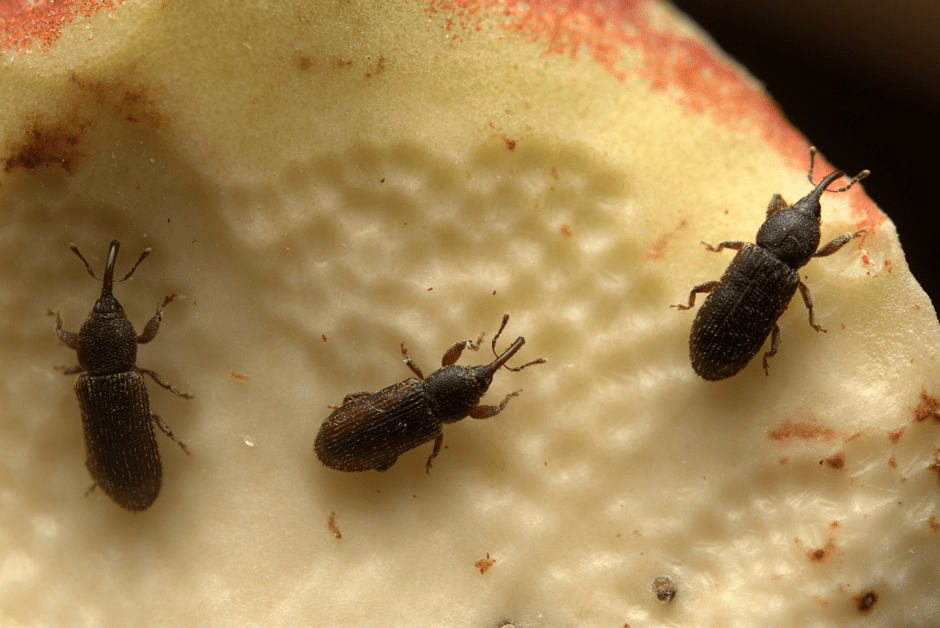
Cycads are among the most threatened plant groups globally, and the African genus Encephalartos is no exception. While habitat loss and poaching are well-recognised threats, our paper highlights a less visible but equally serious risk: the loss of specialised pollinators. Most Encephalartos species rely on highly specific beetle pollinators (such as Porthetes and various erotylids) for sexual reproduction.
We set out to understand how specialised these relationships are and what drives them. By analysing host phylogeny and cone volatile chemistry, we found that both evolutionary relatedness and aspects of cone chemistry help structure these interactions, although no single factor fully explains pollinator host specificity.
Perhaps most concerning, we found evidence of pollinator collapse in at least 13 Encephalartos species. This means that even if we protect the plants themselves, they may be “functionally extinct” in the wild without their insect partners. Our findings highlight the need for conservation strategies that explicitly consider plant-pollinator mutualisms to avoid co-extinction.
About the research
This project brought together data collected over nearly four decades, combining field observations, museum collections, and published records. One of the biggest hurdles is sorting out the taxonomy of the beetle pollinators, particularly the erotylids, which remain undescribed by science. We are currently working with colleagues locally and overseas to sort out the taxonomy and incorporate genetic information to better understand these relationships.
One of the most intriguing aspects of the research is whether we can reintroduce pollinators from common cycads into populations where they’ve gone extinct. Observations from botanical gardens, where beetles sometimes visit novel host species, suggest that host use may be more flexible than it appears in the wild. This raises the possibility that some pollinators may be pre-adapted to shift onto closely related hosts under certain conditions.
At the same time, the traits mediating pollinator behaviour, particularly cone volatile chemistry, are complex mixtures of compounds, making it difficult to identify which components are functionally important. Future work will focus on behavioural experiments and sensory ecology to better understand how pollinators perceive and recognise their hosts, and whether this knowledge can be used to restore pollination in species where it has been lost.
About the author
I am a postdoctoral researcher in the Department of Conservation Ecology and Entomology at Stellenbosch University. This work builds on a long-standing interest in plant-insect interactions and conservation biology. Working on cycads has been especially rewarding. They represent an ancient lineage with highly specialised ecological relationships that are still poorly understood, yet are increasingly under threat. This combination of evolutionary history and urgent conservation relevance continues to motivate my work.