Cover Stories: Dr. Lori Neuman-Lee

Dr. Lori Neuman-Lee, professor at Arkansas State University, discusses the story behind the cover for Volume 29, Issue 11 of Functional Ecology, published all the way back in 2015. Lori is a comparative physiologist. She mostly thinks about reptile ecophysiology at the intersection of endocrinology and immunology. This blog kicks off our brand new blog series – Cover Stories! Read on to learn about one … Continue reading Cover Stories: Dr. Lori Neuman-Lee

Caroline Isaksson: Combined light & traffic noise exposure enhances songbirds’ antioxidant capacity & lowers damage

In our latest post, author Caroline Isaksson explores the impacts of urban pollutants on songbirds! In their recent paper: “Effects of short-term multi-pollutant exposure on the oxidative stress status of captive songbirds”, Caroline investigates how three urban pollutants impacts Zebra finches physiologically. Caroline also shares the surprising results that will promote deeper research into this dynamic. Amid her experiments, Caroline imparts advice we all need … Continue reading Caroline Isaksson: Combined light & traffic noise exposure enhances songbirds’ antioxidant capacity & lowers damage

Tim Forrester: Weight loss in female birds – an adaptive strategy

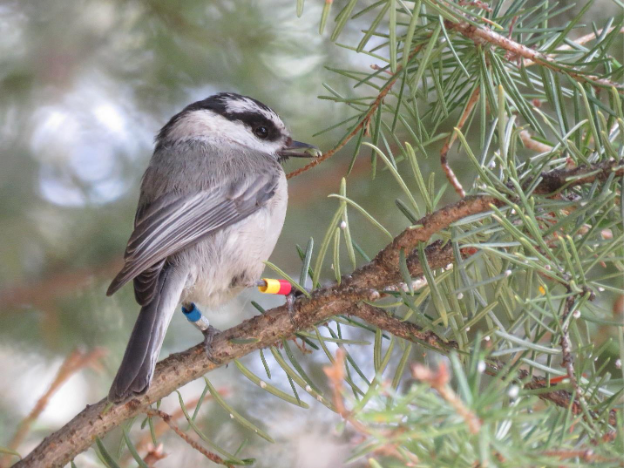
In this blog post, Tim Forrester helps answer a weighty question: Does weight loss help or hurt nesting birds? Based on his recent paper with Tom Martin, “Observational and experimental evidence that rapid mass loss is consistent with the flight efficiency hypothesis and not caused by reproductive effort in three passerine bird species”, Tim shares the fascinating physiological adaptations undergone by songbirds in anticipation of … Continue reading Tim Forrester: Weight loss in female birds – an adaptive strategy

Carolina Reyes-Puig: species coexistence and niche segregation in Mediterranean green lizards.

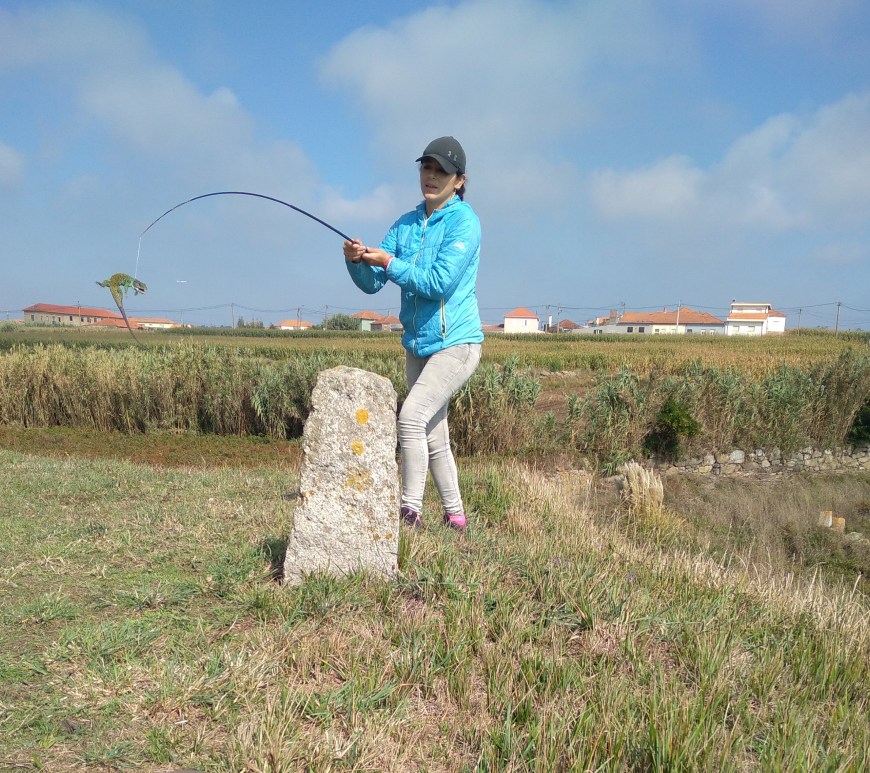
In our latest post, author Carolina Reyes-Puig asks us if it’s all about size (in this case, it is…kinda!). In their latest paper: “Is it all about size? Dismantling the integrated phenotype to understand species coexistence and niche segregation”, Carolina explores how different phenotypic traits contribute to niche segregation in Mediterranean green lizards. Carolina also highlights the importance of ecophysiology research, and staying true to … Continue reading Carolina Reyes-Puig: species coexistence and niche segregation in Mediterranean green lizards.

Camila Madeiros: What are you doing in a place like this? Connecting plants’ climate preferences with functional traits

Camila Medeiros—a post-doc at University of California Los Angeles, USA—presents her work ‘Predicting plant species climate preferences on the basis of mechanistic traits’. She discusses the connection between traits and niches, shows how to do ecology with small budgets, and highlights the need to transfer scientific knowledge to general audiences. About the paper By using mechanistic traits, our paper improves the ability to predict plant … Continue reading Camila Madeiros: What are you doing in a place like this? Connecting plants’ climate preferences with functional traits

Géraldine Hildbrand: Why some plants are better able to adapt to climate change

In this new post, Géraldine Hildbrand—Scientific collaborator, BFH-HAFL, Switzerland—presents her latest work ‘Above- and below-ground responses to experimental climate forcing in two forb species from montane wooded pastures in Switzerland’. She highlights the importance of ecophysiological traits, discusses the relevance of plasticity to cope with environmental changes, and explains how she can balance research while moving to teaching. About the paper It is undeniable that … Continue reading Géraldine Hildbrand: Why some plants are better able to adapt to climate change

Kristiina Visakorpi: The future of Alpine meadows: Can we predict winners and losers in a warmer climate?

In this new post Kristiina Visakorpi—a postdoc at the Norwegian University of Science and Technology—discusses her last research ‘Eco-physiological and morphological traits explain alpine plant species’ response to warming’. She considers the connections between functional traits and climate change, highlights the importance of eco-physiological traits, and provides some thoughts to fight apathy towards our current environmental crises. About the paper In our paper we investigated … Continue reading Kristiina Visakorpi: The future of Alpine meadows: Can we predict winners and losers in a warmer climate?

Simulated winter warming negatively impacts survival of Antarctica’s only endemic insect: Podcast Transcript

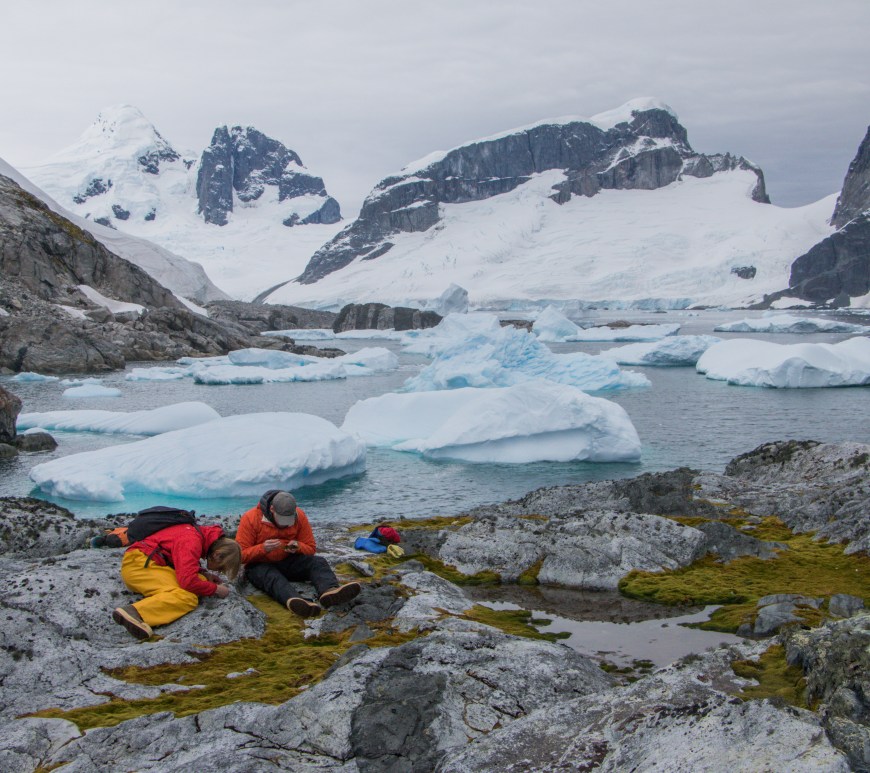
In this podcast for Functional Ecology, Assistant Editor, Frank Harris, sits down with Jack J. Devlin—an early career researcher from the University of Kentucky—to discuss his recently published paper ‘Simulated winter warming negatively impacts survival of Antarctica’s only endemic insect.’ With warmer winters expected to become more common with climate change, this study’s results indicate that winter warming could negatively impact cold-adapted insects like the … Continue reading Simulated winter warming negatively impacts survival of Antarctica’s only endemic insect: Podcast Transcript

Martha Muñoz: Vulnerability of tropical anoles to environmental warming

In this blog post, Dr. Martha Muñoz, Assistant Professor of Ecology and Evolutionary Biology at Yale University, USA, discusses her recent paper, “The multidimensional (and contrasting) effects of environmental warming on a group of montane tropical lizards.” Este blog también está disponible en español aquí. About the paper Our study centred around exploring vulnerability to environmental warming in a group of montane tropical anoles (lizards) … Continue reading Martha Muñoz: Vulnerability of tropical anoles to environmental warming

Martha Muñoz: Vulnerabilidad de los anolis tropicales al calentamiento ambiental

En esta publicación de blog, la Dra. Martha Muñoz, profesora asistente de Ecología y Biología Evolutiva en la Universidad de Yale, EE. UU., analiza su artículo reciente, “The multidimensional (and contrasting) effects of environmental warming on a group of montane tropical lizards.” Una versión en inglés de esta publicación de blog está disponible para leer aquí. Sobre el papel Nuestro estudio se centró en la … Continue reading Martha Muñoz: Vulnerabilidad de los anolis tropicales al calentamiento ambiental