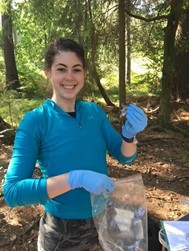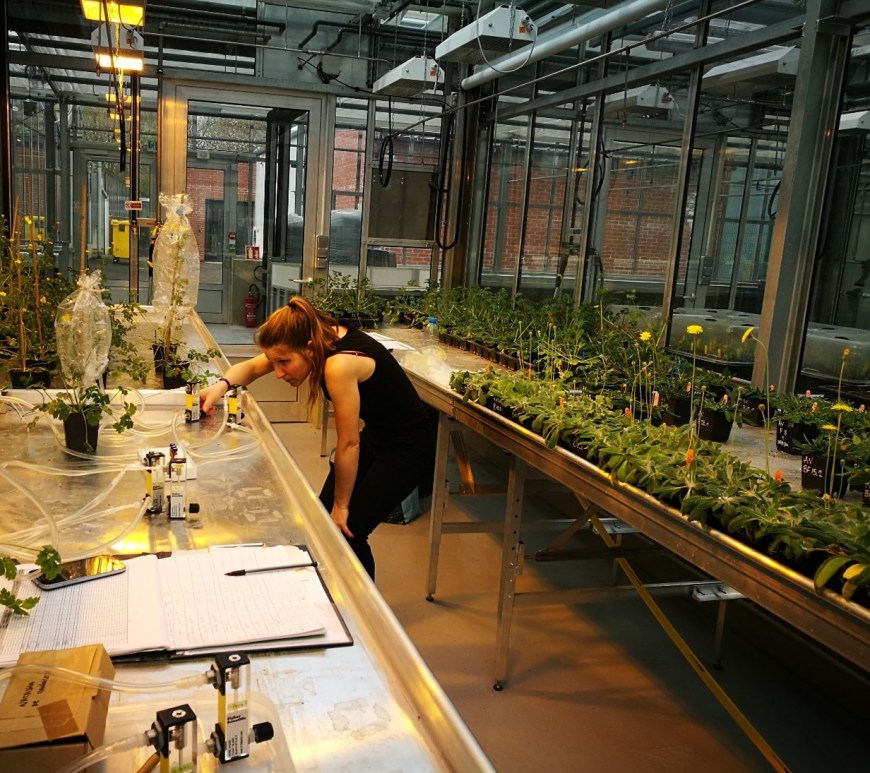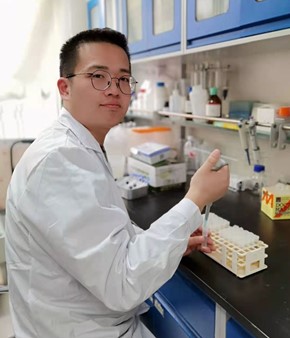
Natasha de Manincor checking the dynamic headspace material during floral scent extraction in the greenhouse (University of Lille, Plateforme Serre, cultures et terrains expérimentaux). (Photo credits: Leslie Faucher)

Natasha de Manincor: Geographical floral scent variation depends on pollinators and plant species identity

In this new post, Natasha de Manincor from University of Lille presents her work “Geographical variation of floral scents in generalist entomophilous species with variable pollinator communities”. She highlights the importance of Volatile Organic Compounds for pollination, discusses the mechanisms behind plant intraspecific chemicals variability and shares her passion for fieldwork all over the world. About the paper Plants are limited by their immobility, so … Continue reading Natasha de Manincor: Geographical floral scent variation depends on pollinators and plant species identity

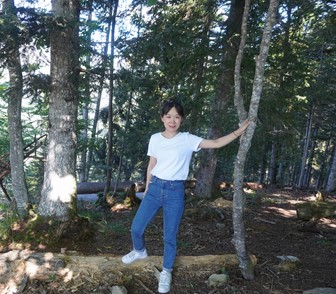
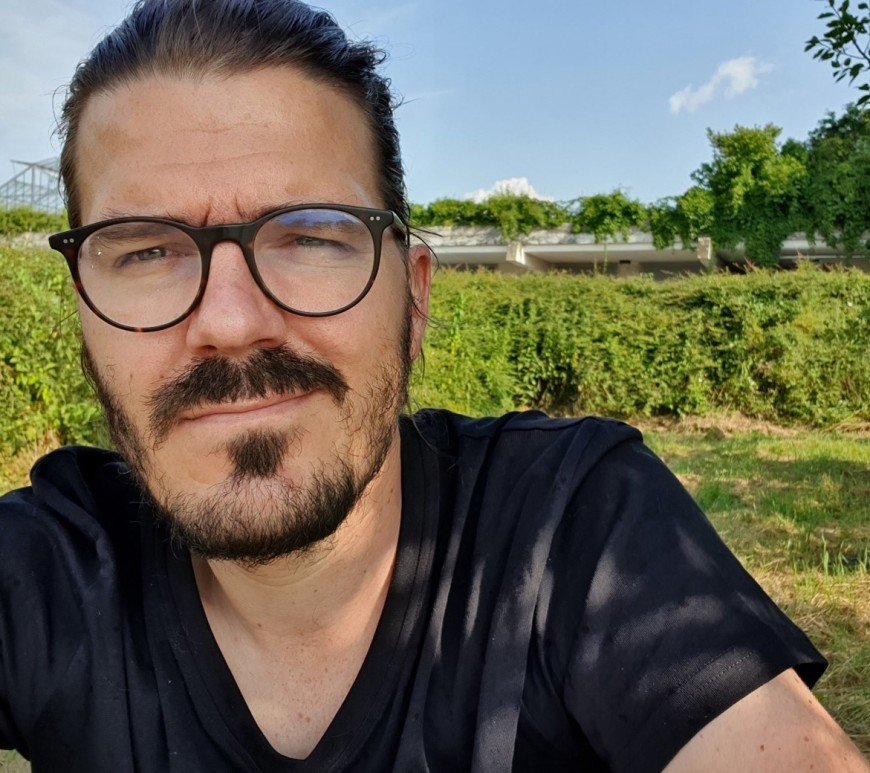
Robin Heinen in his favorite office, outside, at a newly established plant chemodiversity field experiment at Dürnast Experimental Station, Freising, Germany.

Robin Heinen: Feeding from up to bottom: belowground herbivory impacts on plant-soil feedbacks

In this new post, Robin Heinen from the Netherlands Institute of Ecology presents his latest work ‘Foliar herbivory creates subtle soil legacy effects that alter future herbivores via changes in plant community biomass allocation’, discuss the importance of complex interactions to understand ecological communities and shares his worries about not being able to disconnect from nature when you are ecologist. About the paper In early … Continue reading Robin Heinen: Feeding from up to bottom: belowground herbivory impacts on plant-soil feedbacks

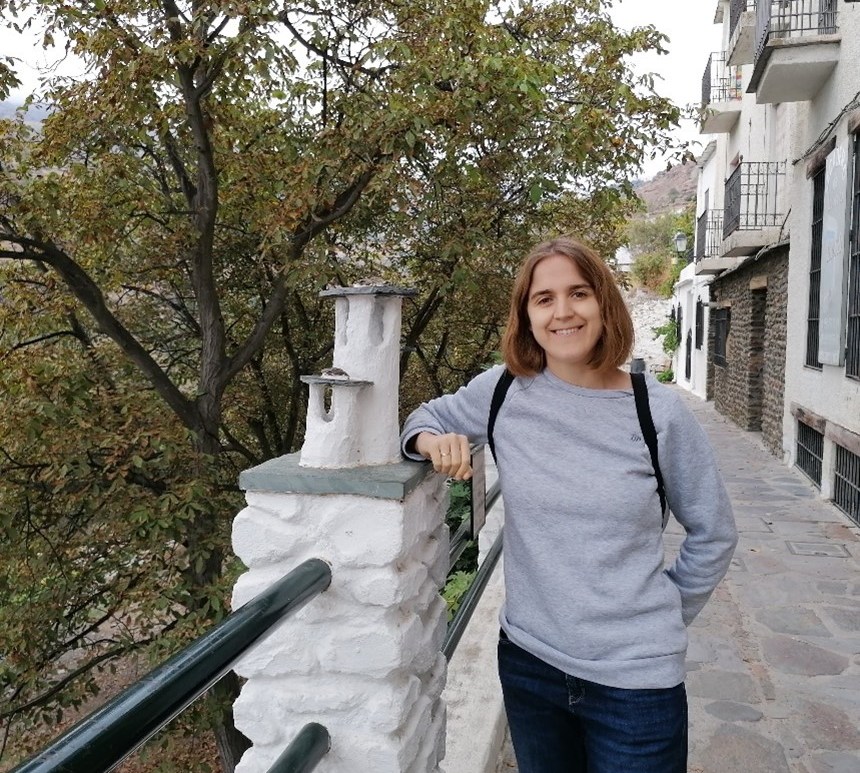
Marina Dacal

Marina Dacal: Can past climatic conditions influence soil microbes and functioning responses to present extreme climatic events?

In this new post, PhD Marina Dacal from University of Alicante presents her last work ‘Climate change legacies contrastingly affect the resistance and resilience of soil microbial communities and multifunctionality to extreme drought’. She talks about the importance of looking at multiple components when doing ecology, highlights the importance of drylands and shares her new-found passion for knitting. About the paper Soil microbes are the … Continue reading Marina Dacal: Can past climatic conditions influence soil microbes and functioning responses to present extreme climatic events?

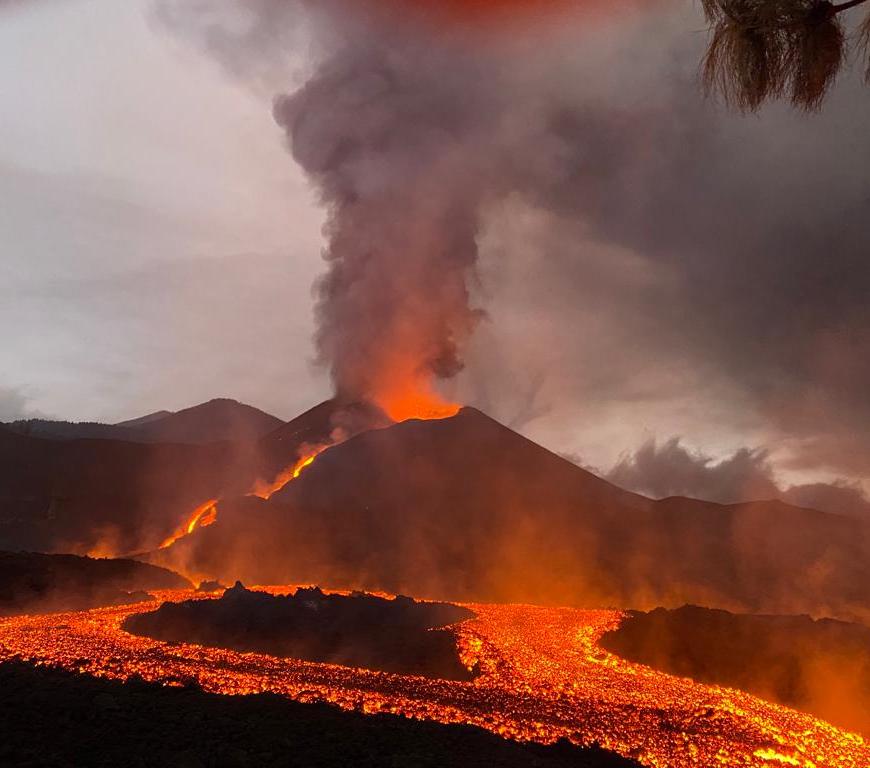
A river of lava flaw at the volcano of Hoya de Tajogaite.

Disaster Ecology: Our experience as biologists in the middle of a volcanic eruption (La Palma, Canary Islands, 2021)

Manuel Nogales and Félix Medina talk about their experience working under the eruption of a volcano in Canary Islands (Spain), while sharing their mixed feelings on the research opportunity and the destruction they lived.  On Sunday, September 19, 2021, a volcanic eruption began in the southwest of La Palma, one of the islands that are part of the Canaries, Spain. It is the first terrestrial … Continue reading Disaster Ecology: Our experience as biologists in the middle of a volcanic eruption (La Palma, Canary Islands, 2021)

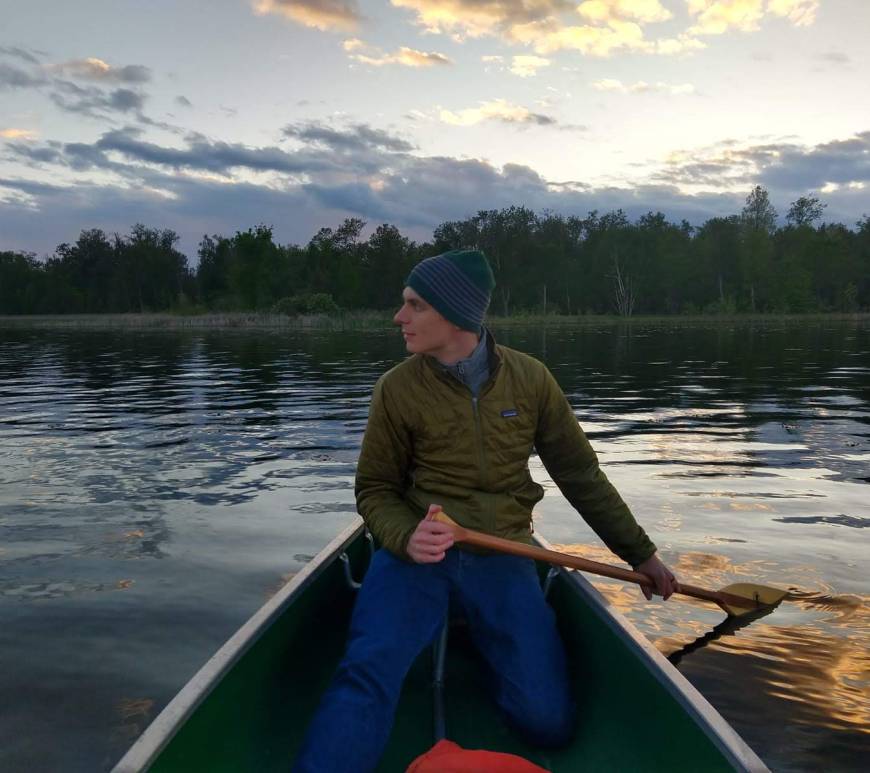
Robert enjoying canoeing

Robert Buchkowski: Weak interactions between herbivores and detritivores in an old-field ecosystem

In our newest post, Robert Buchkowski from University of Wester Ontario presents his last work ‘Weak interactions between strong interactors in an old-field ecosystem: control of nitrogen cycling by coupled herbivores and detritivores’. He discusses the importance of considering multiple interacting organisms when evaluating ecosystem functioning, the challenge to extract earthworms from the soil and warns about doing ecology under the supervision of an expert. … Continue reading Robert Buchkowski: Weak interactions between herbivores and detritivores in an old-field ecosystem

Curtis Lubbe – tired and in a Canadian prairie.

Curtis Lubbe: How much do plants store and why?

In our February cover story, Curtis Lubbe from the Institute of Botany (Czech Academy of Sciences) presents his new work ‘The effect of moisture, nutrients, and disturbance on storage organ size and persistence in temperate herbs’, highlights the importance of looking belowground to understand plants persistence and provides some extra artistic flavour to plant ecology. About the paper This paper is another vital step in … Continue reading Curtis Lubbe: How much do plants store and why?

Teresa Rosas working in their COVID-19 office

Teresa Rosas: single traits are not enough to predict tree growth

In our new post Teresa Rosas, Talent and Gender officer at CREAF (Spain), presents her work ‘Are leaf, stem and hydraulic traits good predictors of individual tree growth?’, discusses the complexity of ecological relationships and shows that there is life for a PhD beyond academia. About the paper In the 21st century, humanity faces the huge challenge to adapt to rapid global change. As ecologists, … Continue reading Teresa Rosas: single traits are not enough to predict tree growth

Alexander Walton with paper wasp workers, temporarily individually housed in deli cups.

Alexander Walton: Nutritional environment is an important regulator of aggression in paper wasps

 Dr. Alexander Walton, a Postdoctoral Researcher working collaboratively at Iowa State University and Cornell University, discusses with us his recent paper, “Resource limitation, intragroup aggression, and brain neuropeptide expression in a social wasp.” Nourishment can affect behaviour in many ways, including social behaviours. In this study, my co-author and I explored the link between a social animal’s nutritional environment and how cooperative or aggressive they … Continue reading Alexander Walton: Nutritional environment is an important regulator of aggression in paper wasps

Beetle replicas with a bird predation attempt (left) indicated by the beak marks across the wings and head and a rodent (right) indicated with the incisor teeth marks in the clay.

Amanda Franklin: Reflecting on mirror camouflage

Our cover story for January 2022 is all about the dazzling world of mirror camouflage. Amanda Franklin of University of Melbourne tells us about her latest research “Cracks in the mirror hypothesis: High specularity does not reduce detection or predation risk” and explains why all may not be as it seems. How can an animal make itself invisible? Perhaps by perfectly mimicking a leaf or … Continue reading Amanda Franklin: Reflecting on mirror camouflage

A male great bustard displaying at dawn, when ambient light is richest in UV wavelengths, in Extremadura, Spain. The insert photo shows the pink colour of still undegraded porphyrins at the base of body feathers of a captive male bustard. Photo credits: Ismael Galván.

Why is pink the colour of virgin birds?

Ismael Galván of National Museum of Natural Sciences (Spain) uncovers to exciting role of porphyrin colouration and what it might mean in an ecological setting. This blog is part of our colourful countdown to the holiday season where we’re celebrating the diversity and beauty of the natural world. Click here to read the rest of the colour countdown series Few things in nature are as … Continue reading Why is pink the colour of virgin birds?