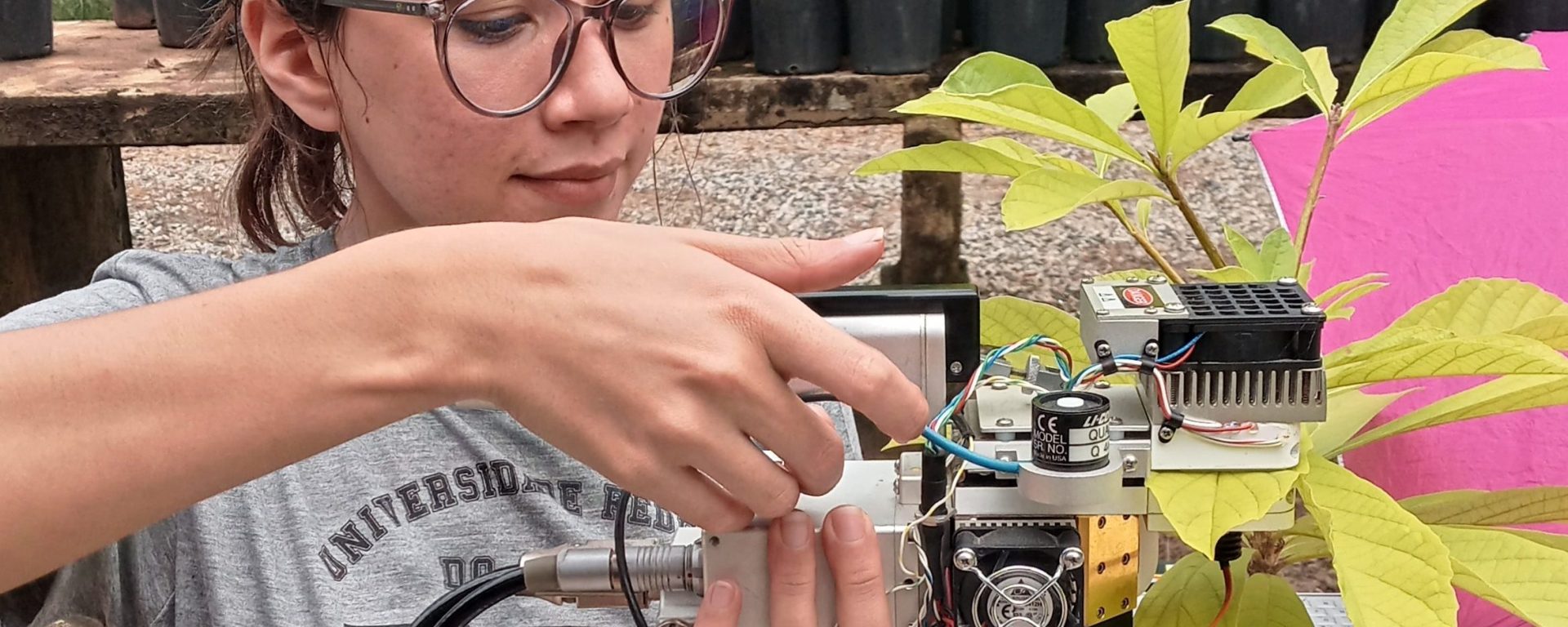
In this ‘Behind the Paper’ blog post, author Lussarina Lima – a PhD student and lecturer – shares insights into the article “Stem water content predicts drought-induced mortality in tropical semiarid species“, which was published in Functional Ecology in August 2026. Lussarina discusses plant mortality during drought, determining whether plants are dead or alive, and the importance of taking risks when you can.
A Portuguese translation of this blog post is available here.
About the paper
Our work focuses on plant mortality during drought, examining the underlying physiological mechanisms and the thresholds that lead to mortality. As these thresholds vary considerably from one species to another, we do not yet know what these values are for trees in the Seasonally Dry Tropical Forest. To predict vegetation mortality on a large scale, it is necessary to understand how different functional types of plants succumb to drought; we therefore aim to provide further insight into the physiology of plants in these areas.
In our article, we sought to determine whether thresholds for loss of hydraulic conductance or stem water content allow for a more accurate prediction of drought-induced mortality in two species from a seasonally dry tropical forest that exhibit contrasting leaf phenology.
Our main findings show that stem water content was a better predictor of plant mortality during drought and that both species were able to survive extreme losses in water transport. Our results challenge the prevailing assumption that certain critical thresholds of hydraulic conductance loss always lead to mortality. Finally, the stem water content thresholds we identified for the perennial species can be incorporated into models and enable greater accuracy in predicting drought-induced plant mortality.
About the research
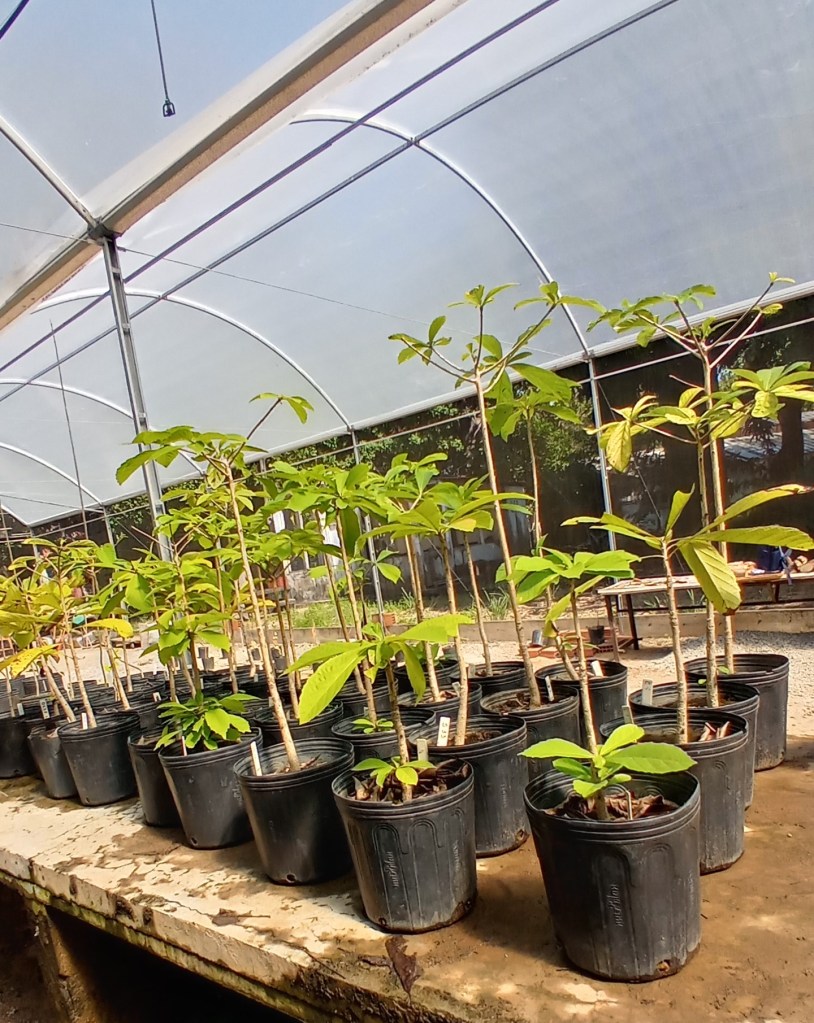
The experiment was carried out in a greenhouse at the Federal University of Ceará, Ceará – Brazil, between March and October 2024. We subjected seedlings of the species to a drought treatment and collected various physiological data from the plants, such as gas exchange measurements, stem water content, growth measurements and soil water content, amongst others. These measurements were taken periodically to monitor the plants’ physiological responses and mortality. One challenge of the experiment was determining whether the plants would be dead or not once we removed them from the drought conditions. Leaf senescence alone could not serve as an indicator, as one of the species is deciduous (i.e. it sheds its leaves during periods of drought). We therefore subjected the plants that had undergone drought to a rehydration treatment; we considered individuals to be dead if they did not produce any new tissue after two months of rehydration.
I was surprised to see that both species managed to survive even after one had lost much of its hydraulic conductance. This is in contrast to some studies involving species from other regions, where plants usually die before suffering such significant losses. I believe the next step is to seek to validate whether stem water content thresholds, together with other hydraulic parameters, can improve the prediction of mortality in adult plants in situ during drought events.
About the author
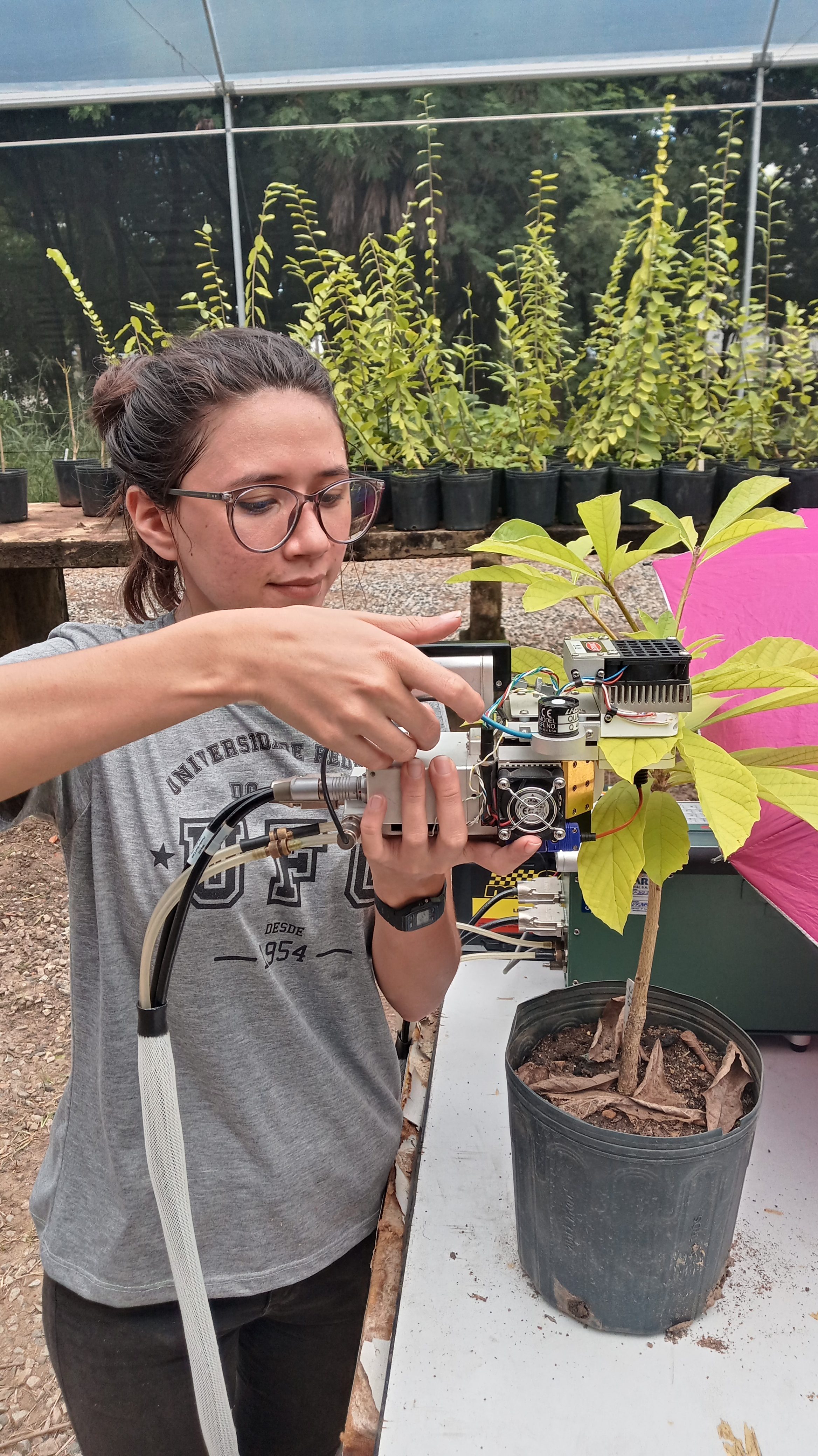
From a very early age, I was fascinated by topics related to nature and the diversity of interactions that existed within it, and it was the subject of ecology that sparked my greatest interest. I completed my undergraduate degree in Biological Sciences at the Federal Institute of Education, Science and Technology of Ceará (IFCE). During my ecology modules, my interest grew even further, which led me to write my final-year dissertation in this field, specifically on plant ecology. My supervisor at the time, Amanda, encouraged me to continue my research in this area. It was then that I began my Master’s degree in Ecology and Natural Resources at the Federal University of Ceará (UFC) and started working on plant ecophysiology under the supervision of Professor Eller. This article is the result of my Master’s experiment, and I was delighted to have it published in a high-impact journal. Furthermore, as this is the first article I have published, I hope to achieve success in future work.
I am currently in my second year of my PhD, working in the same field of specialisation. I aim to contribute new insights into the physiological responses of plants, particularly to drought, helping to predict how vegetation will behave in the face of increasingly severe climate change scenarios. As well as my research, I am working as a lecturer. What I enjoy most is listening to music and exploring natural landscapes; I am always enchanted by the beauty of nature. One obstacle to a scientific career here in Brazil is the low level of investment in research, which makes it difficult to carry out more in-depth studies.
If I could give my younger self one piece of important advice, it would be: ‘Go for it even if you’re scared, and take more risks.’
 Functional Ecologists