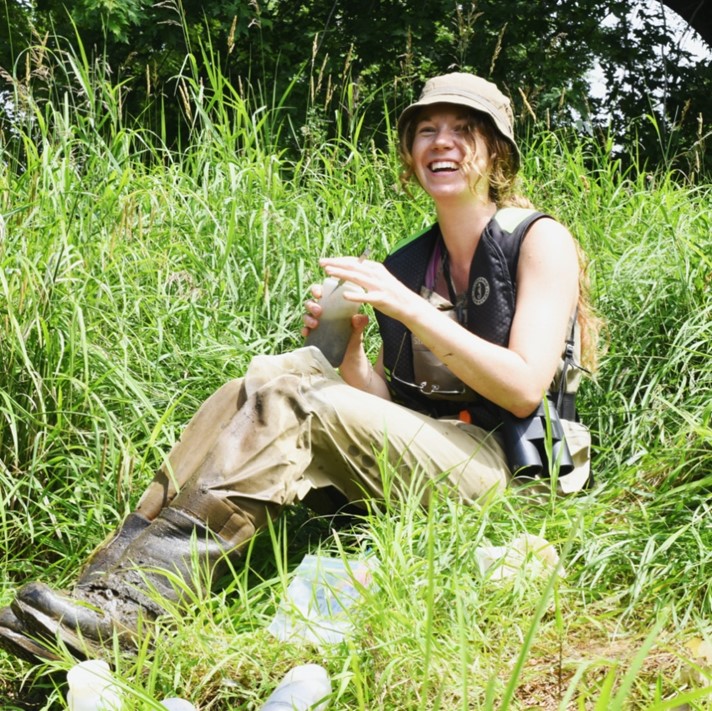
Samantha Bock: A long-standing evolutionary mystery: Why does temperature determine sex in long-lived reptiles?

In this blog post, Samantha Bock, a post-doctoral researcher, discusses her study “Differential early-life survival underlies the adaptive significance of temperature-dependent sex determination in a long-lived reptile“, which has been shortlisted for Functional Ecology’s 2023 Haldane Prize for Early Career Researchers. About the paper: The temperature an animal experiences during development can determine whether it becomes female or male in many reptiles and some fishes. … Continue reading Samantha Bock: A long-standing evolutionary mystery: Why does temperature determine sex in long-lived reptiles?
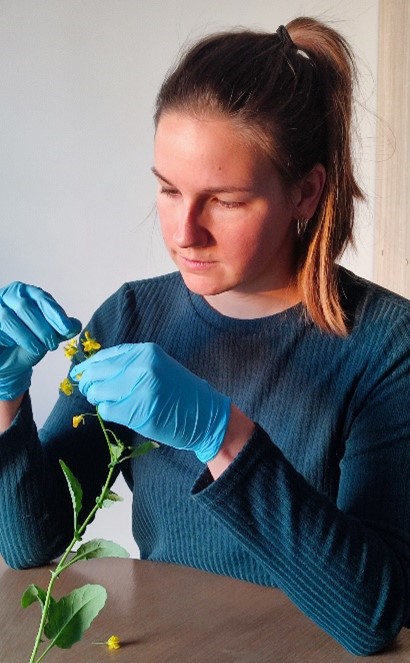
Lina Aoyama: Root diversity in grasslands buffers biomass production under drought

In this post, Lina Aoyama, a PhD student at the University of Oregon, discusses their research “Functional diversity buffers biomass production across variable rainfall conditions through different processes above- versus below-ground“, which has been shortlisted for Functional Ecology’s 2023 Haldane Prize for Early Career Researchers. About the paper Water is a strong driver of plant productivity, and which plant species are there and how many … Continue reading Lina Aoyama: Root diversity in grasslands buffers biomass production under drought

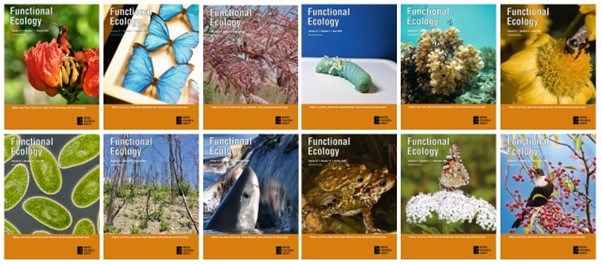
2023 Haldane Prize Shortlist: Functional Ecology’s Award for Early Career Researchers

The Haldane Prize is awarded by the British Ecological Society each year for the best paper in Functional Ecology written by an early career author. With entries spanning the 37th volume of the journal, our Senior Editors carefully shortlisted the following 12 papers: Lina Aoyama Functional diversity buffers biomass production across variable rainfall conditions through different processes above- versus below-ground Lina found that although biomass was largely … Continue reading 2023 Haldane Prize Shortlist: Functional Ecology’s Award for Early Career Researchers

Natalie Rideout: The floodplain wetland puzzle

In this new post, Natalie Rideout, a new ecological researcher working at the University of New Brunswick, Canada, discusses her paper: Environmental filtering of macroinvertebrate traits influences ecosystem functioning in a large river floodplain—recently shortlisted for the 2022 Haldane Prize for Early Career Researchers. Natalie has already provided a blogpost which discusses the particulars of her paper and research experience. Check it out HERE! About … Continue reading Natalie Rideout: The floodplain wetland puzzle

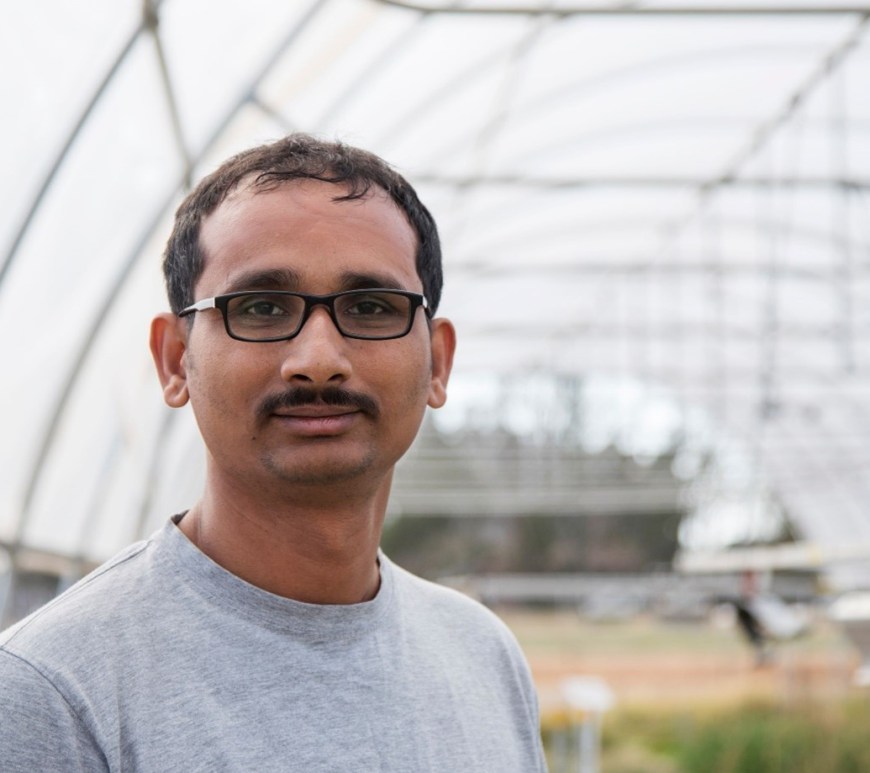
Manjunatha H. Chandregowda: Grasses adjust their root traits during drought to reduce the negative impacts on aboveground productivity

In this new post, Manjunatha H. Chandregowda—a new ecological researcher working at the Hawkesbury Institute for the Environment, Western Sydney University, Australia—discusses his paper: Root trait shifts towards an avoidance strategy promote productivity and recovery in C3 and C4 pasture grasses under drought—recently shortlisted for the 2022 Haldane Prize for Early Career Researchers. About the research Human disruption of global carbon and nitrogen cycles has … Continue reading Manjunatha H. Chandregowda: Grasses adjust their root traits during drought to reduce the negative impacts on aboveground productivity

Yankun Zhu: A long-term precipitation manipulation field experiment in a shrub-encroached grassland in Inner Mongolia, China

In this new post, Yankun Zhu—Associate Professor at Sanming University, China—discusses his paper: Increased precipitation attenuates shrub encroachment by facilitating herbaceous growth in a Mongolian grassland—recently shortlisted for the 2022 Haldane Prize for Early Career Researchers. About the paper Widespread shrub encroachment is profoundly impacting the structures and functions of global drylands, and precipitation change is assumed to be one of the most critical factors … Continue reading Yankun Zhu: A long-term precipitation manipulation field experiment in a shrub-encroached grassland in Inner Mongolia, China

Laura Bellec: Inside the feeding behavior of a pollinivore

In this new post, Laura Bellec—a new ecological researcher working at the Univ Rennes 1, Rennes, France—discusses her paper: Factors driving the within-plant patterns of resource exploitation in a herbivore—recently shortlisted for the 2022 Haldane Prize for Early Career Researchers. About the paper Animals need to find food to survive and grow; however, searching for food is energetically expensive. Thus, animals have evolved strategies that … Continue reading Laura Bellec: Inside the feeding behavior of a pollinivore

Hugo Sentenac: Biofilms, an underrated yet important way of life

In this new post, Hugo Sentenac, a PhD student at Labaoratoire Ecologie Fonctionnelle et Environnement (LEFE), Institut National Polytechnique de Toulouse, France, discusses his review paper: The significance of biofilms to human, animal, plant and ecosystem health—recently shortlisted for the 2022 Haldane Prize for Early Career Researchers. About the paper Microbes are everywhere: in soil, on rocks, in—and on—us, animals, plants, etc. All this is … Continue reading Hugo Sentenac: Biofilms, an underrated yet important way of life

David Villalobos Chaves: Foraging for efficiency—morphological traits provide support for variations in performance of the feeding apparatus in coexisting Neotropical bats

In this new post, David Villalobos Chaves, a PhD student at Department of Biology and Burke Museum of Natural History and Culture, University of Washington, Seattle, WA, USA, discusses his paper: Craniodental traits predict feeding performance and dietary hardness in a community of Neotropical free-tailed bats (Chiroptera: Molossidae)—recently shortlisted for the 2022 Haldane Prize for Early Career Researchers. About the paper Our research adds support … Continue reading David Villalobos Chaves: Foraging for efficiency—morphological traits provide support for variations in performance of the feeding apparatus in coexisting Neotropical bats

Kimberley Lemmen: Surprise! Rapid heritable adaptation can occur without initial standing genetic variation

In this new post, Kimberley Lemmen—a post-doc working at the University of Zurich, Zurich, Switzerland—discusses her paper: Experimental evidence of rapid heritable adaptation in the absence of initial standing genetic variation—recently shortlisted for the 2022 Haldane Prize for Early Career Researchers. About the paper Environmental change presents a fundamental challenge to populations because the traits that previously allowed individuals to grow, survive, and reproduce may … Continue reading Kimberley Lemmen: Surprise! Rapid heritable adaptation can occur without initial standing genetic variation