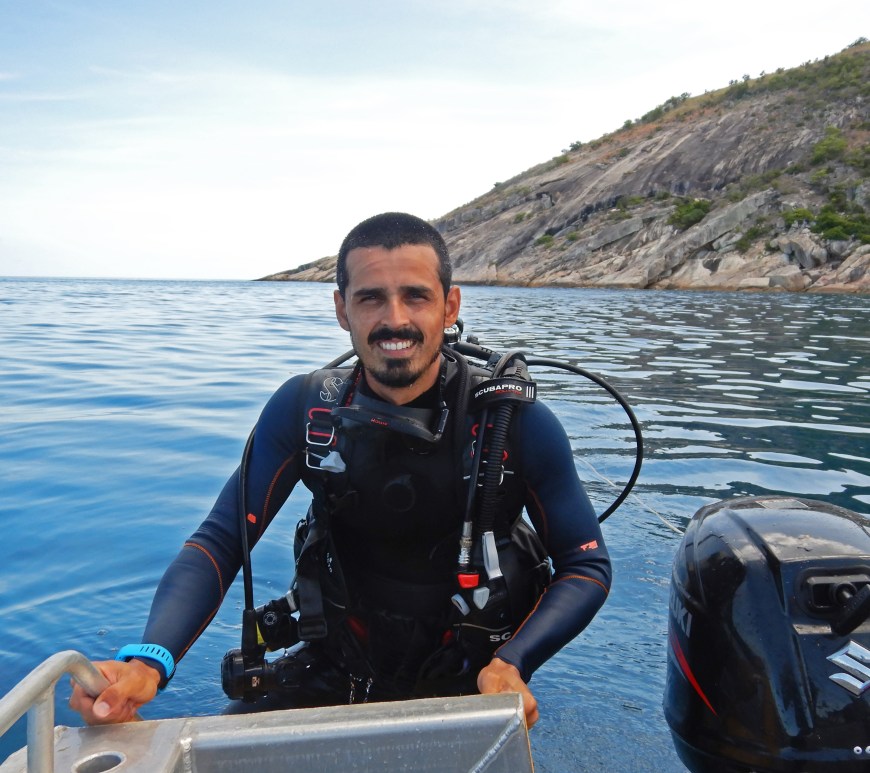
The studied reef has lost most of its coral cover due to two cyclones and two coral bleaching events. Despite some hard and soft coral colonies, most of the reef surface is covered in algal turfs, the favourite food of herbivorous reef fishes. Photo by Renato Morais.

Renato Morais: An unexpected (PhD project) journey

Renato Morais of James Cook University presents his 2020 Haldane Prize shortlisted research ‘Severe coral loss shifts energetic dynamics on a coral reef‘ and talks about his PhD experience where he learned that catastrophe doesn’t mean that all is lost. If I was asked to provide advice for someone starting a (PhD) project in Ecology, it would be don’t get emotionally attached to your project. … Continue reading Renato Morais: An unexpected (PhD project) journey

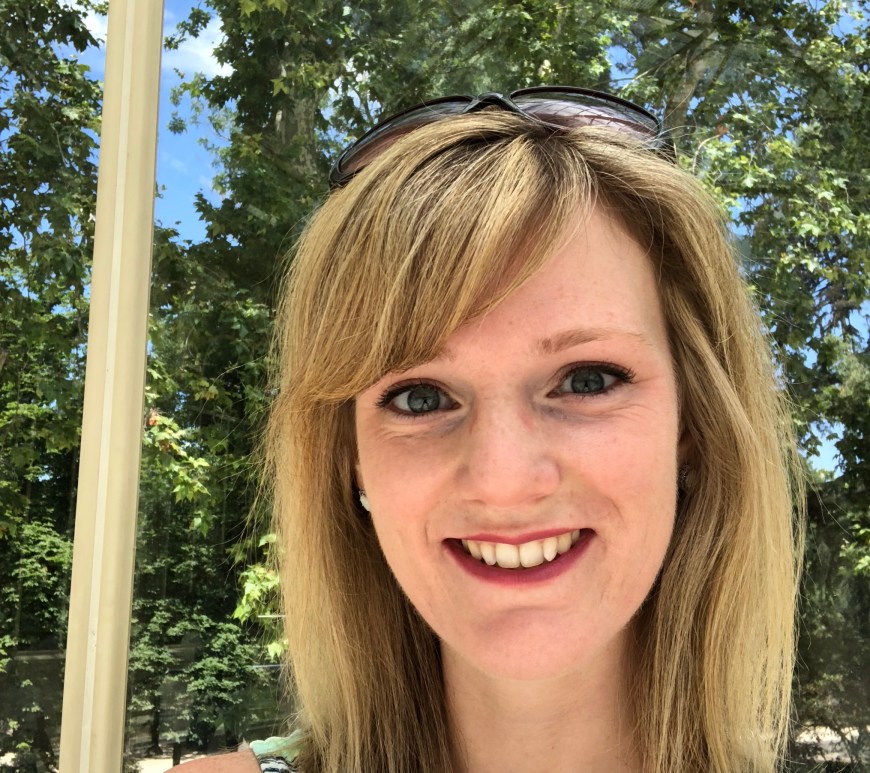
Jessica Moore is a microbial and ecosystem ecologist currently working in the Biosciences Division at Oak Ridge National Laboratory.

Jessica Moore: Root-microbe-ecologist Interactions

Jessica Moore’s research “Plant roots stimulate the decomposition of complex, but not simple, soil carbon” is shortlisted for the 2020 Haldane Prize prize for early career researchers. Here, she talks about her inspiration for the project as well as her experience as a first-generation college student and the importance of a support network. Recently, there has been a lot of discussion around how roots and … Continue reading Jessica Moore: Root-microbe-ecologist Interactions

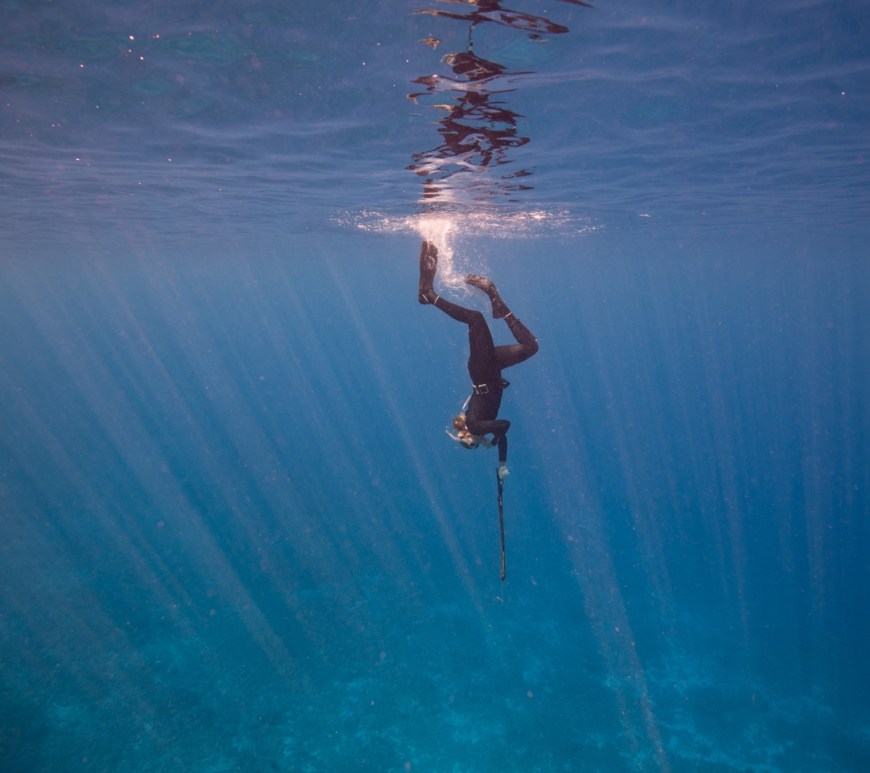
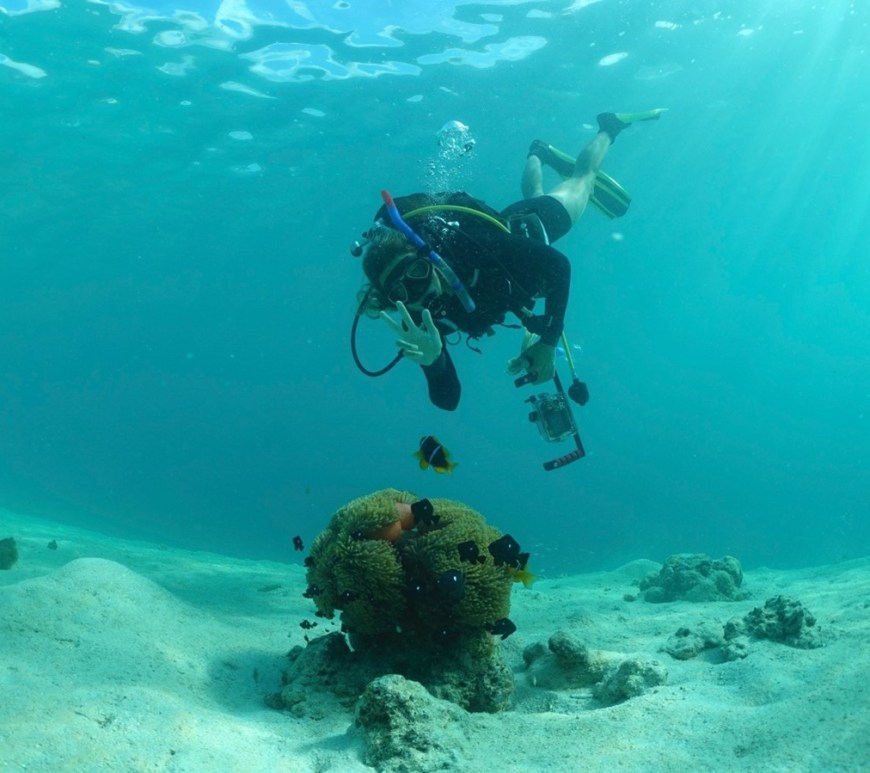
Nina diving to collect fishes in French Polynesia. Copyright: Jennifer Adler

Nina Schiettekatte: Quantifying elemental fluxes in fishes

Nina Schiettekatte of PSL Research University takes us on a journey to French Polynesia to discuss her 2020 Haldane Prize shortlisted work “Nutrient limitation, bioenergetics and stoichiometry: A new model to predict elemental fluxes mediated by fishes” – and the joy of R! The ocean has always piqued my curiosity, and I am drawn to any large body of water.  Following my undergraduate studies in … Continue reading Nina Schiettekatte: Quantifying elemental fluxes in fishes

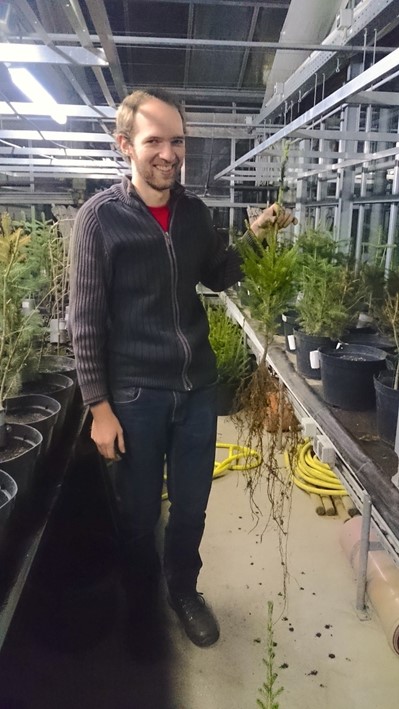
Setting trees into pots in the greenhouse was fun, especially when their root system was as long as the legs of the researcher.

Benjamin Hafner: Split it – disentangling functional mechanisms in forest ecology research

Benjamin Hafner of Technische Universität München & Cornell University, discusses his work “Water potential gradient, root conduit size and root xylem hydraulic conductivity determine the extent of hydraulic redistribution in temperate trees” shortlisted for the 2020 Haldane Prize for Early Career Researchers and draws on how a lifelong love of nature led to a career in forestry research. I have always been fascinated by nature … Continue reading Benjamin Hafner: Split it – disentangling functional mechanisms in forest ecology research

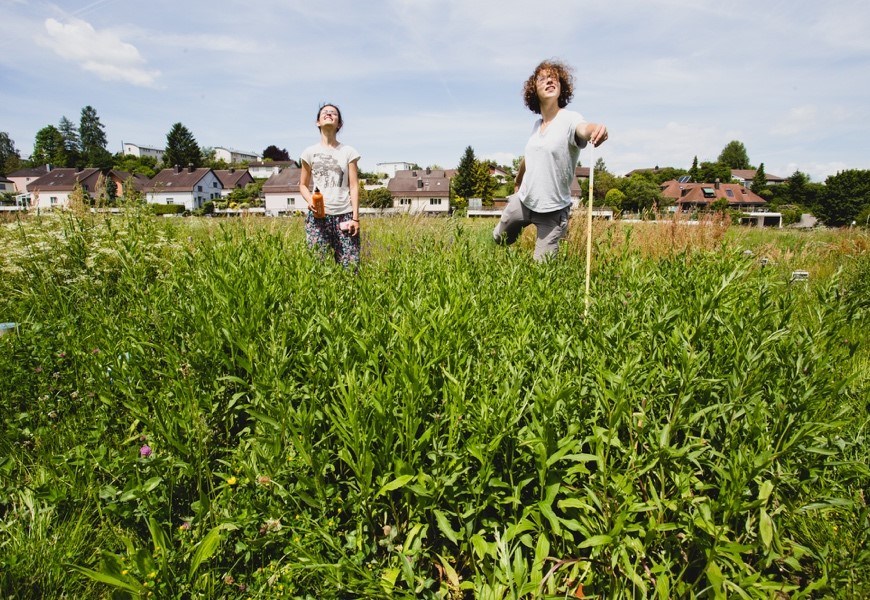
Seraina Cappelli et Noémie Pichon sur l’expérience de PaNDiv, mai 2017. Crédit : Hugo Vincent

Noémie Pichon: La décomposition démêlée

Read this blog in English here Noémie A. Pichon, alors étudiante en doctorat dans le groupe d’Eric Allan, parle de son récent article « La décomposition démêlée : un test des multiples mécanismes par lesquels l’enrichissement en azote modifie la décomposition de la litière », le contexte de cet article et les futures directions de ce champ de recherche. Quel est le contexte de votre étude ? Les expériences … Continue reading Noémie Pichon: La décomposition démêlée

Author Alihan Katlav, Hawkesbury Institute for the Environment Western Sydney University, NSW, Australia

Alihan Katlav: Egg size matters for sex allocation in thrips

Alihan Katlav is currently a Ph.D. candidate at the Hawkesbury Institute for the Environment, Western Sydney University. Alihan is studying the evolution of sex allocation in haplodiploid thrips. Under supervision of Assoc. Prof. Markus Riegler and Prof. James Cook, Alihan’s Ph.D. research focuses on the mechanisms and constraints of sex allocation adjustment in Kelly’s citrus thrips – an important Australian-native pest of citrus which is … Continue reading Alihan Katlav: Egg size matters for sex allocation in thrips

Daphne Cortese visiting an anemonefish site in Moorea, French Polynesia (Photo by Marc Besson).

Daphne Cortese: Bleached anemones alter anemonefish physiology & behaviour

Daphne Cortese, PhD student at PSL Université Paris, Moorea, French Polynesia, explains the detrimental effects of anemone bleaching on the fish that depend on them in her recently accepted Functional Ecology paper, “Physiological and behavioural effects of anemone bleaching on symbiont anemonefish in the wild.” What’s your paper about? Our paper is about the cascading effect of bleaching on the physiology and behaviour of clownfish … Continue reading Daphne Cortese: Bleached anemones alter anemonefish physiology & behaviour

Mark Wilber

Mark Wilber: Resistance and tolerance of salamanders to an emerging fungal pathogen

Dr. Mark Wilber, Assistant Professor in the Department of Forestry, Wildlife, and Fisheries at the University of Tennessee, discusses his recently accepted article, “Putative resistance and tolerance mechanisms have little impact on disease progression for an emerging salamander pathogen”, describes his favourite part about being ecologist, and how he got into the field. What is the background behind your paper? Hosts can defend themselves against … Continue reading Mark Wilber: Resistance and tolerance of salamanders to an emerging fungal pathogen

Bushfire grounds near Bermagui in south-eastern Australia, viewed through a destroyed termite mound. Photos: F. Scarff, J. Lewin.

Fiona Scarff: Effect of plant hydraulic traits on flammability

In this new post Fiona Scarff, a former postdoc at Macquarie University, presents her work on the effect of plant hydraulic traits on flammability, highlights the importance of lab meeting for fostering research and discusses the importance of failure in science. Our paper is about how readily live plants can burn in wildfires. Plants dry out in the hot, dry, windy weather that accompanies the … Continue reading Fiona Scarff: Effect of plant hydraulic traits on flammability

Jitka Klimesova sorting biomass in field

Jitka Klimesova: why we should all care more about belowground plant organs

Jitka Klimesova serves as Senior Scientist at the Institute of Botany of the Czech Academy of Sciences in Třeboň and as Professor at Charles University in Prague. Her main interest is in functional morphology of clonal and regenerative organs of herbs. She is the main author of the only existing database of clonal and bud bank traits for an entire flora (CLO-PLA; Czech Republic), organizes … Continue reading Jitka Klimesova: why we should all care more about belowground plant organs