The alpine landscape at 2500m.

Ecologist’s Diary with Rob Mills: Making the most of summer snow

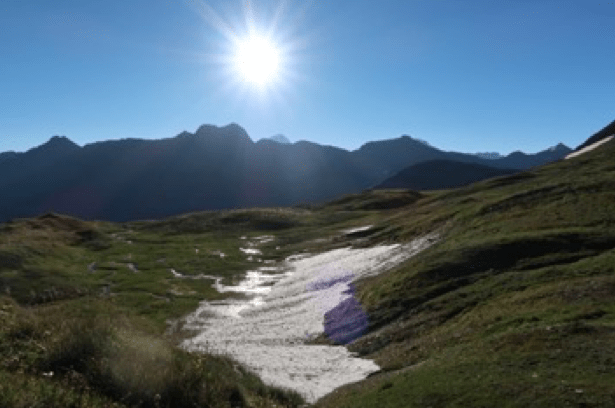
It’s late July, the alpine meadows of the Swiss Alps are in full bloom, and the heat of the summer sun drives a deep sweet smell from the litter of the spruce forest floor as we start our walk up. My friend and colleague Mark leads the way as we move up the tour de Mont Blanc from la Fouly in the Valais, heading for our research site at ~2500m. There, the sun has given rise to abundant flowers, rich meadows, the buzzing of insect and bird life, but still works hard at melting the last of last of the snow. As we reach the site, we are greeted with the familiar, but always astounding, mixture of snowbeds, ridges, meadows, flush wetland, pools and screes of this dynamic and fantastic environment (see picture). Continue reading “Ecologist’s Diary with Rob Mills: Making the most of summer snow”

Tuesday taster: 03/10/2017

At my dinner table, we often talk about the environmental issues around eating beef. The information is often ambiguous and the whole issue seems to be a minefield, but cattle farming is evidently contributing to emissions, and eating grass-fed beef is not going to change that, as stated in a blog on the Food Climate Research Network. If you are interested in regime changes in … Continue reading Tuesday taster: 03/10/2017

Insights: Anamarija Žagar

In Insights we discover the story behind a recent publication in Functional Ecology. What inspired the authors to do the research and how did the project develop before the publication? and what wider impact might their work have?

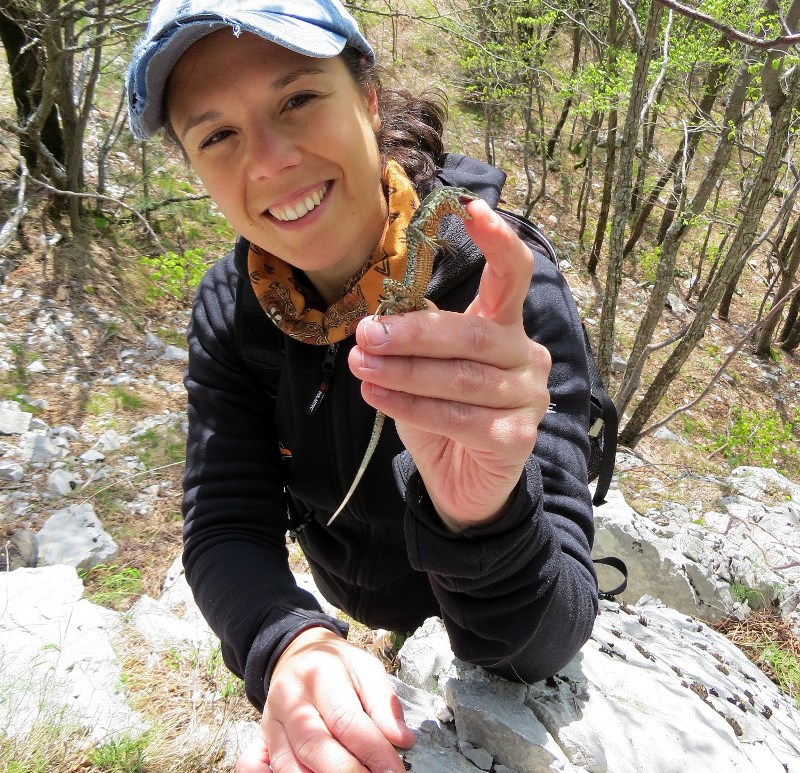
This week, Anamarija Žagar talks to Bjorn about her paper on the performance of two co-existing lizards in Slovenia and the role of functional and morphological traits. Anamarija currently works at the National institute of Biology in Slovenia, and is also affiliated as a research associate to the CIBIO Research Centre in Biodiversity and Genetic Resources at the University of Porto in Portugal.

Continue reading “Insights: Anamarija Žagar”

Tuesday taster: 19/09/2017

With the new academic year starting, an interesting study shows that small group seminars are most effective in preventing students to drop out of university. A runner myself, I liked this BBC coverage on running in the wilds of the Scottish Highlands, where (perhaps this week) the oldest snow patch may disappear. Following up on my blog for Peer Review Week 2017, researchers from Imperial … Continue reading Tuesday taster: 19/09/2017

Peer Review Week: Thoughts from a researcher

It is peer review week, a week in which we celebrate the review process and acknowledge the work of reviewers, and celebrate the review process that is the beating heart of science communication. There are many arguments why reviewing is necessary to do, but can it also benefit you as a reviewer? And if you review, what are your responsibilities? Below I give my vision on these aspects.

Bjorn

Continue reading “Peer Review Week: Thoughts from a researcher”

Peer review and publishing workshops from the BES

For Peer Review week, the BES Publications Team are discussing about various aspects of peer review, and how we make the process more transparent. Yesterday, methods.blog launched their new Peer Reviewer Mentoring Scheme, but the Publications Team have a number of other ways of opening up peer review and helping people get the most out of their published paper. Continue reading “Peer review and publishing workshops from the BES”

Insights: Florian Altermatt

In Insights we discover the story behind and beyond a recent publication in Functional Ecology. What inspired the authors to do the research, how did the project develop and what implications might their results have on the scientific community and on society?

This week, we talk to Florian Altermatt from Eawag (the Swiss Federal Institute of Aquatic Science and Technology) in Dübendorf, Switzerland, and the Department of Evolutionary Biology and Environmental Studies at the University of Zurich, Switzerland, and corresponding author on Leaf litter diversity and structure of microbial decomposer communities modulate litter decomposition in aquatic systems (plain language summary here.)

Continue reading “Insights: Florian Altermatt”