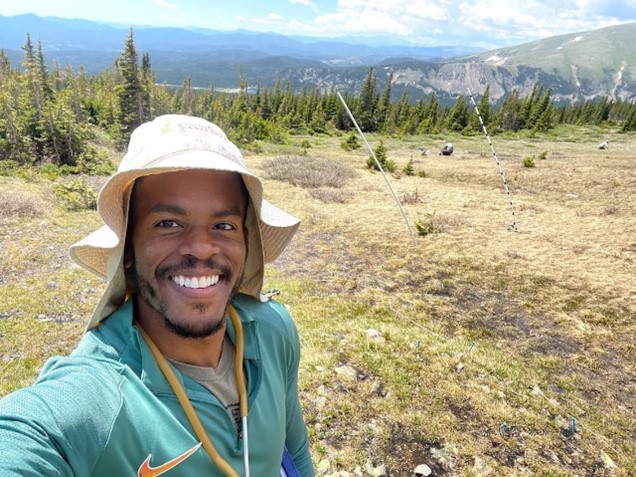
Laura Castaneda-Gomez: Roots may not be key drivers of soil responses to elevated CO2 in a phosphorus-limited forest

In this new post, Laura Castañeda-Gómez, a new ecological researcher working at The University of Toronto, Canada, shares their paper: The influence of roots on mycorrhizal fungi, saprotrophic microbes and carbon dynamics in a low‐phosphorus Eucalyptus forest under elevated CO2—recently shortlisted for the Haldane Prize for Early Career Researchers. Last February, the Earth’s atmosphere reached a new record high CO2 concentration of almost 422 ppm. … Continue reading Laura Castaneda-Gomez: Roots may not be key drivers of soil responses to elevated CO2 in a phosphorus-limited forest

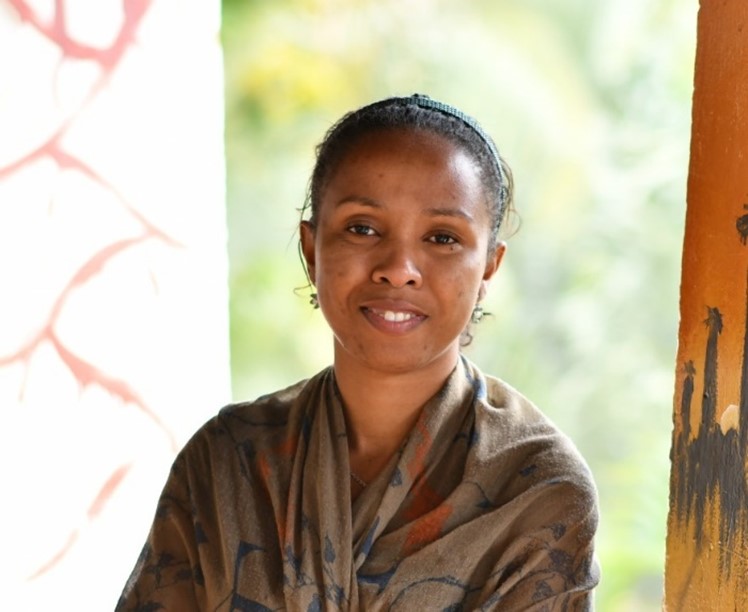
Na Eve Davidian: Hadithi ya mapenzi, msongo na kinyesi cha fisi Ngorongoro

Soma karatasi hapa An English version of this blogpost is available here. Kuna pengo la kiuelewa kuhusu uhusiano kati ya cheo cha mwanaume kijamii na mafanikio yake katika uzazi. Hii ni kwa mujibu wa utafiti nilioufanya na mwenzangu, miongoni mwa wanyama. Utafiti huu unaonyesha kuwa mfumo wa kijamii na kujamiiana wa fisi wenye madoadoa unaweza kutoa mwanga katika kuelewa mienendo ya usawa wa uzazi miongoni … Continue reading Na Eve Davidian: Hadithi ya mapenzi, msongo na kinyesi cha fisi Ngorongoro

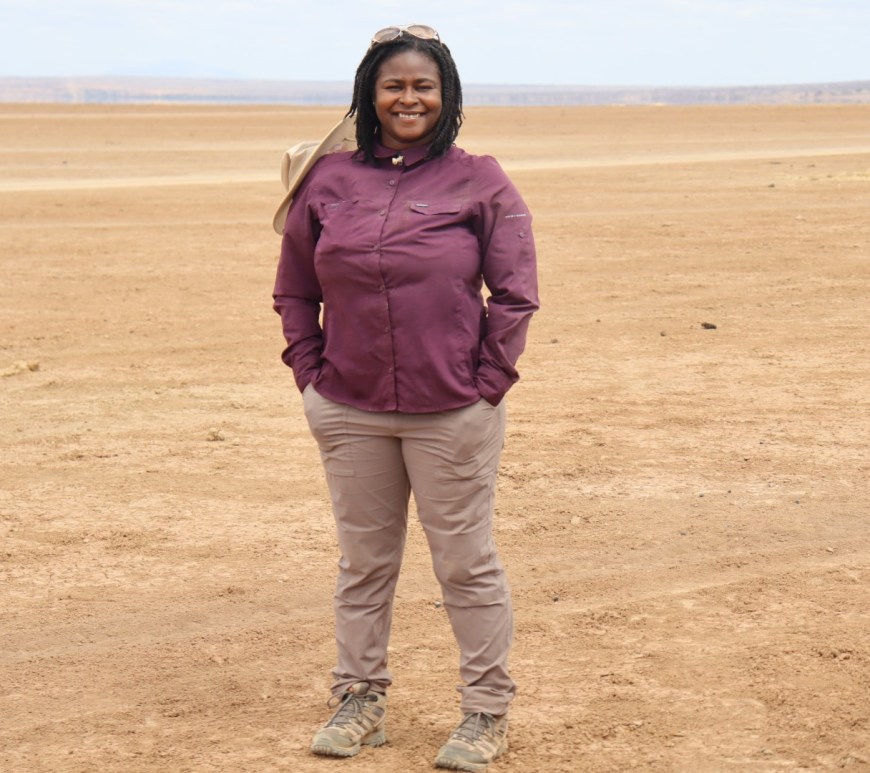
Eve Davidian: Why do the top dogs get the prettiest ladies? A story of sex, stress and hyena poops

In this new post, Eve Davidian and colleagues explore The interplay between social rank, physiological constraints and investment in courtship in male spotted hyenas. Their study shows that the social and mating system of spotted hyenas may shed some light into the roots of reproductive inequalities in mammalian societies. Toleo la Kiswahili linapatikana hapa. In most animal societies, resources are not shared equally among members … Continue reading Eve Davidian: Why do the top dogs get the prettiest ladies? A story of sex, stress and hyena poops

A varangyméreg az állatvilág svájci bicskája

Üveges Bálint This blog is available in English here. A kutatás A ragadozás (predáció) mindennapos jelenség a természetben, ezért a préda állatoknak folyamatosan fel kell mérniük környezetüket, és reagálniuk kell a ragadozók jelenlétére és táplálékszerzési kísérleteikre. Ezt tehetik például úgy, hogy felkészülnek a támadásra fenotípusuk megváltoztatásával, vagy, hogy nagyobb csapatokba tömörülnek. Az előbbi azt jelenti, hogy a potenciális prédaállat érzékeli a ragadozók (vagy bármely más … Continue reading A varangyméreg az állatvilág svájci bicskája

Jian-Yong Wang: What role do clonal plants play in our ecosystems?

In this new post, Jian-Yong Wang, a new ecological researcher working at Northeast Normal University, China, shares his paper: A meta-analysis of effects of physiological integration in clonal plants under homogeneous vs. heterogeneous environments—recently shortlisted for the Haldane Prize for Early Career Researchers. About the paper Clonal plants, i.e. those able to reproduce vegetatively, play important roles in many ecosystems. Connected individuals (ramets) can translocate … Continue reading Jian-Yong Wang: What role do clonal plants play in our ecosystems?

Audrey Barker Plotkin: Los árboles pueden morir de hambre debido a la defoliación por insectos

En esta publicación, Audrey Barker Plotkin de la Universidad de Harvard nos habla sobre su última investigación en la que estudia cómo los insectos invasores pueden matar de hambre a los árboles y la importancia de proteger los bosques templados. An English version of this blog is available here. Soy ecóloga forestal con base en Harvard Forest en el noreste de los Estados Unidos. Debido … Continue reading Audrey Barker Plotkin: Los árboles pueden morir de hambre debido a la defoliación por insectos

Martha Muñoz: Vulnerabilidad de los anolis tropicales al calentamiento ambiental

En esta publicación de blog, la Dra. Martha Muñoz, profesora asistente de Ecología y Biología Evolutiva en la Universidad de Yale, EE. UU., analiza su artículo reciente, “The multidimensional (and contrasting) effects of environmental warming on a group of montane tropical lizards.” Una versión en inglés de esta publicación de blog está disponible para leer aquí. Sobre el papel Nuestro estudio se centró en la … Continue reading Martha Muñoz: Vulnerabilidad de los anolis tropicales al calentamiento ambiental

Martha Muñoz: Vulnerability of tropical anoles to environmental warming

In this blog post, Dr. Martha Muñoz, Assistant Professor of Ecology and Evolutionary Biology at Yale University, USA, discusses her recent paper, “The multidimensional (and contrasting) effects of environmental warming on a group of montane tropical lizards.” Este blog también está disponible en español aquí. About the paper Our study centred around exploring vulnerability to environmental warming in a group of montane tropical anoles (lizards) … Continue reading Martha Muñoz: Vulnerability of tropical anoles to environmental warming

Sabine Nooten: Ant body size mediates functional performance and species interactions in carrion decomposer communities

In this blog post, Sabine Nooten, postdoctoral researcher at the University of Würzburg, Germany, presents her latest work ‘Ant body size mediates functional performance and species interactions in carrion decomposer communities‘. She highlights the importance of linking species traits to function in the community and ecological process, and discusses the power of field-based experiments in functional ecology. About the paper Ecological processes are driven by … Continue reading Sabine Nooten: Ant body size mediates functional performance and species interactions in carrion decomposer communities

Javiera Benavente: Scaling of metabolism and excretion along a temperature gradient

In this blog post, Dr. Javiera Benavente, who recently graduated with their PhD from the University of Auckland, discusses with their recently accepted paper, “Plasticity and evolution shape the scaling of metabolism and excretion along a geothermal temperature gradient.” About the paper In this paper, we investigated how phenotypic plasticity and contemporary evolutionary adaptation can shape how the size- and temperature-dependence of metabolic and excretion … Continue reading Javiera Benavente: Scaling of metabolism and excretion along a temperature gradient