2023 Haldane Prize Shortlist: Functional Ecology’s Award for Early Career Researchers

The Haldane Prize is awarded by the British Ecological Society each year for the best paper in Functional Ecology written by an early career author. With entries spanning the 37th volume of the journal, our Senior Editors carefully shortlisted the following 12 papers: Lina Aoyama Functional diversity buffers biomass production across variable rainfall conditions through different processes above- versus below-ground Lina found that although biomass was largely … Continue reading 2023 Haldane Prize Shortlist: Functional Ecology’s Award for Early Career Researchers

Functional Ecology: International Women’s Day 2024 

To celebrate International Women’s Day 2024, we are excited to share a collection of blog posts showcasing the work of some of our new Associate Editors. In each post, our editors discuss their experiences in ecology, as well as what this year’s theme, ‘Inspire Inclusion‘, means to them.  Dr Iveren Abiem  What work do you do?  I am a lecturer at the University of Jos, … Continue reading Functional Ecology: International Women’s Day 2024 

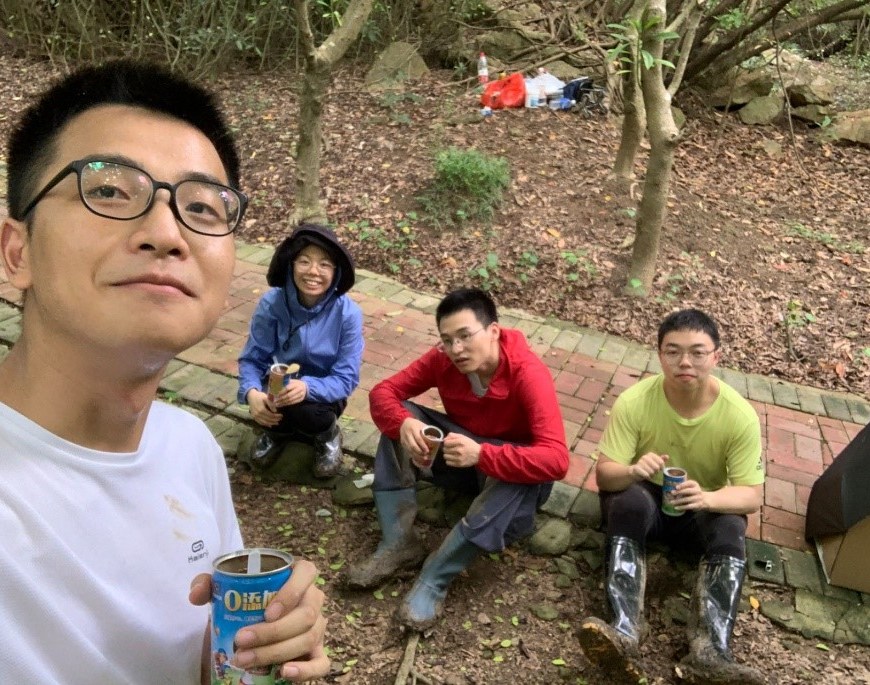
Guoming Qin: Unlocking the Secrets of Soil Carbon Storage in Mangrove Ecosystems 

In this post, Guoming Qin—a postdoc at the South China Botanical Garden, Chinese Academy of Sciences—share his recently published paper: “Contributions of Plant- and Microbial-Derived Residues to Mangrove Soil Carbon Stocks: Implications for Blue Carbon Sequestration”. He underscores the importance of this research in advancing our understanding of carbon accumulation in mangrove ecosystems, shares his initial experiences with mangrove sampling, and expresses gratitude to his … Continue reading Guoming Qin: Unlocking the Secrets of Soil Carbon Storage in Mangrove Ecosystems 

Ximena Cibils-Stewart: Silicon and endophyte defences in tall fescue reduce feeding and weaken immunity of an insect herbivore.

Ximena Cibils-Stewart completed her doctoral dissertation at the Hawkesbury Institute for the Environment, Western Sydney University, and works as an adjunct scientist at the Instituto Nacional de Investigación Agropecuaria in Uruguay. During her doctoral research, her primary focus revolved around assessing the impact of silicon supplementation coupled with beneficial symbionts, such as endophytes, on bolstering grass resistance against insect pests. In this blog post, she … Continue reading Ximena Cibils-Stewart: Silicon and endophyte defences in tall fescue reduce feeding and weaken immunity of an insect herbivore.

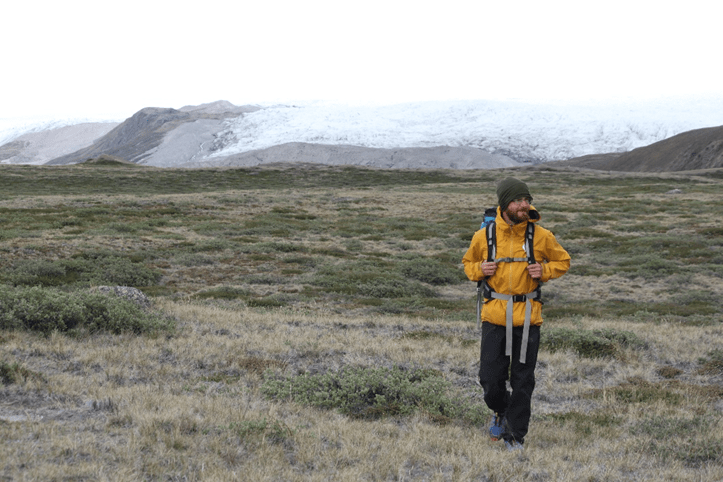
Myrsky Eero: The warming arctic, herbivore outbreaks and the importance of long-term field studies

In our latest post, Myrsky Eero, a PhD student at the University of Helsinki, presents his work ‘Higher vascular plant abundance associated with decreased ecosystem respiration after 20 years of warming in the forest-tundra -ecotone’. He discusses the importance of long term research, presents the complex trade-offs happening in ecology and shares his passion for cold places. About the Paper The Arctic is warming as … Continue reading Myrsky Eero: The warming arctic, herbivore outbreaks and the importance of long-term field studies

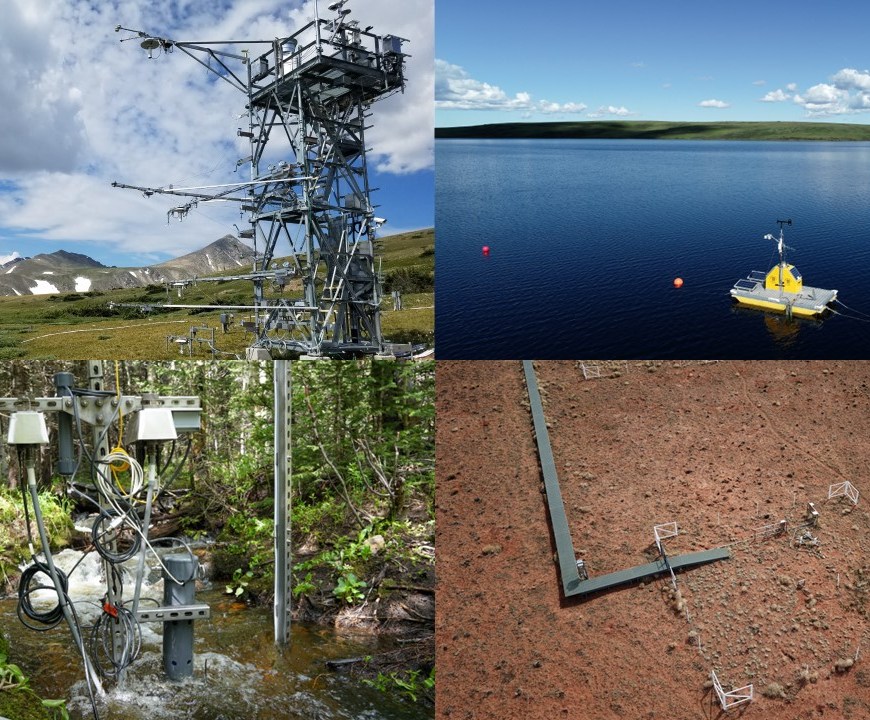
Call for Proposals: Cross Journal Special Feature on “Large Scale, Open Data, and a Big Tent: Leveraging collaboration, transparency, and inclusion to advance macrosystems biology”

Functional Ecology, Journal of Animal Ecology, Journal of Ecology, Methods in Ecology and Evolution and People and Nature are seeking proposals for a cross-journal Special Feature on “Large Scale, Open Data, and a Big Tent: Leveraging collaboration, transparency, and inclusion to advance macrosystems biology”  Edited by: Daniel C Allen, Alejandro Cueva, Xiaonan Tai, Matt Heard, Kai Zhu and Brenden McNeil.  The field of macrosystems biology … Continue reading Call for Proposals: Cross Journal Special Feature on “Large Scale, Open Data, and a Big Tent: Leveraging collaboration, transparency, and inclusion to advance macrosystems biology”

Clara Castellano—Understanding the Impact of Rural Abandonment on Ecological Processes in Mediterranean Ecosystems

In this blog post, Clara Castellano—from the Department of Agrarian and Environmental Science at the University of Zaragoza, Huesca, Spain—discusses working on the ARBIO Project in the Middle Ebro River Valley, the joys of fieldwork, and what the future holds. Profile I’m interested in ecology in general, and specifically in nature conservation and ecological restoration. Throughout my scientific career, I have studied ecosystem services (i.e., … Continue reading Clara Castellano—Understanding the Impact of Rural Abandonment on Ecological Processes in Mediterranean Ecosystems

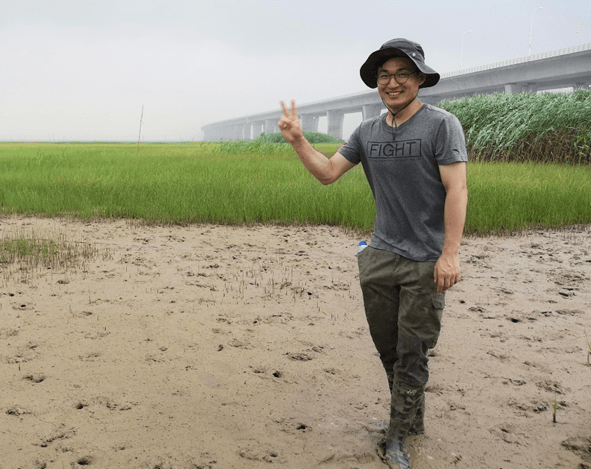
Explore the root advantages of invasive plants under nutrient enrichment

In this new post, Hao Liu—a postdoc from Fudan University, China—presents his work ‘Root plasticity benefits a global invasive species in eutrophic coastal wetlands’. Here he discusses the importance in plasticity for invasive species success, highlights the cohesion required to work in the mud, and shares his journey in ecology. About the paperInvasive species usually benefit more than native species from increases in nutrient availability. … Continue reading Explore the root advantages of invasive plants under nutrient enrichment

Jakub Štenc: Matching plants and pollinators in Czech grasslands: Czech Version

O článku Příběh tohoto článku se začal psát někdy před dvanácti lety, když Zdeněk viděl plakát Českého svazu včelařského, že 95 % rostlin opyluje včela medonosná a pouze zbylých 5 % opylují divocí opylovači. Toto tvrzení odporovalo jeho zkušenostem z terénu, ale uvědomoval si, že k vyvrácení tvrzení včelařské lobby bude potřeba komplexního datového souboru a ne jen terénní zkušenosti. Začal dohledávat články s publikovanými … Continue reading Jakub Štenc: Matching plants and pollinators in Czech grasslands: Czech Version

Jakub Štenc: Matching plants and pollinators in Czech grasslands

In this post, Zdeněk Janovský and Jakub “Kuba” Štenc —from Charles University, Prague, Czech Republic—share their work ‘Pollinator community and generalisation of pollinator spectra changes with plant niche width and local dominance’. They discuss how they gathered hundreds of thousands of plant-pollinator visits, showed beekeepers the magic of the scientific method, and share their passion in politics and reggaeton.  Read the Czech version of this … Continue reading Jakub Štenc: Matching plants and pollinators in Czech grasslands