In this blog post, we hear from Stella Wimmer, winner of Functional Ecology’s prize for best presentation by an Early Career Researcher at the BES’ Climate Change and Ecosystem Dynamics Special Interest Group Annual Meeting 2026! Stella discusses the conditions affecting arthropod communities during deadwood decomposition, completing the trip from Germany to the UK by train, and having fun at your first conference!
A German version of this blog post is a available here.
When we think about how climate change affects forests and the communities inside them, we usually think about climate on larger scales: a warming environment, changing precipitation regimes and more frequent extreme weather events. But a beetle larva developing inside a decaying log might actually be influenced by more than just macroclimatic conditions. So, what do the conditions that affect arthropod communities during deadwood decomposition actually look like? What are the important drivers across different spatial scales? And finally: which roles do land use and forest management play in this equation? These are the questions my PhD at Ulm University and the Biodiversity Exploratories focuses on, as well as the presentation I recently gave at the annual meeting of the Climate Change and Ecosystem Dynamics Special Interest Group of the British Ecological Society in Plymouth.
In September, I set off for the adventure of attending this meeting. I had set a challenge for myself: to do the entire journey from southwestern Germany to Plymouth and back by train. It was my first time attending the meeting and I figured it would be a very nice opportunity to not only present the topic of my PhD, but also learn more about how questions around climate change are treated by different sub-disciplines of ecology. What made the presentation exciting is that the BEClimWood-Bugs project is still in its very early stages. First established in late 2025 to early 2026, the first field sampling season will just be finishing as this blog published, so at that time I did not have any real key findings to present. What I did have: the results of over 15 years of a long-term monitoring of deadwood (BElongDead), which has been taking place in 3 different German regions, some predictions for the BEClimWood-Bugs experiment and an interesting topic to talk about.
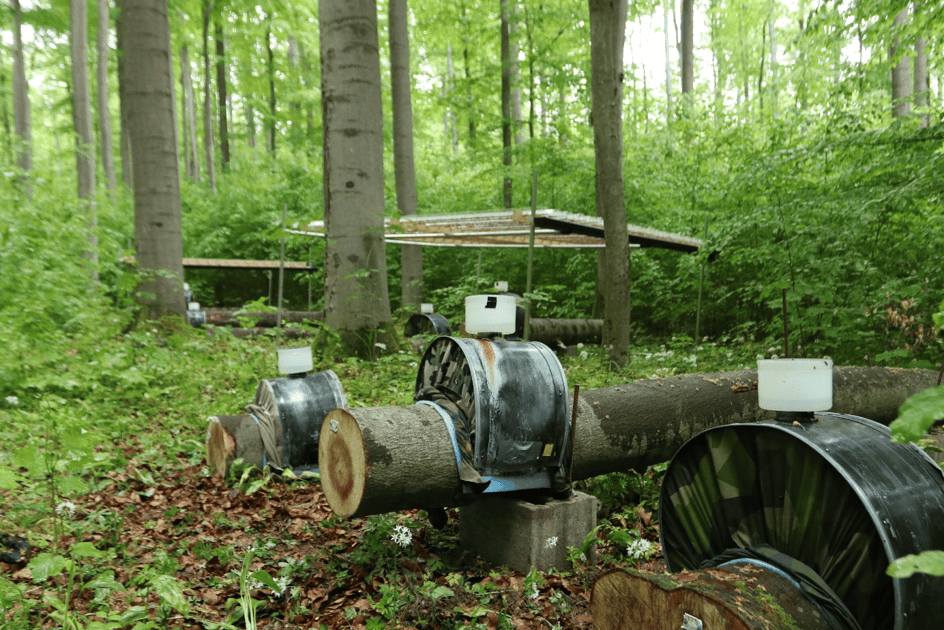
The aim of BEClimWood-Bugs is to better understand how forest land-use intensity and climate influence arthropod communities in deadwood across different spatial scales. To address this, the project uses a new multi-site experiment, in which deadwood logs are experimentally manipulated along climatic and land-use gradients, both through rainout shelters – simulating a summer drought – and through different soil-contact regimes which further alters deadwood microclimate. A total of 108 logs, half of them pine and the other half beech, were placed on selected VIP plots in each region of the Biodiversity Exploratories and assigned to different treatments. Half of the logs were placed under rainout shelters that exclude 60 % of precipitation. One third of the logs were buried 10 cm into the soil, one third were placed directly on the ground, and one third were elevated on stones in order to simulate three different soil-contact regimes. During the summer season, arthropods are collected monthly using stem emergence traps. Beetles are identified by taxonomic experts, while DNA metabarcoding is used for other arthropod groups. This approach provides a comprehensive picture of arthropod biodiversity patterns and their drivers and covers a broad range of taxa that have so far been little studied.
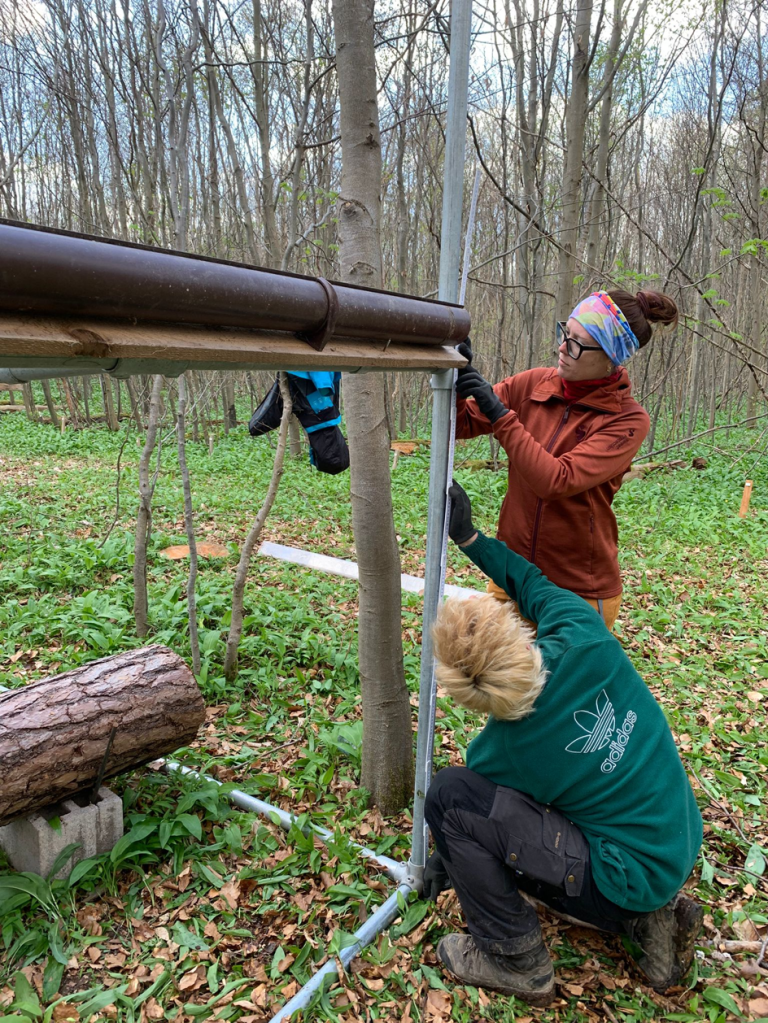
My journey into the world of arthropods started early on when I was just 16 years old. Back then, I started an internship at the University of Natural Resources and Life Sciences in Vienna, which gave me the chance to learn some fieldwork methods and develop my interest in arthropods, especially beetles. All throughout the course of my studies, these organisms played a key role, be it in an Ethiopian Church Forest or in a riverbed in Salzburg. But there was another overarching topic that was central from the start: climate change and anthropogenic influences to ecosystems. While I was studying my MSc., it became clear to me that I want to explore these two topics further, so I joined the newly founded Ecosystem Resilience group at Ulm University and the BEClimWood-Bugs project. What I particularly enjoy about my current work is that it allows for a good combination of field work, lab work, desk work and other duties. Furthermore, the German Biodiversity Exploratories, in which my project is embedded, gives early career researchers an amazing platform from the start.
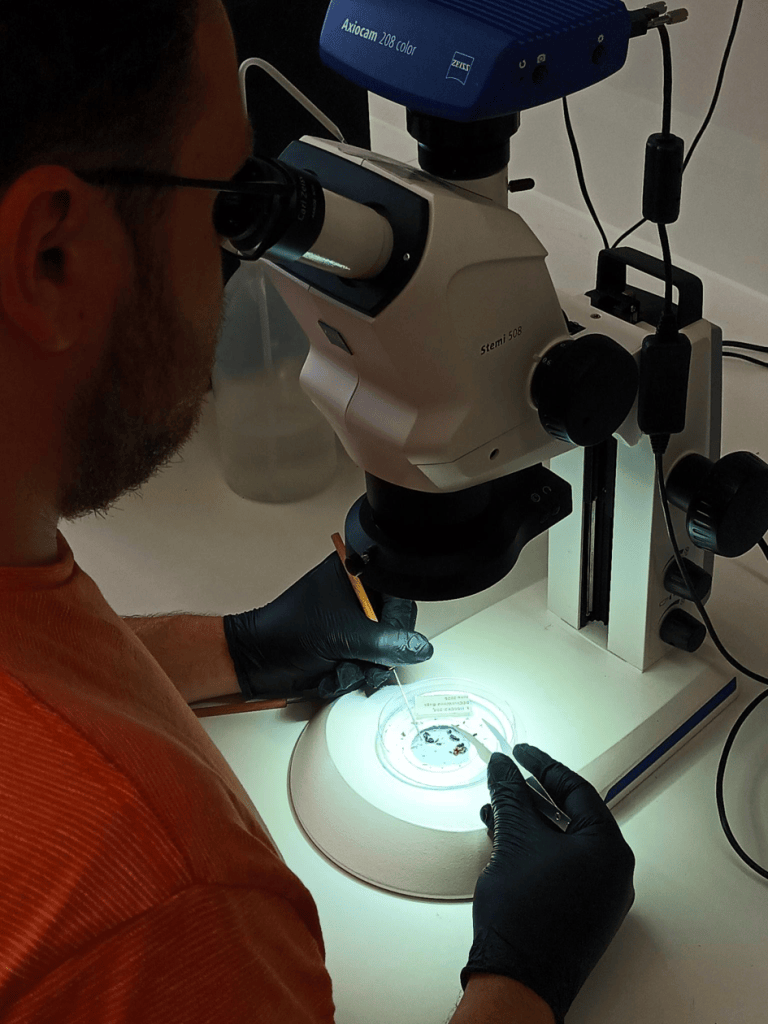
My main advice for someone attending their first conference or presenting for the first time is: Don’t forget to have fun! Everybody starts somewhere and it is so much more important to deliver your main message and your enthusiasm for the topic than to get the exact order of words just right. Presentations are an opportunity to speak to other people from different backgrounds and at different stages of their careers. Furthermore, they make you critically evaluate your approaches, because questions will inevitably be asked.
This conference has again showed me the value of interdisciplinary work and of learning from scientists in other disciplines and career stages. My experience has shown that sometimes, ideas can only develop further when there is constant room for exchange of thought. This room for ideas that conferences provide might be one of the aspects I love most about being part of the scientific community.