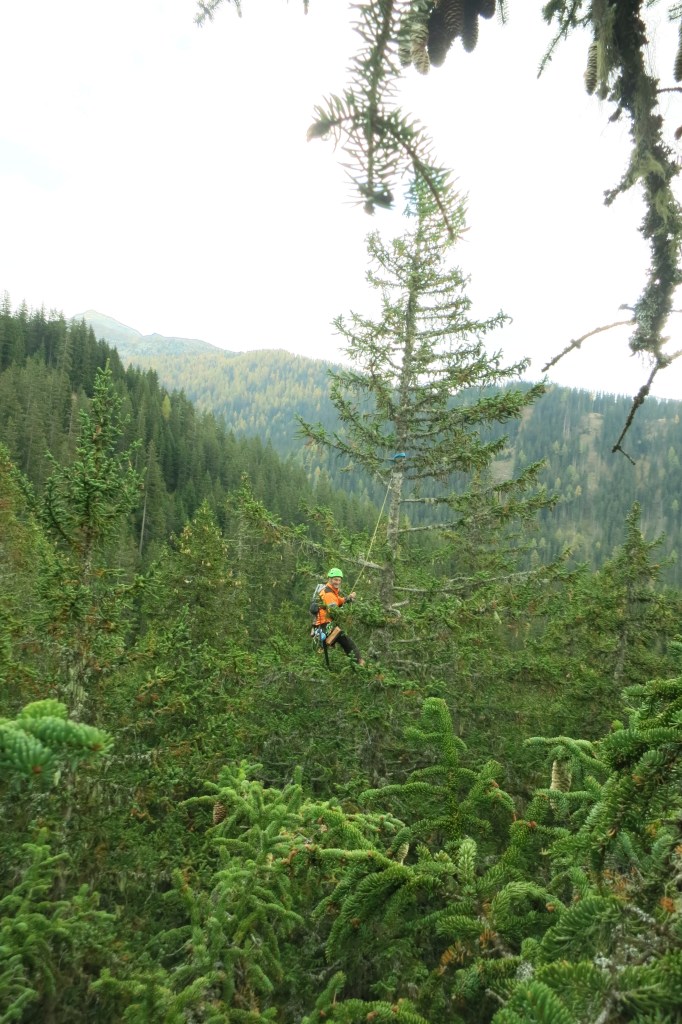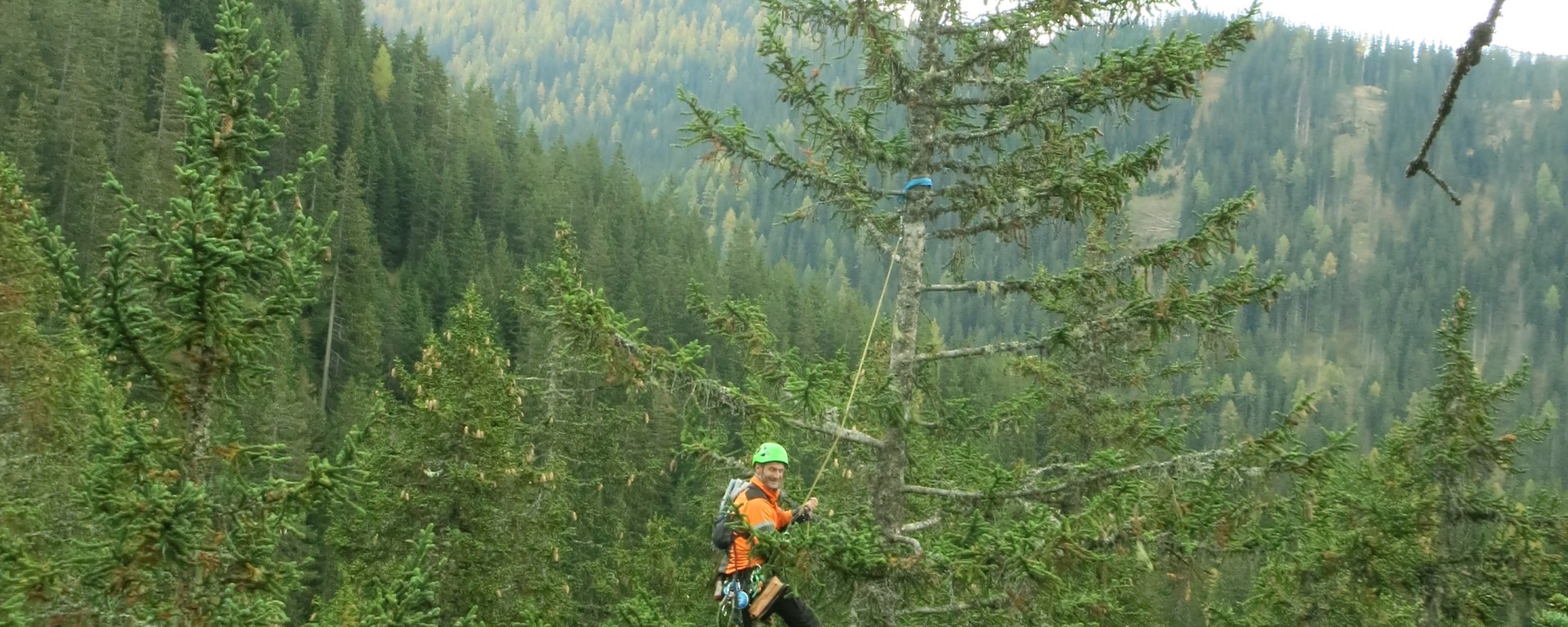
In this blog post, author Sofia Etzold – a researcher at the Swiss Federal Research Institute for Forest, Snow and Landscape – discusses the research article Decreasing water availability reduces productivity in Swiss forests along an altitudinal gradient, which was recently published in Functional Ecology. Sofia explores whether emerging trends in forest productivity can already be linked to climatic changes, and shares the challenges of working with three decades of data!
About the paper
In this study, we analyzed 30 years of monitoring data on tree and forest growth across Switzerland to determine whether emerging trends in forest productivity can already be linked to climatic changes. Switzerland’s highly heterogeneous topography creates strong environmental gradients over short distances, making it a useful analogue for broader global patterns. For instance, high‑elevation forests in Switzerland share ecological characteristics with high‑latitude forests.
The monitored sites spanned a wide altitudinal range—from 500 to 1900 m a.s.l.—and therefore a substantial climatic gradient. We expected productivity trends to differ between lowland forests and those at higher elevations. Surprisingly, however, we observed a consistent decline in productivity across all sites, including those at higher altitudes.
We examined whether this decline could be explained by forest or tree ageing. Although age and stand density do influence productivity, these stand properties could not account for the observed downward trend on their own. Notably, the decline was also evident in young forests and in young individual trees.
This prompted us to investigate additional drivers. We found that decreasing water availability—measured as declining soil water potential—was a key factor explaining the reduced growth rates. Given the ecological parallels between elevational and latitudinal gradients, the patterns identified in Switzerland may also apply to larger regions of Europe.
The fact that productivity is declining across such a wide range of environmental conditions is cause for concern.
About the research
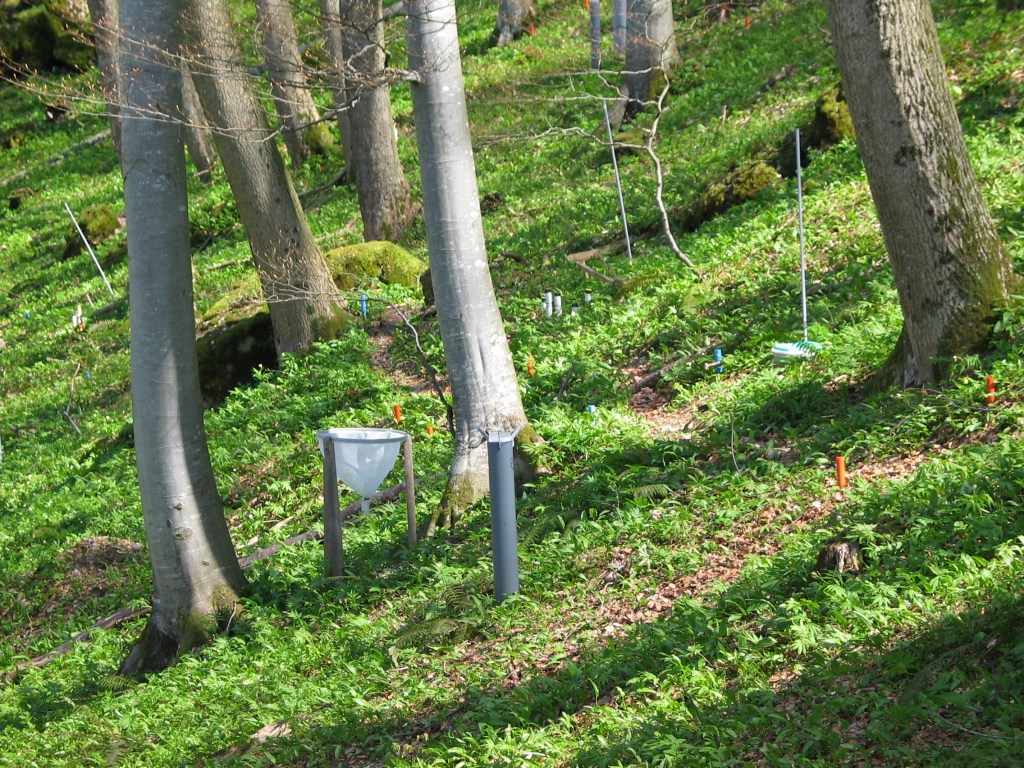
Data from the 18 forest sites have been collected since 1995 within the framework of the UNECE Co‑operative Programme on the Assessment and Monitoring of Air Pollution Effects on Forests (Air Convention). This programme (ICP Forests) uses harmonized methods to regularly assess a wide range of stand variables, enabling the investigation of cause–effect relationships between forest ecosystem condition and external influences such as climate, nutrient inputs, and air pollutants.
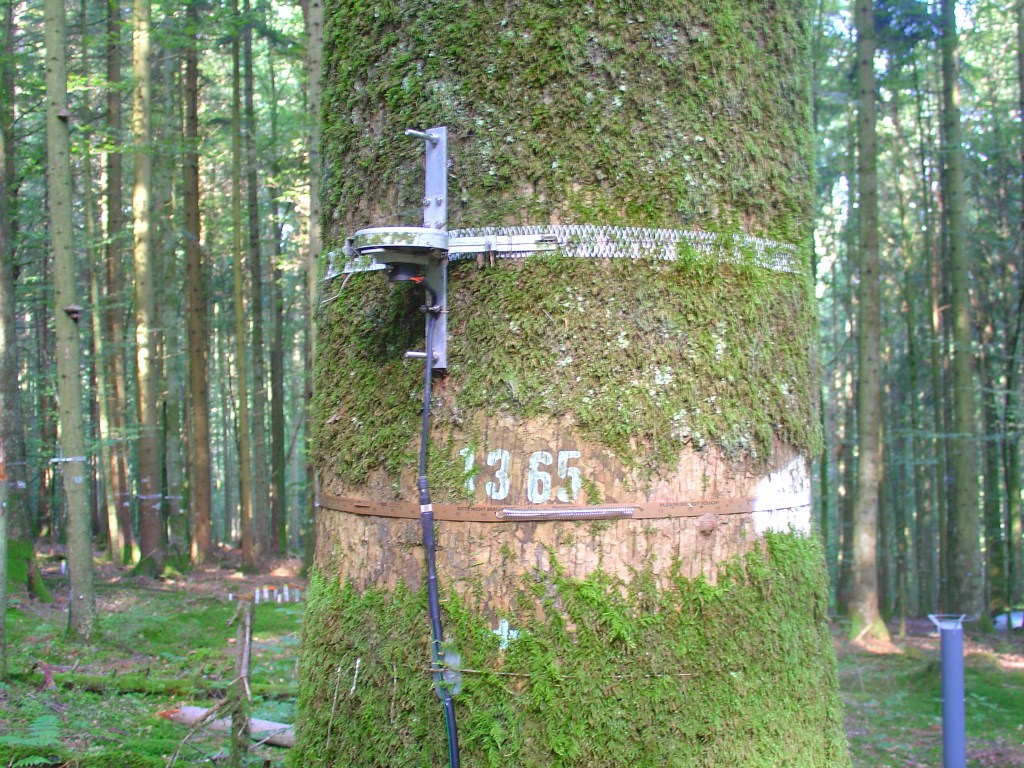
Tree diameter (DBH) and height inventories are conducted every five years for all trees larger than 5 or 12 cm growing within the 2‑ha plots. Annual dendrometer measurements are taken on selected individuals of the main tree species. Additional monitoring includes biweekly litterfall collection, biennial foliar nutrient analyses, and periodic assessments of soil properties and leaf area index (LAI). Meteorological data, soil water potential, and nitrogen deposition were obtained from models that have been validated with on‑site measurements.
Collecting such a broad set of variables over nearly three decades requires substantial personnel effort and a robust data infrastructure. In a single year, the monitoring programme generates approximately 25 million data points. Given the relatively long lifespan of trees, we were surprised to observe such clear trends already within a 30‑year period. This underscores the value of long‑term monitoring datasets—and their importance increases as the time series continues to grow.
Future research should focus on developing strategies to make forests more climate‑resilient while ensuring they can continue to provide essential ecosystem services. It would also be highly informative to extend similar analyses to forest growth data across a broader continental scale.
About the author
Already during my biology studies in Germany and Switzerland, I found myself most drawn to ecological topics. After focusing on vegetation ecology in my master’s thesis, I moved into forest ecology and ecophysiology for my PhD. Today, I work as a scientific researcher at the Swiss Federal Research Institute for Forest, Snow and Landscape. I am involved in several long‑term projects on forest growth, carbon sequestration, and climate change—ranging from small‑scale tree physiological processes to large‑scale forest ecosystem functioning. The central question guiding much of this work is how climate change is affecting our forests and how we can adapt them to future conditions.
Outside of research, I spend most of my time with my family. I love being outdoors—hiking, climbing, or mountaineering—and I also enjoy quieter moments with a good book, yoga, or working in the garden.
One of the biggest challenges of staying in research is the lack of long‑term career perspectives for scientific staff. Many positions are tied to short‑term project funding or limited university contracts. I have been fortunate in this respect, but I know many researchers who have left academia because of these uncertainties. The advice I would give my younger self would be: Choose the things that light you up, explore what fascinates you, and have confidence in the path you’re creating.