Ricardo Sánchez Martín | Functional generalism in plant-hummingbird interactions: causes and consequences from a plant perspective

In this week’s blog post, we’re learning all about the causes and consequences of functional generalism! Author Ricardo Sánchez Martín explains the fascinating fit between hummingbirds and the plants they pollinate: “Functional generalism in plant-hummingbird interactions: causes and consequences from a plant perspective”. 1. About the Paper Scientists have long been fascinated by the apparent tight fit between hummingbirds and the flowers they pollinate: long-billed … Continue reading Ricardo Sánchez Martín | Functional generalism in plant-hummingbird interactions: causes and consequences from a plant perspective

Tim Forrester: Weight loss in female birds – an adaptive strategy

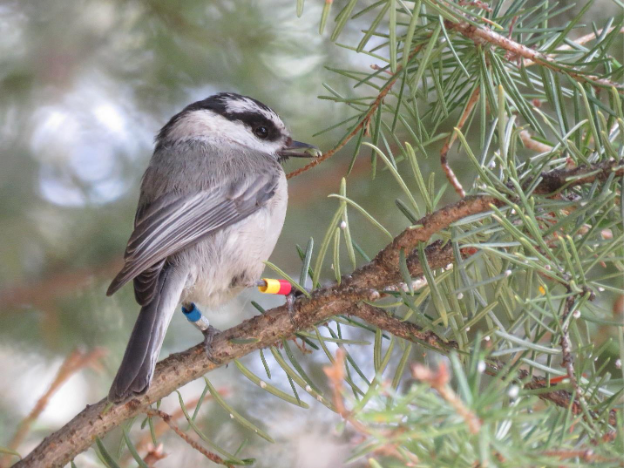
In this blog post, Tim Forrester helps answer a weighty question: Does weight loss help or hurt nesting birds? Based on his recent paper with Tom Martin, “Observational and experimental evidence that rapid mass loss is consistent with the flight efficiency hypothesis and not caused by reproductive effort in three passerine bird species”, Tim shares the fascinating physiological adaptations undergone by songbirds in anticipation of … Continue reading Tim Forrester: Weight loss in female birds – an adaptive strategy

Stephanie Chia: Mechanistic understanding of how temperature and its variability shape body size composition in moth assemblages

2024 HALDANE PRIZE SHORTLIST: Stephanie Chia discusses her paper “Mechanistic understanding of how temperature and its variability shape body size composition in moth assemblages“, which has been shortlisted for Functional Ecology’s 2024 Haldane Prize for Early Career Researchers: About the paper Have you ever watched a diverse array of moths gather around a glowing light in the mountains at night? And if you head up … Continue reading Stephanie Chia: Mechanistic understanding of how temperature and its variability shape body size composition in moth assemblages

Alice Risely: Why time of day matters when studying host-microbe interactions

In our new post, Dr. Alice Risely—who will start a Research Fellowship at Salford University, UK in March—discusses her recently published paper, “Circadian rhythms of hosts and their gut microbiomes: implications for animal physiology and ecology.” Alice elucidates on the link between gut microbiomes and circadian rhythms, ideas for future research, and reminisces on her childhood fascination with animals. About the paper So many processes … Continue reading Alice Risely: Why time of day matters when studying host-microbe interactions