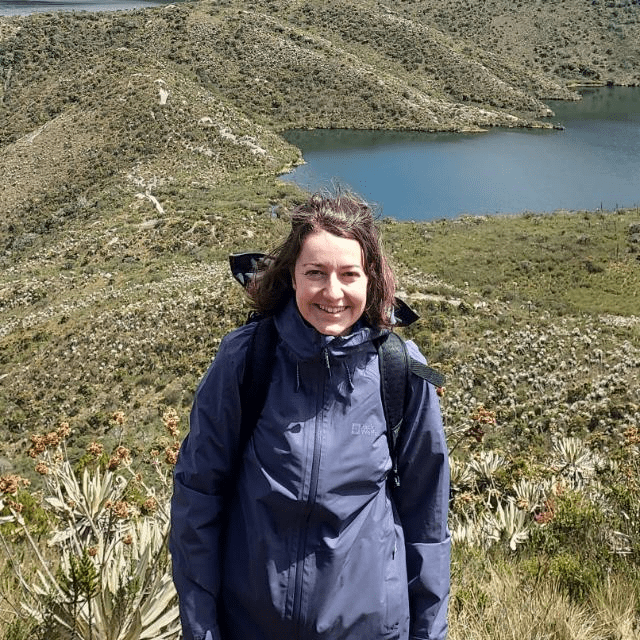
Marion Boisseaux: trait combinations and their effects on tree physiology

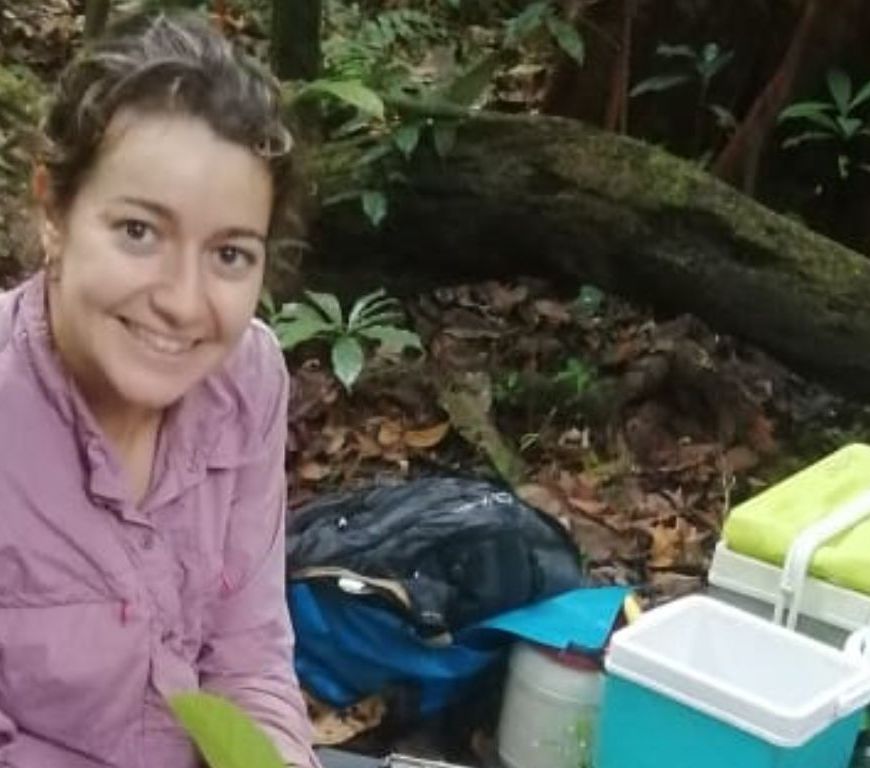
In this new blog post, Marion Boisseaux, a postdoc at California State University, presents her work ‘Shifting trait coordination along a soil-moisture-nutrient gradient in tropical forests’. She discusses the knowledge gaps in functional traits studies, presents the importance of looking at multiple components to understand plants responses, and shares her wish to transmit the relevance of ecophysiology to everyone. A French translation of this blog … Continue reading Marion Boisseaux: trait combinations and their effects on tree physiology

Marion Boisseaux: trait combinations and their effects on tree physiology (Français)

À propos de l’article Dans le cadre de la théorie de la niche écologique, l’environnement agit comme un filtre et sélectionne les espèces d’une communauté locale. Le concept de filtrage environnemental explique que tous les organismes ne peuvent pas s’établir et persister dans tous les environnements. Les études qui examinent les relations entre les traits fonctionnels et l’environnement soutiennent souvent l’idée que les gradients environnementaux … Continue reading Marion Boisseaux: trait combinations and their effects on tree physiology (Français)

Pedro Gundel: plant-fungi symbiosis and the impact of host fitness and vertical transmission efficiency

In our new post Pedro Gundel, researcher at University of Talca (Chile) presents his work ‘Temporal host–symbiont dynamics in community contexts: Impact of host fitness and vertical transmission efficiency on symbiosis prevalence’. He shows how symbiotic species transmit between generations, discusses the complexity of ecological processes and shares the long path that paved the way to this work.  About the paper A major topic in … Continue reading Pedro Gundel: plant-fungi symbiosis and the impact of host fitness and vertical transmission efficiency

Matthew Gilbert: Flowers of a South African succulent plant predict tomorrow’s weather, synchronizing flower opening with pollinator activity

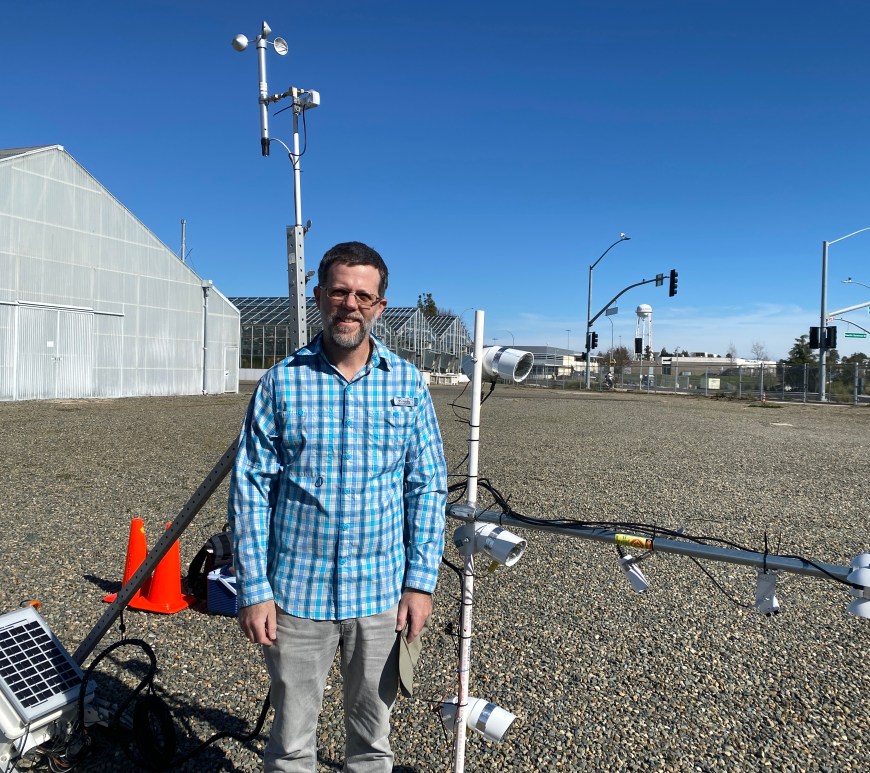
In this new post Matthew Gilbert—Associate Professor at University of California, Davis, CA, USA—presents his recently published paper “Flowers of a South African succulent plant predict tomorrow’s weather, synchronizing flower opening with pollinator activity“. He discusses the connection between phenology and weather, shows how inspiration can come from anywhere, and highlights the importance of observing nature to find interesting research questions. About the paper It’s … Continue reading Matthew Gilbert: Flowers of a South African succulent plant predict tomorrow’s weather, synchronizing flower opening with pollinator activity

Géraldine Hildbrand: Why some plants are better able to adapt to climate change

In this new post, Géraldine Hildbrand—Scientific collaborator, BFH-HAFL, Switzerland—presents her latest work ‘Above- and below-ground responses to experimental climate forcing in two forb species from montane wooded pastures in Switzerland’. She highlights the importance of ecophysiological traits, discusses the relevance of plasticity to cope with environmental changes, and explains how she can balance research while moving to teaching. About the paper It is undeniable that … Continue reading Géraldine Hildbrand: Why some plants are better able to adapt to climate change

Kristiina Visakorpi: The future of Alpine meadows: Can we predict winners and losers in a warmer climate?

In this new post Kristiina Visakorpi—a postdoc at the Norwegian University of Science and Technology—discusses her last research ‘Eco-physiological and morphological traits explain alpine plant species’ response to warming’. She considers the connections between functional traits and climate change, highlights the importance of eco-physiological traits, and provides some thoughts to fight apathy towards our current environmental crises. About the paper In our paper we investigated … Continue reading Kristiina Visakorpi: The future of Alpine meadows: Can we predict winners and losers in a warmer climate?

Wei Xue: Born with a silver spoon? How light condition experienced by parent plants influences the response of offspring to light

In this new post, Wei Xue from Taizhou University, China, presents his latest work ‘Light condition experienced by parent plants influences the response of offspring to light via both parental effects and soil legacy effects’. He discusses the importance of parental effects, soil legacy effects, and current light availability in driving clonal plant population growth. About the paper It is a common notion in humans, … Continue reading Wei Xue: Born with a silver spoon? How light condition experienced by parent plants influences the response of offspring to light

Pieter Arnold: How an alpine plant species responds to temperature stress depends on the type of trait and life stage

In this new post, Pieter Arnold, Research Fellow at The Australian National University (ANU), presents his latest work ‘Patterns of phenotypic plasticity along a thermal gradient differ by trait type in an alpine plant’. Pieter discusses the challenges of his group’s experimental design, highlights the importance of looking at plants along their entire life cycle, and also advises everyone to expand their horizons when looking … Continue reading Pieter Arnold: How an alpine plant species responds to temperature stress depends on the type of trait and life stage

Mario Blanco-Sánchez: La selección natural favorece de manera consistente a las plantas con una estrategia adquisitiva de recursos en el semiárido mediterráneo

En esta nueva publicación, Mario Blanco-Sánchez, estudiante de doctorado en la Universidad Rey Juan Carlos, España, presenta su última publicación ‘La selección natural favorece el escape de la sequía y una estrategia adquisitiva de uso de recursos en arbustos mediterráneos semiáridos‘. Habla de cómo lidió con un resultado sorprendente y alienta a los jóvenes ecologistas a perseguir sus propios intereses en el campo. Una traducción … Continue reading Mario Blanco-Sánchez: La selección natural favorece de manera consistente a las plantas con una estrategia adquisitiva de recursos en el semiárido mediterráneo

Mario Blanco-Sánchez: Natural selection consistently favours an acquisitive resource-use strategy in Mediterranean semiarid plants

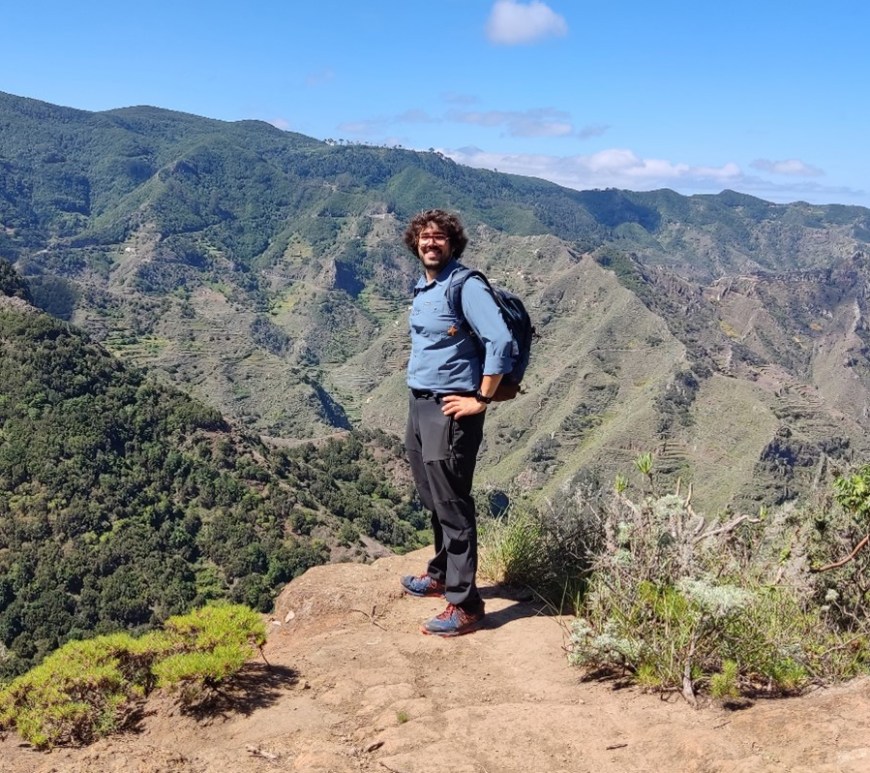
In this new post, Mario Blanco-Sánchez, Ph.D student at University Rey Juan Carlos, Spain, presents his latest publication ‘Natural selection favours drought escape and an acquisitive resource-use strategy in semiarid Mediterranean shrubs’. He discusses how he dealt with a striking result and encourages young ecologists to pursue their own interests in the field! A Spanish translation of this blogpost is available to read here! About … Continue reading Mario Blanco-Sánchez: Natural selection consistently favours an acquisitive resource-use strategy in Mediterranean semiarid plants