Els van de Zande: In the laboratory, greenhouse and field; how insects skins belowground can enhance the attraction of natural enemies of aboveground pest insects

Els van de Zande – a post-doc at Wageningen University, the Netherlands – presents her work ‘Enhanced parasitisation of caterpillars and aphids on field-grown Brassica oleracea plants upon soil amendment with insect exuviae’. She discusses how belowground changes can affect aboveground tri-trophic interactions, highlights a silver lining of the Covid-19 lockdowns and makes the case for investing time in volunteer work. About the paper Our … Continue reading Els van de Zande: In the laboratory, greenhouse and field; how insects skins belowground can enhance the attraction of natural enemies of aboveground pest insects
Joshua Brian: Parasites flex their mussels to influence ecosystem function

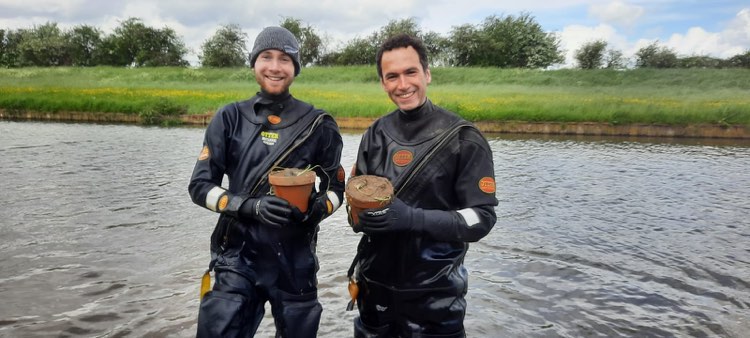
In this new post, Joshua Brian, a new ecological researcher working at King’s College London,  UK, discusses his paper: Parasitism dramatically alters the ecosystem services provided by freshwater mussels—recently shortlisted for the 2022 Haldane Prize for Early Career Researchers. About the paper There is increasing awareness of the importance of parasites in ecosystem structure and function. However, there has been very little work done actually … Continue reading Joshua Brian: Parasites flex their mussels to influence ecosystem function

The Mechanisms and Consequences of Infection-Induced Phenotypes: Podcast transcript

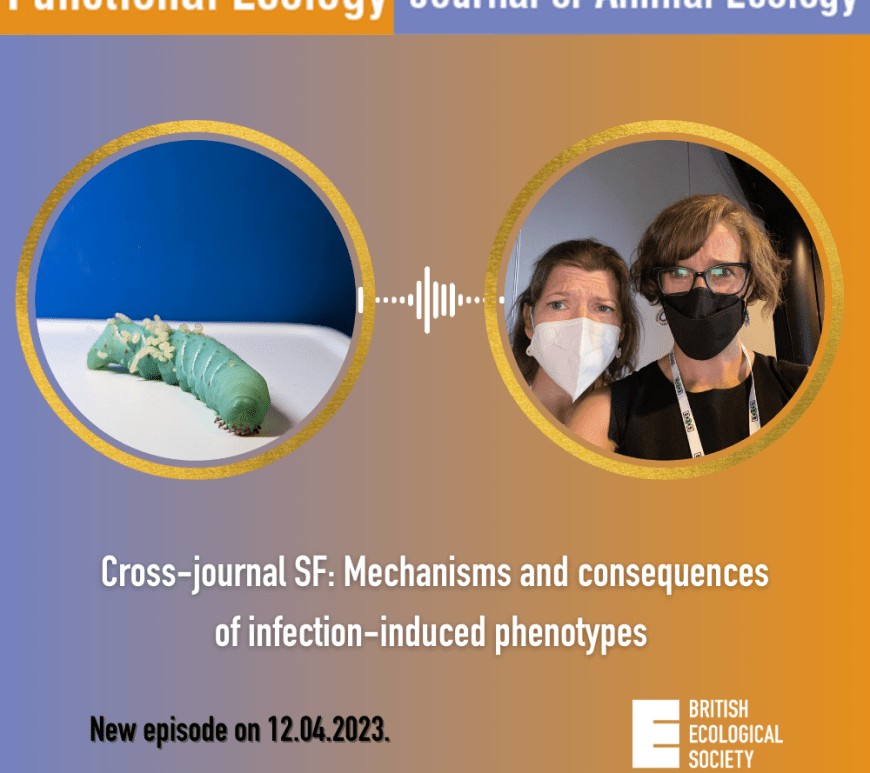
In this podcast for Functional Ecology, Assistant Editor, Frank Harris, sits down with Lauren Nadler and Sandra Binning—two of the four guest editors (also Shelley Adamo & Dana Hawley)—to discuss the recently published cross-journal (with Journal of Animal Ecology) Special Feature titled, The Mechanisms and Consequences of Infection-Induced Phenotypes. This special feature highlights recent insights into the ways parasites alter host phenotypes across a range … Continue reading The Mechanisms and Consequences of Infection-Induced Phenotypes: Podcast transcript

Mechanisms and consequences of infection-induced phenotypes: A Functional Ecology and Journal of Animal Ecology cross-journal special feature

In this post, Functional Ecology and Journal of Animal Ecology showcases each article that can be found in our cross-journal special feature on Mechanisms and consequences of infection-induced phenotypes. This collection of studies brings together biologists working on a wide range of host-parasite systems and topics—from molecular biology and animal behaviour to comparative physiology and community ecology—to synthesize our current state of understanding of host-parasite … Continue reading Mechanisms and consequences of infection-induced phenotypes: A Functional Ecology and Journal of Animal Ecology cross-journal special feature

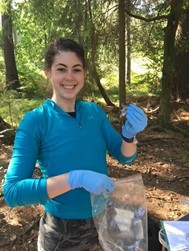
A photo of Amy carrying out wild wood mouse fieldwork.

Amy Sweeny: Why is this mouse more infected than others?

In this new post Amy Sweeny, postdoctoral research at University of Edinburgh, presents her last work ‘Spatiotemporal variation in drivers of parasitism in a wild wood mouse population.’ She discusses the importance of recognising the forces behind parasitism, the difficulties behind field work and her career path on disease ecology. About the paper In natural populations, parasite infection is ubiquitous. However, some individuals within a … Continue reading Amy Sweeny: Why is this mouse more infected than others?