Skip to content
  • Home
  • About Us
  • Behind the paper
  • Community+Ecology
  • Journal Content
  • Facebook
  • Twitter
  • YouTube
  • Podcasts

Functional Ecologists

Official blog of Functional Ecology, a British Ecological Society journal

  • Home
  • About Us
    • About the blog
    • Blog writing guidelines
  • Behind the paper
  • Community+Ecology
    • Black in STEM
    • Community
    • COVID-19
    • Ecologist’s Diary
      • GescheBlume-Werry
      • RichardBeason
      • RobMills
      • StaceyTrevathan-Tackett
    • LGBTQIA+
    • Moving Ecology
    • PhDs around the world
    • Postcards From The Field
    • Translation
    • Events
    • Hindsight
  • Journal Content
    • FE.org
    • Journal Updates
    • Research Summaries
    • Editorial Board

Tag: Masters student

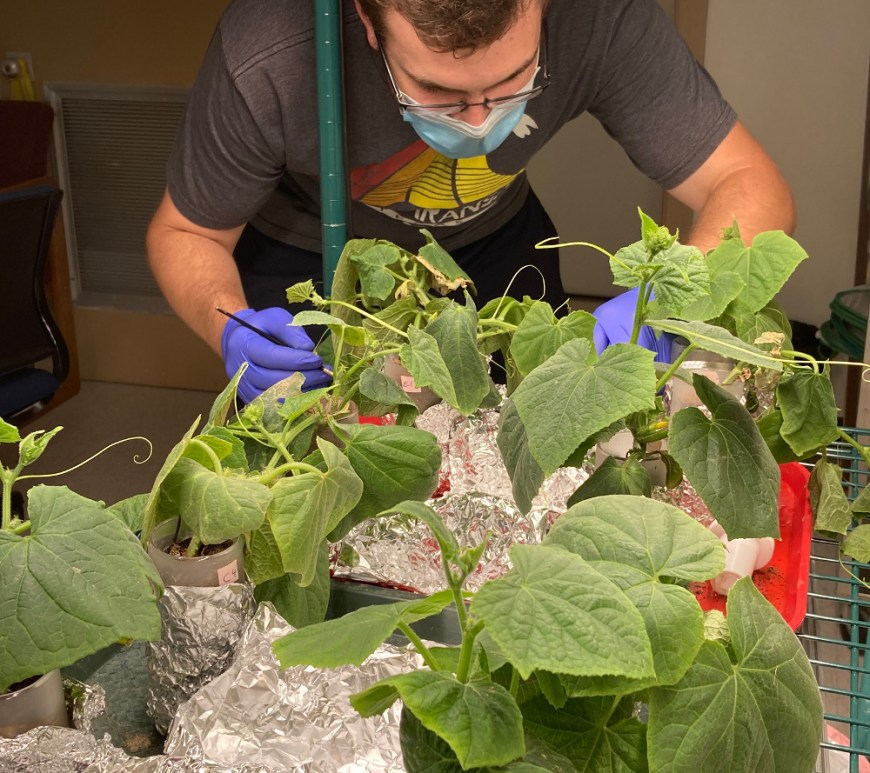
John Grunseich at work
Behind the paper

John Grunseich: risky roots and careful herbivores

In this post John Grunseich, a Masters Student in the Helms Lab talks about his new paper Risky roots and careful herbivores: Sustained herbivory by a root‐feeding herbivore attenuates indirect plant defences out now in the latest issue of Functional Ecology.
John Grunseich at work
Continue reading “John Grunseich: risky roots and careful herbivores”
Unknown's avatarBritish Ecological Society10 Sep 20201 Comment

The official blog of Functional Ecology, a British Ecological Society Journal

Enter your email address to subscribe to this blog and receive notifications of new posts by email.

Join 343 other subscribers
Follow Functional Ecologists on WordPress.com

Other BES blogs

Methods.blog
Journal of Ecology Blog
The Applied Ecologists Blog
Animal Ecology In Focus
Relational Thinking

Top Posts & Pages

  • Functional Ecology now requires a ‘Replication Statement’ for all submitted Research Articles
  • Ecologist's Diary with Richard Beason: If a tree falls in the forest and no one hears it... it does make a sound!
  • Eve Davidian: Why do the top dogs get the prettiest ladies? A story of sex, stress and hyena poops
  • Key Concepts in Ecology: Mutualisms and Facilitation 
  • Paul Huber | Better together: Do siblings help each other cope with environmental stress?

Tags

biodiversity birds Black Ecologists Black History Month Black in STEM climate change community ecology early career Ecology ecr Editorial Board first-hand account functional traits haldane prize Journal Updates Meet the Editor phd plant-animal interactions plant physiology plants

Follow us on Twitter

My Tweets

Enter your email address to subscribe to this blog and receive notifications of new posts by email.

Join 343 other subscribers
Follow Functional Ecologists on WordPress.com

RSS

  • RSS - Posts

BES journal blogs

Methods.blog
Journal of Ecology Blog
The Applied Ecologists Blog
Animal Ecology In Focus
Relational Thinking

Tags

animal behaviour animal physiology bees behaviour behavioural ecology Behind the paper biodiversity birds Black Ecologists Black History Month Black in STEM Brazil climate change Community community ecology conferences conservation coral reefs coronavirus COVID-19 decomposition diversity drought early career Ecology ecophysiology ecosystem ecology ecosystems ecology ecr Editorial Board environment Events evolution evolutionary ecology fieldwork first-hand account forests frugivory functional diversity Functional Ecology functional traits global warming haldane prize Haldane Prize 2022 herbivory invasive species Journal Update Journal Updates lgbt+ lizards Meet the Editor nature nutrient cycling phd PhDs around the world phenology plant-animal interactions plant ecology plant functional traits plant physiological ecology plant physiology plants podcast podcast transcript pollination Postcards From The Field predation pride research soil ecology special feature temperature Translation trees tropical forest

Archives

Enter your email address to subscribe to this blog and receive notifications of new posts by email.

Join 343 other subscribers
Follow Functional Ecologists on WordPress.com

RSS

  • RSS - Posts

BES journal blogs

Methods.blog
Journal of Ecology Blog
The Applied Ecologists Blog
Animal Ecology In Focus
Relational Thinking

Top Posts & Pages

  • Functional Ecology now requires a ‘Replication Statement’ for all submitted Research Articles
  • Ecologist's Diary with Richard Beason: If a tree falls in the forest and no one hears it... it does make a sound!
  • Eve Davidian: Why do the top dogs get the prettiest ladies? A story of sex, stress and hyena poops
  • Key Concepts in Ecology: Mutualisms and Facilitation 
  • Paul Huber | Better together: Do siblings help each other cope with environmental stress?
  • Dave Daversa | Batrachochytrium dendrobatidis infections proliferate during amphibian terrestrial dormancy
  • Eusociality and the transition from biparental to alloparental care in termites: Podcast Transcript
  • Pamela Medina-van Berkum: Plant geographic distribution influences chemical defences in native and introduced Plantago lanceolata populations
  • Samantha Bock: A long-standing evolutionary mystery: Why does temperature determine sex in long-lived reptiles?
  • Amber Wright: Sticky toes and grippy claws

Archives

Follow me on Twitter

My Tweets

Tags

biodiversity birds Black Ecologists Black History Month Black in STEM climate change community ecology conferences drought early career Ecology ecr Editorial Board Events first-hand account functional traits haldane prize Journal Updates Meet the Editor nature phd plant-animal interactions plant ecology plant physiology plants
  • Home
  • About Us
  • Behind the paper
  • Community+Ecology
  • Journal Content
  • Facebook
  • Twitter
  • YouTube
  • Podcasts
Website Built with WordPress.com.
  • Subscribe Subscribed
    Functional Ecologists
    Join 343 other subscribers

    Have a WordPress.com account? Log in now.

  • Functional Ecologists
    View site in Reader
    Manage subscriptionsSign upLog in
    Report this content
    Collapse this bar
Loading Comments...
Privacy & Cookies: This site uses cookies. By continuing to use this website, you agree to their use.
To find out more, including how to control cookies, see here: Cookie Policy