The Mechanisms and Consequences of Infection-Induced Phenotypes: Podcast transcript

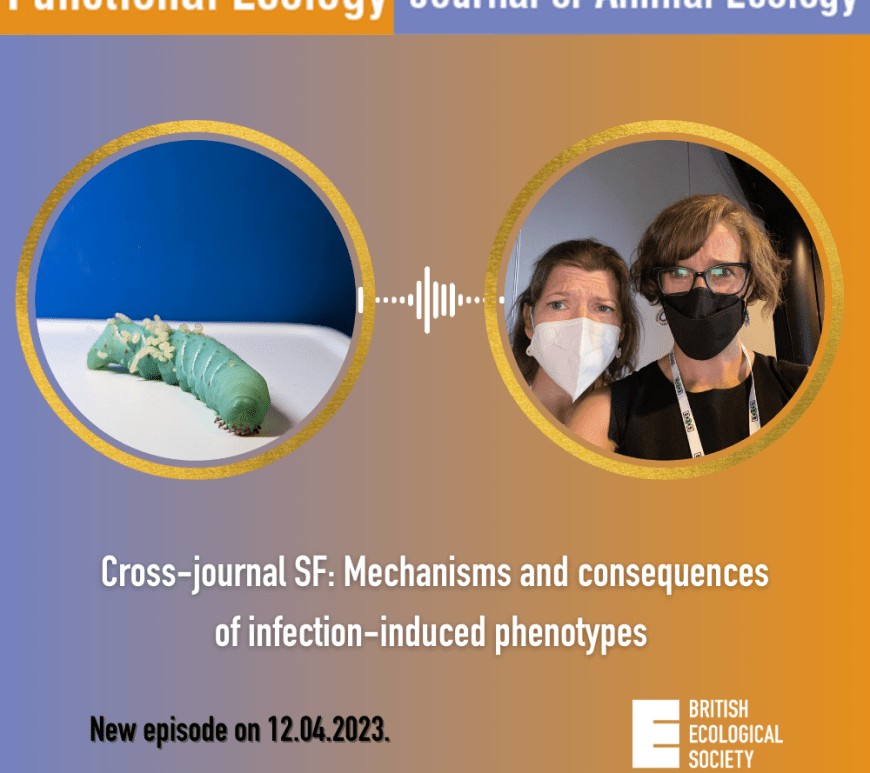
In this podcast for Functional Ecology, Assistant Editor, Frank Harris, sits down with Lauren Nadler and Sandra Binning—two of the four guest editors (also Shelley Adamo & Dana Hawley)—to discuss the recently published cross-journal (with Journal of Animal Ecology) Special Feature titled, The Mechanisms and Consequences of Infection-Induced Phenotypes. This special feature highlights recent insights into the ways parasites alter host phenotypes across a range … Continue reading The Mechanisms and Consequences of Infection-Induced Phenotypes: Podcast transcript

Mechanisms and consequences of infection-induced phenotypes: A Functional Ecology and Journal of Animal Ecology cross-journal special feature

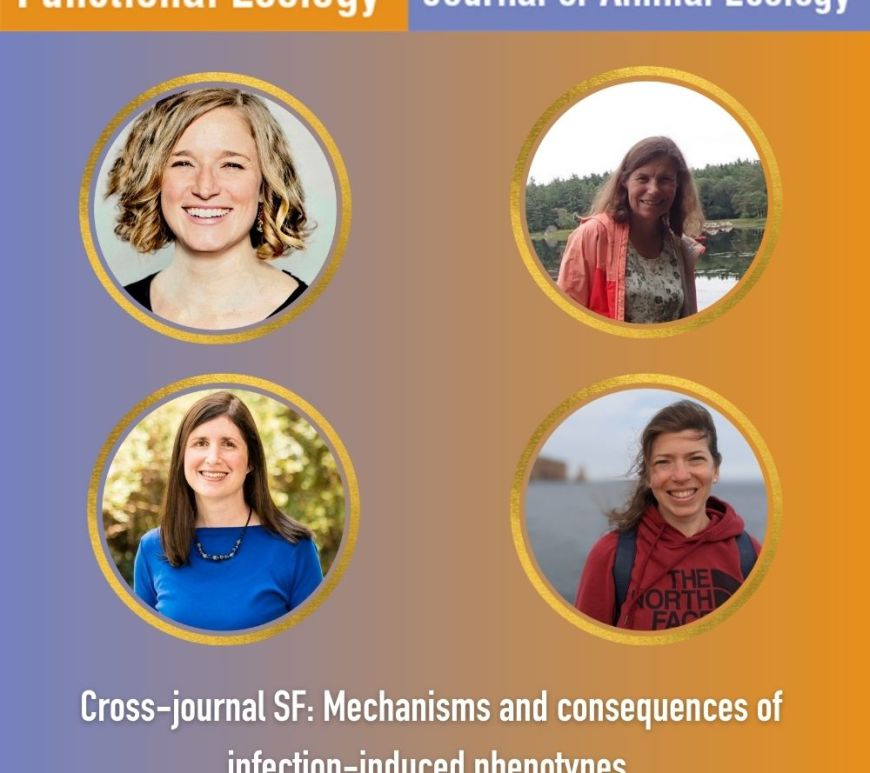
In this post, Functional Ecology and Journal of Animal Ecology showcases each article that can be found in our cross-journal special feature on Mechanisms and consequences of infection-induced phenotypes. This collection of studies brings together biologists working on a wide range of host-parasite systems and topics—from molecular biology and animal behaviour to comparative physiology and community ecology—to synthesize our current state of understanding of host-parasite … Continue reading Mechanisms and consequences of infection-induced phenotypes: A Functional Ecology and Journal of Animal Ecology cross-journal special feature

A photo of Amy carrying out wild wood mouse fieldwork.

Amy Sweeny: Why is this mouse more infected than others?

In this new post Amy Sweeny, postdoctoral research at University of Edinburgh, presents her last work ‘Spatiotemporal variation in drivers of parasitism in a wild wood mouse population.’ She discusses the importance of recognising the forces behind parasitism, the difficulties behind field work and her career path on disease ecology. About the paper In natural populations, parasite infection is ubiquitous. However, some individuals within a … Continue reading Amy Sweeny: Why is this mouse more infected than others?