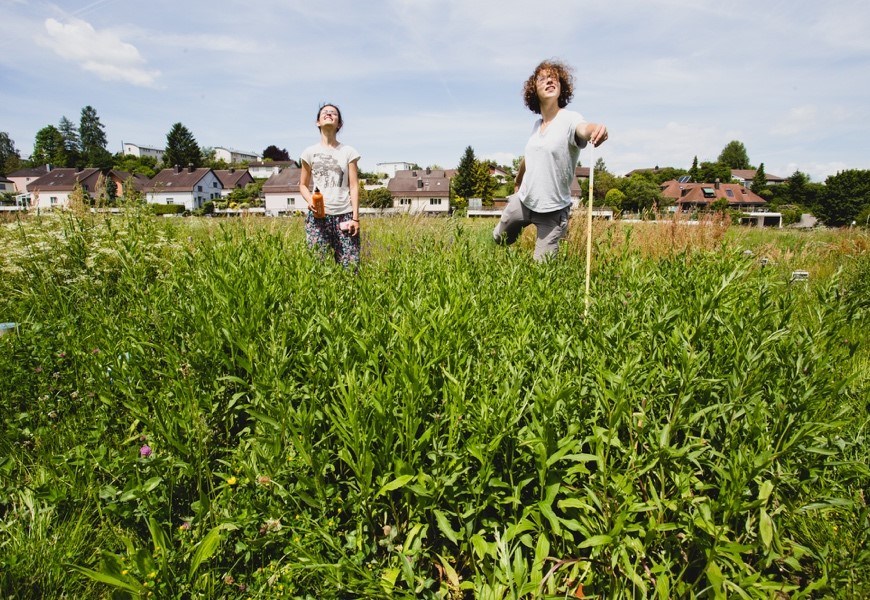
Seraina Cappelli et Noémie Pichon sur l’expérience de PaNDiv, mai 2017. Crédit : Hugo Vincent

Noémie Pichon: La décomposition démêlée

Read this blog in English here Noémie A. Pichon, alors étudiante en doctorat dans le groupe d’Eric Allan, parle de son récent article « La décomposition démêlée : un test des multiples mécanismes par lesquels l’enrichissement en azote modifie la décomposition de la litière », le contexte de cet article et les futures directions de ce champ de recherche. Quel est le contexte de votre étude ? Les expériences … Continue reading Noémie Pichon: La décomposition démêlée

2020 Haldane Prize Shortlist: Functional Ecology’s Award for Early Career Researchers

The Haldane Prize is awarded by the British Ecological Society each year for the best paper in Functional Ecology written by an early career author. The winner of the Haldane Prize 2020 is Renato Morais with his fantastic paper on coral reef energetic shifts following natural disaster. Severe coral loss shifts energetic dynamics on a coral reef – Renato A. Morais – read the blog behind the … Continue reading 2020 Haldane Prize Shortlist: Functional Ecology’s Award for Early Career Researchers

Yingying Wang

Yingying Wang: Phylogenetic structure of wildlife assemblages shapes patterns of infectious diseases

In this Insight, Yingying Wang, a Postdoctoral researcher at the University of Jyväskylä, discusses her  paper Phylogenetic structure of wildlife assemblages shapes patterns of infectious livestock diseases in Africa – recently shortlisted for the Haldane Prize for Early Career Researchers.

Yingying Wang
Yingying Wang
Continue reading “Yingying Wang: Phylogenetic structure of wildlife assemblages shapes patterns of infectious diseases”

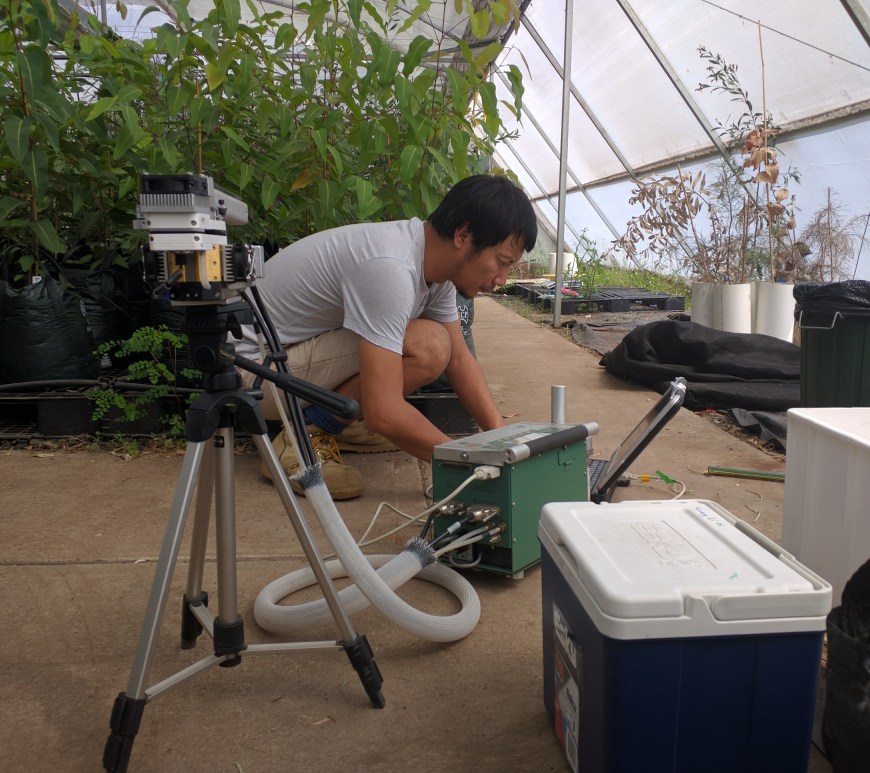
Ximeng Li: More than iso/anisohydry

In this Insight, Ximeng Li talks about his paper More than iso/anisohydry: Hydroscapes integrate plant water use and drought tolerance traits in 10 eucalypt species from contrasting climates, recently shortlisted for Functional Ecology’s Haldane Prize. Ximeng recently finished his PhD at the Hawkesbury Institute for the Environment, Western Sydney University and has now returned to China, where he hopes to continue his research.

Continue reading “Ximeng Li: More than iso/anisohydry”

Daniel Winkler: “Mixed-bag” strategies can help plant species cope with changing climate

In this Insight, Daniel Winkler, a Research Ecologist with the U.S. Geological Survey’s Southwest Biological Science Center, discusses his paper Earlier plant growth helps compensate for reduced carbon fixation after 13 years of warming – recently shortlisted for the Haldane Prize for Early Career Researchers.

Continue reading “Daniel Winkler: “Mixed-bag” strategies can help plant species cope with changing climate”

“Both groups are picking the flowers when they’re feeding – they’re walking about and you can see them pick flower after flower after flower after flower.” Jurene Kemp talks to Ken Thompson in our new podcast!

Find our podcasts on apple, spotify and stitcher, or your favourite podcast app. “It seems that both groups are picking the flowers when they’re feeding – they’re walking about and you can see them pick flower after flower after flower after flower.” In this podcast, Jurene Kemp talks about her paper, Cryptic petal coloration decreases floral apparency and herbivory in nocturnally closing daisies – recently … Continue reading “Both groups are picking the flowers when they’re feeding – they’re walking about and you can see them pick flower after flower after flower after flower.” Jurene Kemp talks to Ken Thompson in our new podcast!

“Breaking down leaves is basically hard work, so if the fungi have the option of an easier life, they take it?” Ken Thompson interviews Hal Halvorson in our new podcast

“Breaking down leaves is basically hard work, so if the fungi have the option of an easier life, they take it?” Continue reading “Breaking down leaves is basically hard work, so if the fungi have the option of an easier life, they take it?” Ken Thompson interviews Hal Halvorson in our new podcast

2019 Haldane Prize Shortlist: Functional Ecology’s Award for Early Career Researchers

The Haldane Prize is awarded by the British Ecological Society each year for the best paper in Functional Ecology written by an early career author. Today, we are pleased to present the shortlisted papers for this year’s award (from the 2019 volume of Functional Ecology). This year’s shortlisted candidates are: A trait-based framework for understanding predator-prey relationships: trait matching between a specialist snake and its … Continue reading 2019 Haldane Prize Shortlist: Functional Ecology’s Award for Early Career Researchers

Alex Strauss: disease, diversity and dilution

Dr Alex Strauss  is a Postdoctoral Research Assistant at the University of Minnesota and winner of the 2018 Haldane Prize for Early Career Researchers for his paper, Linking host traits, interactions with competitors and disease: Mechanistic foundations for disease dilution.

In this Insight, he talks about the background behind his paper, digs into disease, dilution and biodiversity, and what he wants to see happen next in this area.

Continue reading “Alex Strauss: disease, diversity and dilution”

Insight: Andrew Durso

Andrew Durso

Dr Andrew Durso is a Postdoctoral Research Assistant at the University of Geneva, Switzerland. He was recently shortlisted for Functional Ecology’s Haldane Prize for Early Career Researchers for his paper, Stable isotope tracers reveal a trade‐off between reproduction and immunity in a reptile with competing needs

In this Insight, he talks about how he got into ecology and what he’s been working on since then.

Continue reading “Insight: Andrew Durso”