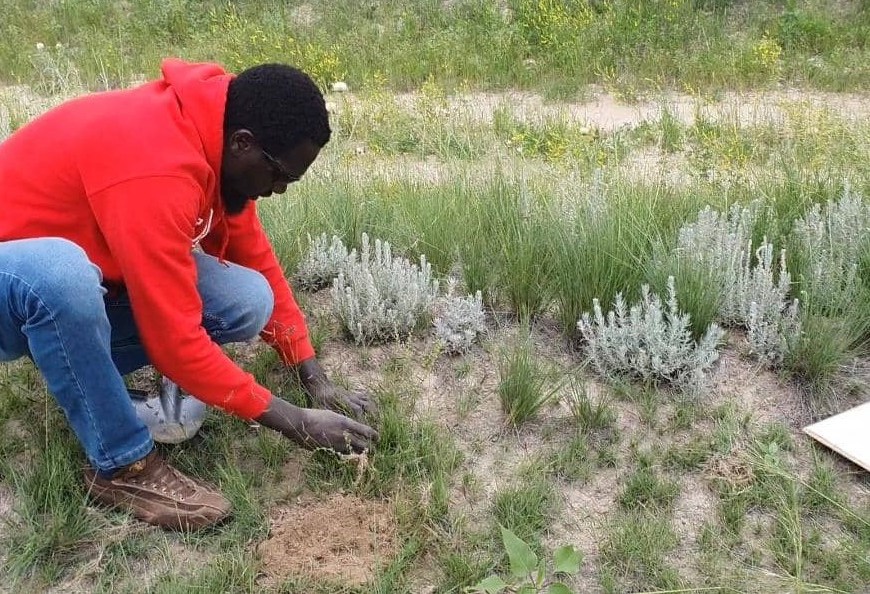
Black History Month 2024: Dr Saheed Olaide Jimoh

For Black History Month 2024, the British Ecological Society (BES) journals are celebrating the work of Black ecologists around the world and sharing their stories. In this blog, Dr Saheed Olaide Jimoh shares his story. Biography Name: Saheed Olaide Jimoh Pronouns: He/Him Affiliation: Postdoctoral Research Associate at the University of Wyoming, USA Website/social media links: Ecology interests in three keywords: 1. Functional ecology  2. Belowground … Continue reading Black History Month 2024: Dr Saheed Olaide Jimoh

Curtis Lubbe: Going Belowground in Central European Meadows

In our latest post, Curtis Lubbe – a researcher at the Institute of Botany of the Czech Academy of Sciences – discusses the fascinating subterranean world of roots, the diversity of plant forms and species in meadows, and what the future in this field may bring. Profile I am completely fascinated by the variety of subterranean plant organs and their traits, especially those involved in … Continue reading Curtis Lubbe: Going Belowground in Central European Meadows

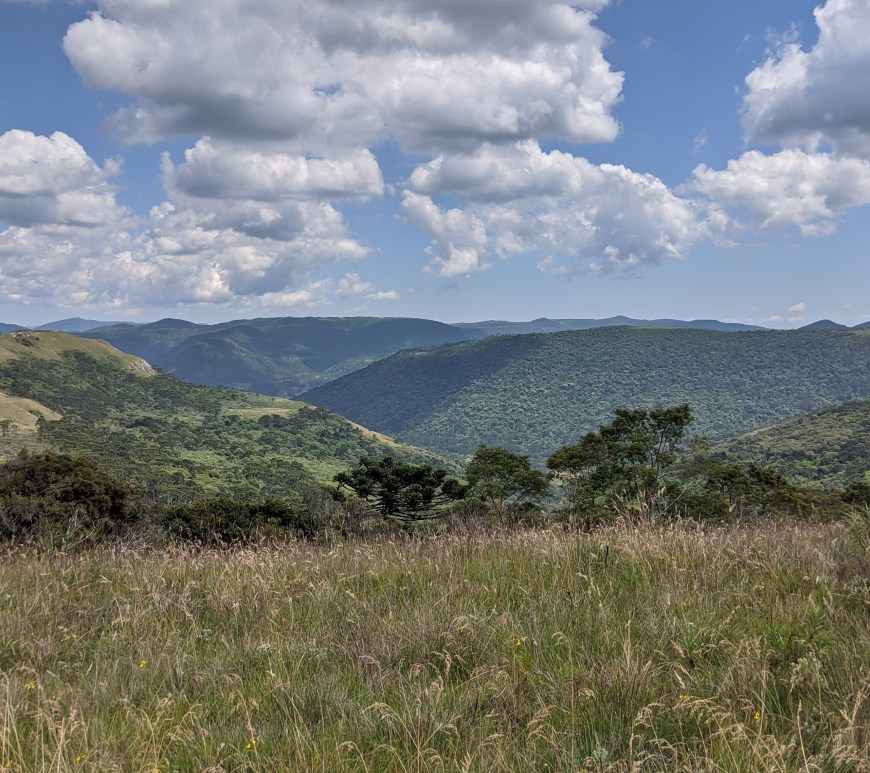
Ana Porto: Brazil isn’t just trees—working in grasslands in a country conventionally seen as a big forest

In this blogpost, Ana Porto—from the Federal University of Santa Catarina (UFSC), Brazil—describes their interest in grasslands restoration ecology. Ana is particularly interested in grassland restoration techniques using hay and direct seeding. Ana is also interested in the community vegetation of this ecosystem, mainly following its development after endogenous and exogenous disturbances (e.g. grazing, fire, afforestation, and biological invasions). Profile I arrived at this topic … Continue reading Ana Porto: Brazil isn’t just trees—working in grasslands in a country conventionally seen as a big forest

Géraldine Hildbrand: Why some plants are better able to adapt to climate change

In this new post, Géraldine Hildbrand—Scientific collaborator, BFH-HAFL, Switzerland—presents her latest work ‘Above- and below-ground responses to experimental climate forcing in two forb species from montane wooded pastures in Switzerland’. She highlights the importance of ecophysiological traits, discusses the relevance of plasticity to cope with environmental changes, and explains how she can balance research while moving to teaching. About the paper It is undeniable that … Continue reading Géraldine Hildbrand: Why some plants are better able to adapt to climate change