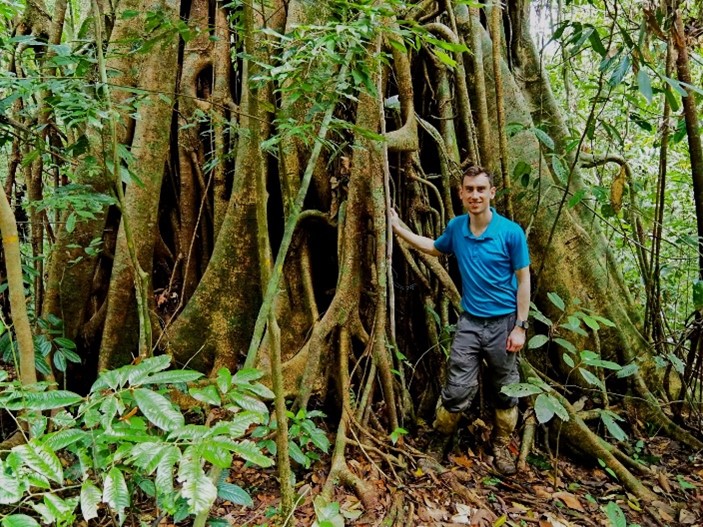
Chaoqing Song: Tree demography in a moist tropical forest: Response to water stress and associations with plant functional traits

In this new post, PhD candidate at University of Sun Yat-sen University, Chaoqing Song, presents his work ‘Differential tree demography mediated by water stress and functional traits in a moist tropical forest’. He shows the importance of water for tree survivability, highlights how functional traits can help us to understand demography, and thanks data collectors who help to enable science to advance.  About the paper … Continue reading Chaoqing Song: Tree demography in a moist tropical forest: Response to water stress and associations with plant functional traits

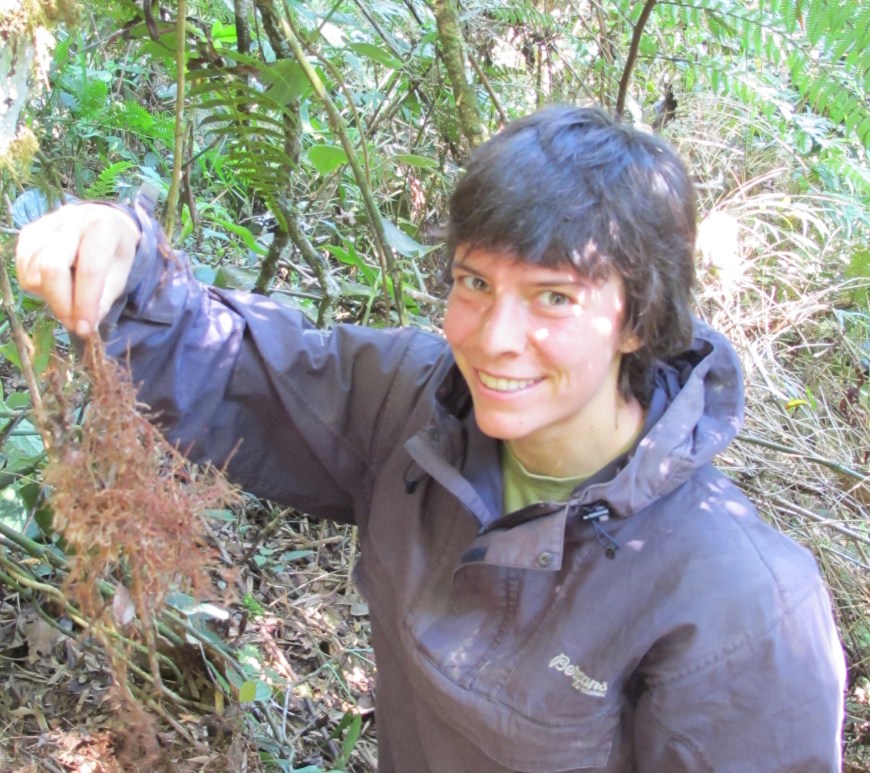
Camila Madeiros: What are you doing in a place like this? Connecting plants’ climate preferences with functional traits

Camila Medeiros—a post-doc at University of California Los Angeles, USA—presents her work ‘Predicting plant species climate preferences on the basis of mechanistic traits’. She discusses the connection between traits and niches, shows how to do ecology with small budgets, and highlights the need to transfer scientific knowledge to general audiences. About the paper By using mechanistic traits, our paper improves the ability to predict plant … Continue reading Camila Madeiros: What are you doing in a place like this? Connecting plants’ climate preferences with functional traits

David Villalobos Chaves: Foraging for efficiency—morphological traits provide support for variations in performance of the feeding apparatus in coexisting Neotropical bats

In this new post, David Villalobos Chaves, a PhD student at Department of Biology and Burke Museum of Natural History and Culture, University of Washington, Seattle, WA, USA, discusses his paper: Craniodental traits predict feeding performance and dietary hardness in a community of Neotropical free-tailed bats (Chiroptera: Molossidae)—recently shortlisted for the 2022 Haldane Prize for Early Career Researchers. About the paper Our research adds support … Continue reading David Villalobos Chaves: Foraging for efficiency—morphological traits provide support for variations in performance of the feeding apparatus in coexisting Neotropical bats

Géraldine Hildbrand: Why some plants are better able to adapt to climate change

In this new post, Géraldine Hildbrand—Scientific collaborator, BFH-HAFL, Switzerland—presents her latest work ‘Above- and below-ground responses to experimental climate forcing in two forb species from montane wooded pastures in Switzerland’. She highlights the importance of ecophysiological traits, discusses the relevance of plasticity to cope with environmental changes, and explains how she can balance research while moving to teaching. About the paper It is undeniable that … Continue reading Géraldine Hildbrand: Why some plants are better able to adapt to climate change

Animal Functional Traits: A Functional Ecology Special Focus

In this post, Functional Ecology provides an introduction to each article that can be found in our Animal Functional Traits Special Focus. This collection of studies shows how precise measurements of morphological or physiological traits can increase mechanistic understanding of community assembly across trophic levels, particularly of the mechanisms underpinning large-scale biodiversity patterns. Further, a clearer picture is emerging of systematic animal responses to environmental … Continue reading Animal Functional Traits: A Functional Ecology Special Focus

Using functional traits to identify conservation priorities for the world’s crocodylians: Podcast transcript

In this podcast for Functional Ecology, Assistant Editor, Frank Harris, sits down with Phoebe Griffith—a researcher from the Institute of Zoology, London, and the Wildlife Conservation Research Unit, Oxford University—to discuss her recently published paper ‘Using functional traits to identify conservation priorities for the world’s crocodylians.’ To understand better the functional diversity of crocodylians, Griffiths et al. collected a database of functional traits of all … Continue reading Using functional traits to identify conservation priorities for the world’s crocodylians: Podcast transcript

David Bartholomew: Revealing the niche of the world’s tallest tropical trees

In this new post, David Bartholomew presents his last work ‘Differential nutrient limitation and tree height control leaf physiology, supporting niche partitioning in tropical dipterocarp forests’, shares the difficulties of working in tropical forests and invites everyone to help any ecologists seeking for help. About the paper In the rainforests of north Borneo in South-East Asia exist the world’s tallest tropical trees. These are the … Continue reading David Bartholomew: Revealing the niche of the world’s tallest tropical trees

How do rapid shifts in body size influence population dynamics?

In this new post, Dr. Jean-Philippe Gibert, an Assistant Professor of Biology at Duke University, USA, discusses with us his recently accepted paper, “Feedbacks between size and density determine rapid eco-phenotypic dynamics.” About the paper This paper was born out of serendipity and was a true team effort. Our goal was to quantify possible changes in protist traits over a short period of time as … Continue reading How do rapid shifts in body size influence population dynamics?

Fernanda Barros

Fernanda Barros: What can plant life history tell us?

Fernanda Barros, postdoc at University of Exeter, talks in this new post about her recent paper ‘Phytogeographic origin determines Tropical Montane Cloud Forest hydraulic trait composition’. She highlights the importance of functional traits for ecology, discusses the importance of drought tolerance in tropical mountain cloud forests and calls for more efforts to reduce inequality in science. About the paper Our paper investigates traits of important … Continue reading Fernanda Barros: What can plant life history tell us?

Jitka Klimesova sorting biomass in field

Jitka Klimesova: why we should all care more about belowground plant organs

Jitka Klimesova serves as Senior Scientist at the Institute of Botany of the Czech Academy of Sciences in Třeboň and as Professor at Charles University in Prague. Her main interest is in functional morphology of clonal and regenerative organs of herbs. She is the main author of the only existing database of clonal and bud bank traits for an entire flora (CLO-PLA; Czech Republic), organizes … Continue reading Jitka Klimesova: why we should all care more about belowground plant organs