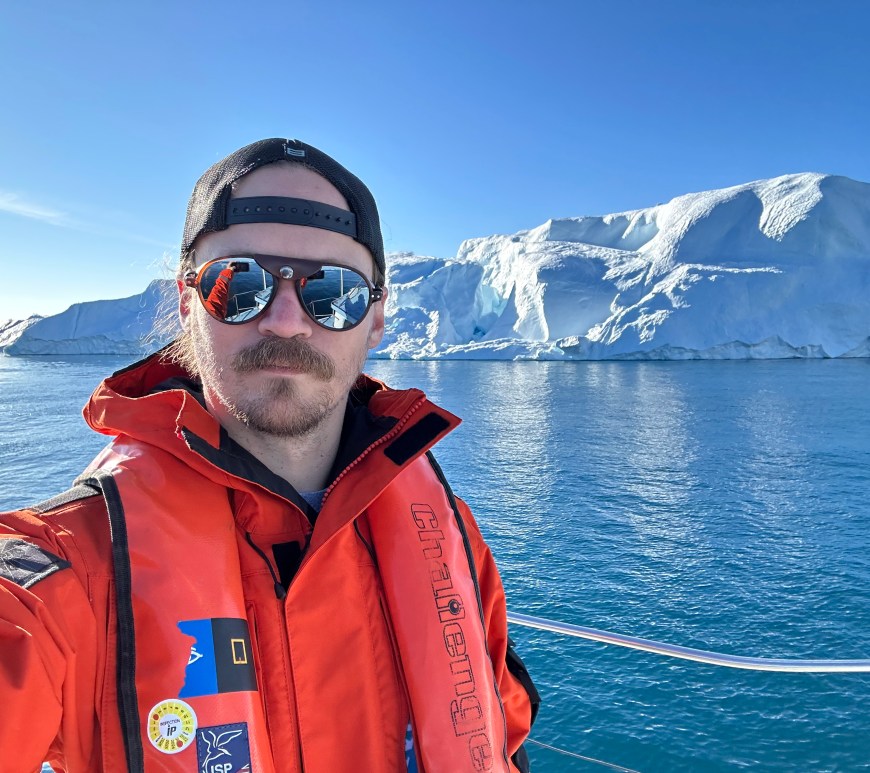
Daniel G. Dick: Exploring the relationship between different measures of functional redundancy

In this blog post, Daniel G. Dick, a public education and geoscience communication postdoctoral fellow at McMaster University, Canada, discusses his study “Measuring functional redundancy using generalized Hill numbers”, which has been shortlisted for Functional Ecology’s 2023 Haldane Prize for Early Career Researchers. About the Paper Whether an ecological community can withstand an external perturbation (such as rapid global warming) is thought to be largely … Continue reading Daniel G. Dick: Exploring the relationship between different measures of functional redundancy

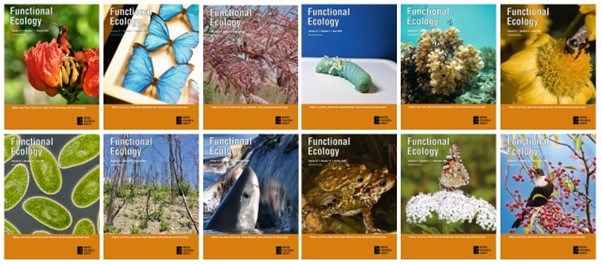
2023 Haldane Prize Shortlist: Functional Ecology’s Award for Early Career Researchers

The Haldane Prize is awarded by the British Ecological Society each year for the best paper in Functional Ecology written by an early career author. With entries spanning the 37th volume of the journal, our Senior Editors carefully shortlisted the following 12 papers: Lina Aoyama Functional diversity buffers biomass production across variable rainfall conditions through different processes above- versus below-ground Lina found that although biomass was largely … Continue reading 2023 Haldane Prize Shortlist: Functional Ecology’s Award for Early Career Researchers

Functional Ecology now requires a ‘Replication Statement’ for all submitted Research Articles

In this new post, Functional Ecology announces that a ‘Replication Statement’ is now mandatory for research articles to be considered for publication. Senior Editor for Functional Ecology, Dustin Marshall, provides some background information on this new requirement and a handful examples to assist authors. Check out our updated Author Guidelines if you are looking to submit a manuscript to Functional Ecology. Rationale Measuring independent replicates … Continue reading Functional Ecology now requires a ‘Replication Statement’ for all submitted Research Articles