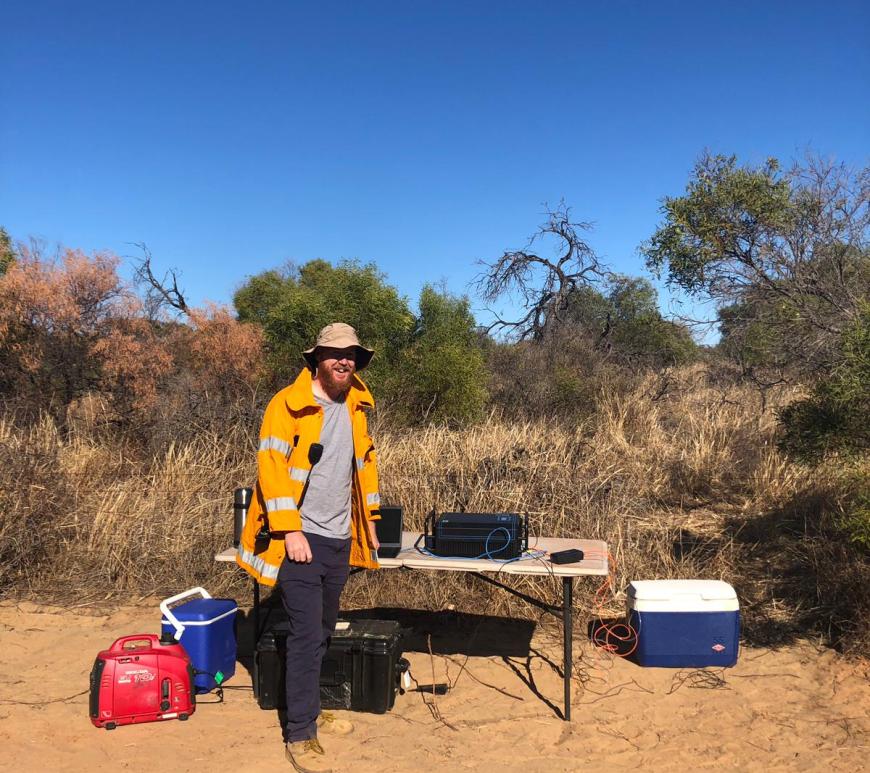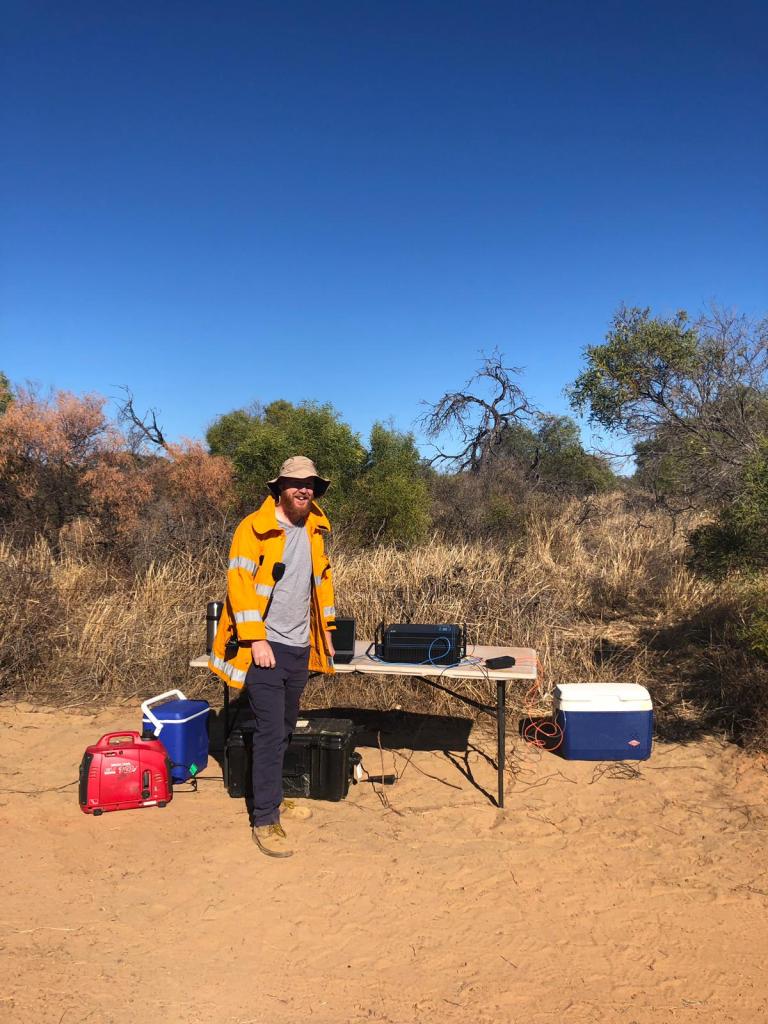
Nate Anderson: My unexpected path to academia

In our latest post, Nate Anderson—a researcher at the University of Western Australia—discusses the healing and regenerative benefits of time spent in nature, working in majestic Red Tingle forests, and the dangerous aspects of fieldwork in his study site. Profile I have followed a roundabout path to research. In 2008, my best friend committed suicide. I didn’t know how to process my grief or come … Continue reading Nate Anderson: My unexpected path to academia

Pedro Jaureguiberry: Plants from regions with different fire histories respond to fire and burn differently

In this new post Pedro Jaureguiberry—Adjunct Researcher at IMBIV (CONICET-UNC)—Argentina, presents his last work ‘A three-dimensional approach to general plant fire syndromes’. He highlights the importance of effect traits for fire ecology, hypothesizes plant traits based on regional fire history, and shows his interest in the connections between humans and nature.  Una versión en Español de esta publicación está disponible aquí! About the paper Fire … Continue reading Pedro Jaureguiberry: Plants from regions with different fire histories respond to fire and burn differently

Pedro Jaureguiberry: Las plantas de regiones con diferentes historias de incendios responden al fuego y se queman de manera diferente

En este nuevo post Pedro Jaureguiberry—Investigador Adjunto del IMBIV (CONICET-UNC), Argentina—presenta su último trabajo ‘A three-dimensional approach to general plant fire syndromes’. Aquí destaca la importancia de considerar rasgos funcionales de efecto en ecología del fuego, hipotetiza qué rasgos tendrá la vegetación en función de la historia regional de incendios y muestra su interés por la conexión entre el ser humano y la naturaleza. An … Continue reading Pedro Jaureguiberry: Las plantas de regiones con diferentes historias de incendios responden al fuego y se queman de manera diferente

Rebecca Hewitt: A focus on root-associated fungi informs predictions of plant-soil feedbacks in the boreal forest after fire

In our new post Rebecca Hewitt—Assistant Professor at Amherst College, MA, USA—presents her work ‘Wildfire impacts on root-associated fungi and predicted plant-soil feedbacks in the boreal forest: research progress and recommendations’. She discusses the importance of plant-fungal interactions to cope with fire disturbance and shares her fascination for environmental research. About the paper We wrote a review paper that synthesizes what is currently known about … Continue reading Rebecca Hewitt: A focus on root-associated fungi informs predictions of plant-soil feedbacks in the boreal forest after fire

Bushfire grounds near Bermagui in south-eastern Australia, viewed through a destroyed termite mound. Photos: F. Scarff, J. Lewin.

Fiona Scarff: Effect of plant hydraulic traits on flammability

In this new post Fiona Scarff, a former postdoc at Macquarie University, presents her work on the effect of plant hydraulic traits on flammability, highlights the importance of lab meeting for fostering research and discusses the importance of failure in science. Our paper is about how readily live plants can burn in wildfires. Plants dry out in the hot, dry, windy weather that accompanies the … Continue reading Fiona Scarff: Effect of plant hydraulic traits on flammability