Marie-Caroline Prima: Empirically testing the robustness of a spatial network following habitat loss and fragmentation

Marie-Carolina Prima

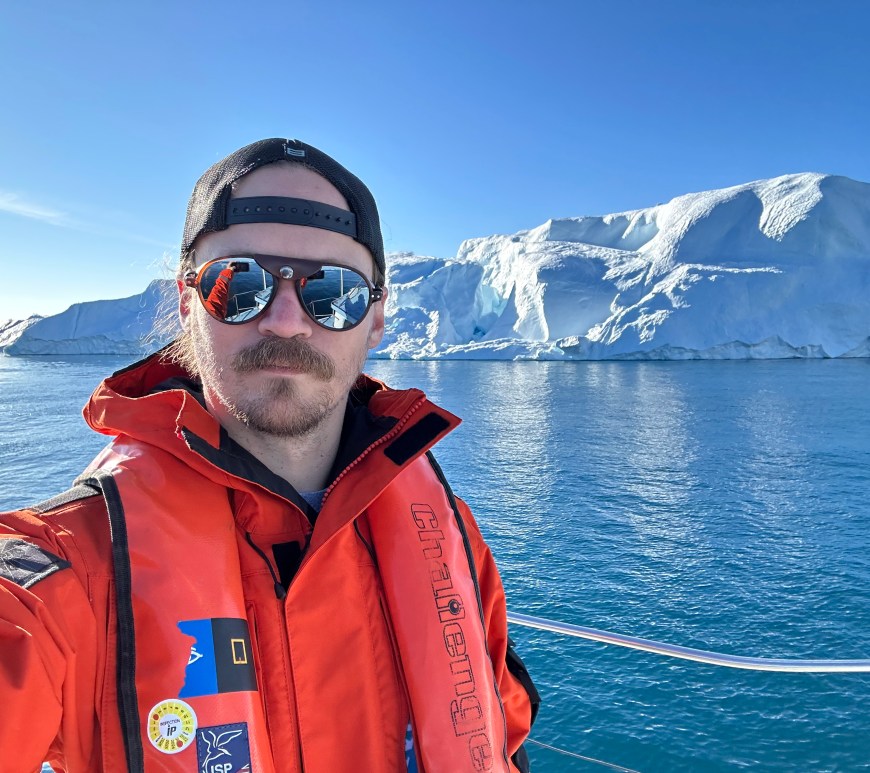
In this insight, Dr. Marie-Caroline Prima discusses the paper, “A landscape experiment of spatial network robustness and space-use reorganisation following habitat fragmentation”, possible new research questions, and her involvement in ecology.

Continue reading “Marie-Caroline Prima: Empirically testing the robustness of a spatial network following habitat loss and fragmentation”

Stefano Mammola doing fieldwork in a cave. Photo by courtesy of Francesco Tomasinelli (http://www.isopoda.net/).

Stefano Mammola: Revisiting Janzen’s hypothesis using cave-dwelling spiders

In this insight, Dr. Stefano Mammola discusses his paper “Extending Janzen’s hypothesis to temperate regions: a test using subterranean ecosystems” as well his experience as a subterranean ecologist. What’s your paper about? This paper is about testing the underlying assumption of Janzen’s hypothesis in caves. Published in 1967 under the evocative title “Why Mountain Passes are Higher in the Tropics”, Janzen’s hypothesis is an important … Continue reading Stefano Mammola: Revisiting Janzen’s hypothesis using cave-dwelling spiders

Alex Strauss: disease, diversity and dilution

Dr Alex Strauss  is a Postdoctoral Research Assistant at the University of Minnesota and winner of the 2018 Haldane Prize for Early Career Researchers for his paper, Linking host traits, interactions with competitors and disease: Mechanistic foundations for disease dilution.

In this Insight, he talks about the background behind his paper, digs into disease, dilution and biodiversity, and what he wants to see happen next in this area.

Continue reading “Alex Strauss: disease, diversity and dilution”

Insight: Andrew Durso

Andrew Durso

Dr Andrew Durso is a Postdoctoral Research Assistant at the University of Geneva, Switzerland. He was recently shortlisted for Functional Ecology’s Haldane Prize for Early Career Researchers for his paper, Stable isotope tracers reveal a trade‐off between reproduction and immunity in a reptile with competing needs

In this Insight, he talks about how he got into ecology and what he’s been working on since then.

Continue reading “Insight: Andrew Durso”

Francois-Xavier Joly: decomposition, detritivores and filling in the gaps.

FXJolyDr Francois-Xavier Joly  is a Postdoctoral Research Assistant at the University of Stirling, Scotland. He was recently shortlisted for Functional Ecology’s Haldane Prize for Early Career Researchers.

 In this Insight, he talks about his shortlisted paper, Litter conversion into detritivore faeces reshuffles the quality control over C and N dynamics during decomposition, as well the best – and worst – parts of being an ecologist.

Continue reading “Francois-Xavier Joly: decomposition, detritivores and filling in the gaps.”

PEPG ECR Symposium - group photo

Reporting back from the Plant Environmental Physiology Group’s Early Career Researchers Symposium 2019


PEPG ECR Symposium - group photo
PEPG ECR Symposium – group photo

A blog post by Magdalena Cobo-Medina, Sarah Carroll, Sophie Young, Helena Herrmann, winners of the Functional Ecology-sponsored best poster and talk prizes.


Continue reading “Reporting back from the Plant Environmental Physiology Group’s Early Career Researchers Symposium 2019”

Corinne Hertäg

Corinne Hertäg: sharing the costs – and benefits – of defensive symbionts

Corinne Hertäg

Corinne Hertäg is a PhD student at ETH Zürich. She was recently shortlisted for Functional Ecology’s Haldane Prize for Early Career Researchers.

In this Insight, she talks about her shortlisted paper, Defensive symbionts mediate species coexistence in phytophagous insects

Continue reading “Corinne Hertäg: sharing the costs – and benefits – of defensive symbionts”

Nadescha Zwerschke in the field.

Nadescha Zwerschke – a new angle on oyster competition

Nadescha Zwerschke is a benthic ecologist with the British Antarctic Survey. She was recently shortlisted for Functional Ecology’s Haldane Prize for Early Career Researchers. In this Insight, she talks about her shortlisted paper, Competition between co‐occurring invasive and native consumers switches between habitats   Oyster vs Oyster In Europe, the native oyster is declining due to overfishing and habitat destruction, effectively extirpating it from intertidal … Continue reading Nadescha Zwerschke – a new angle on oyster competition