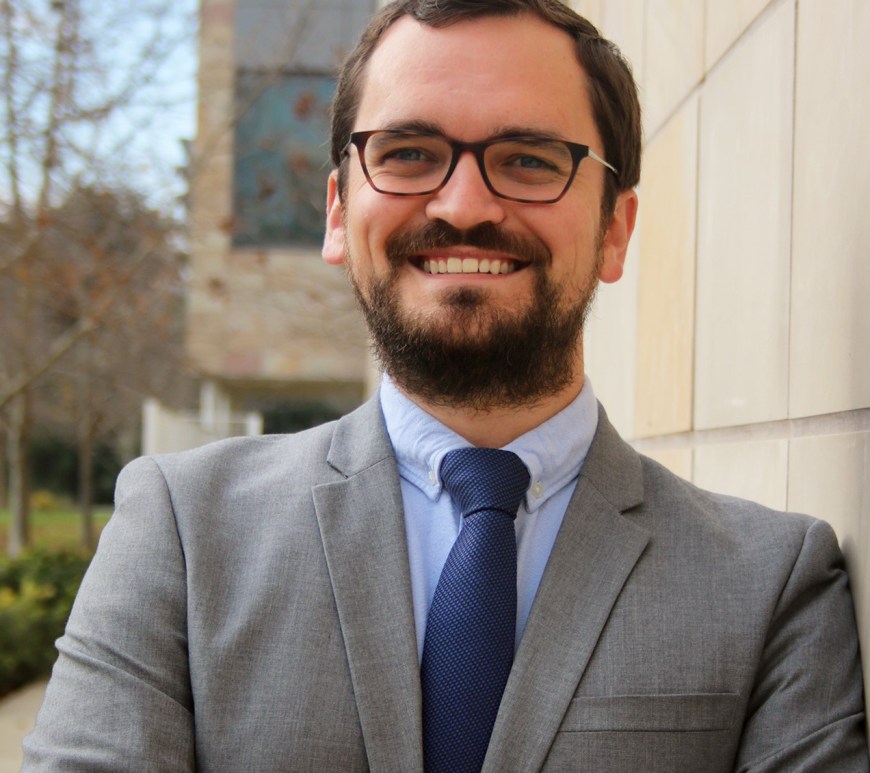
Noémie Pichon: decomposition disentangled

2021 Update – The paper discussed in this blog by Noémie Pichon is shortlisted for the 2020 Haldane Prize. This blog is also available in French.

Noémie A. Pichon, a PhD student in the Allan Lab, talks about her recent paper Decomposition disentangled: a test of the multiple mechanisms by which nitrogen enrichment alters litter decomposition, the background behind this paper and the next steps in this field.

Continue reading “Noémie Pichon: decomposition disentangled”

Elizabeth Mendoza. Photo credit: UC Irvine Graduate Division

Elizabeth Mendoza: Variation in jumping power in anurans

Elizabeth Mendoza, a PhD student at UC Irvine in the Department of Ecology and Evolutionary Biology, discusses with us her paper “What explains vast differences in jumping power within a clade? Diversity, ecology, and evolution of anuran jumping power”, along with her journey into ecology, her current research interests, and hobbies.

Elizabeth Mendoza. Photo credit: UC Irvine Graduate Division
Continue reading “Elizabeth Mendoza: Variation in jumping power in anurans”

Daniel Winkler: “Mixed-bag” strategies can help plant species cope with changing climate

In this Insight, Daniel Winkler, a Research Ecologist with the U.S. Geological Survey’s Southwest Biological Science Center, discusses his paper Earlier plant growth helps compensate for reduced carbon fixation after 13 years of warming – recently shortlisted for the Haldane Prize for Early Career Researchers.

Continue reading “Daniel Winkler: “Mixed-bag” strategies can help plant species cope with changing climate”
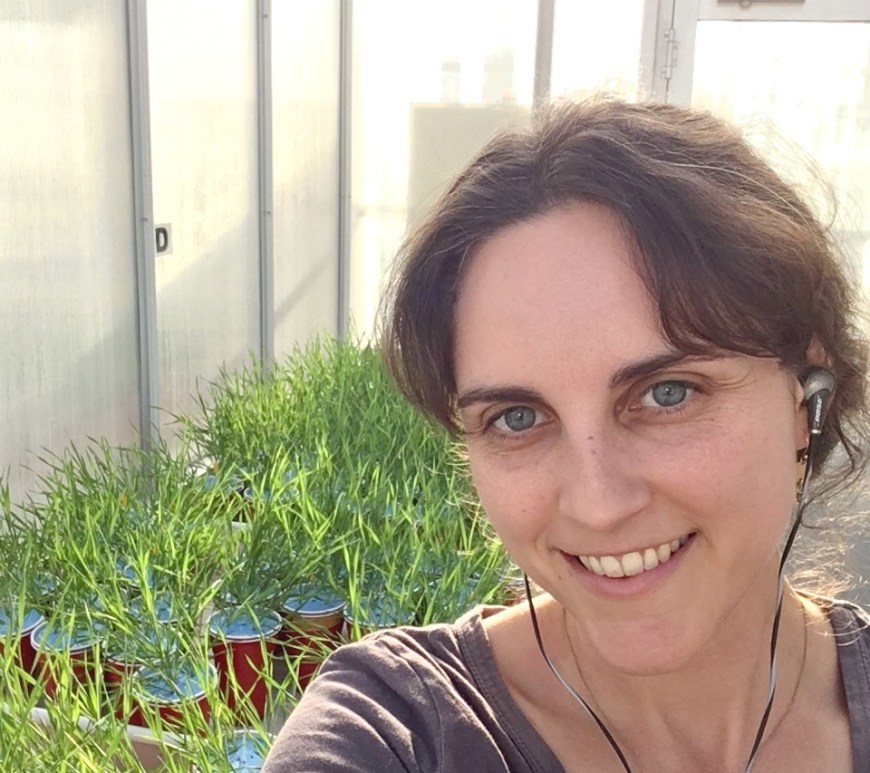
Casey Hall in the glasshouse, with the grass Brachypodium distachyon growing in hydroponics

Casey Hall: Plant defence against insects in a changing climate

Casey Hall is a postdoctoral researcher at The Hawkesbury Institute for the Environment, Western Sydney University looking at plant defence against insects in a changing climate. In this Insight, she talks about her erecent paper Elevated atmospheric CO2 suppresses jasmonate and silicon‐based defences without affecting herbivores.

Continue reading “Casey Hall: Plant defence against insects in a changing climate”

Jennifer Jones: The importance of bark decomposition

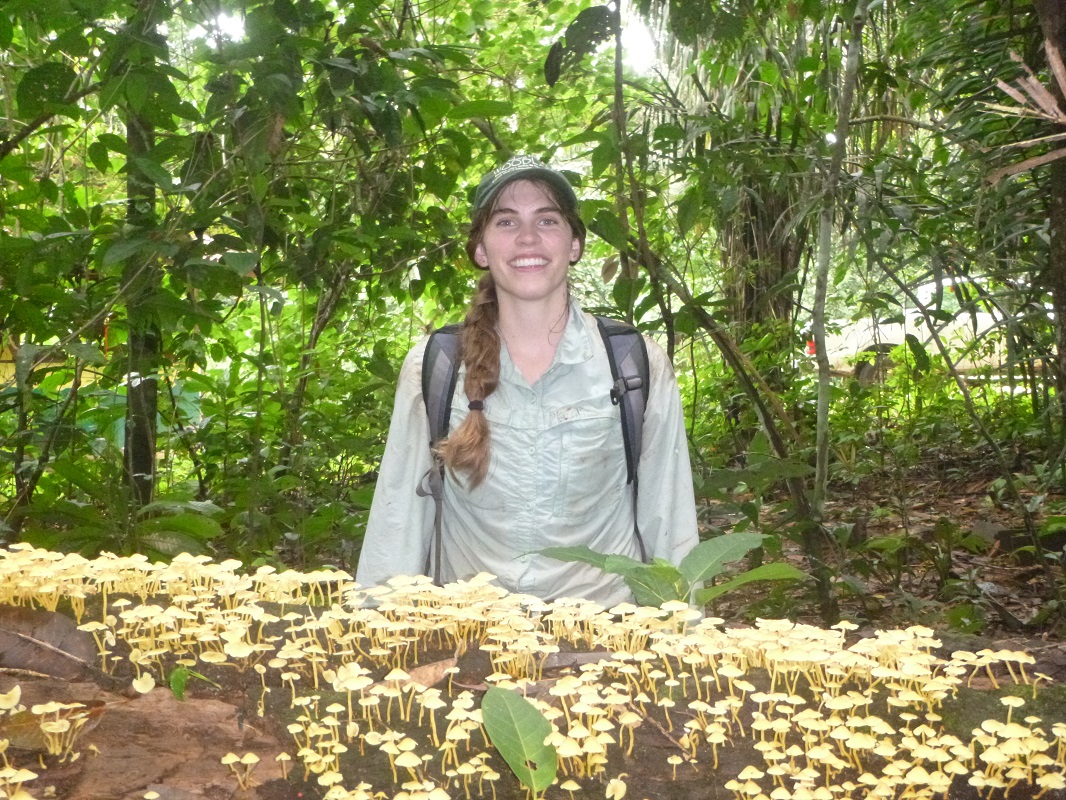
Admiring some nearby fungi (photo by Astrid Ferrer)

In our latest Insight, Jennifer Jones, a researcher at Michigan State University talks about her recent paper, Habitat‐specific effects of bark on wood decomposition: Influences of fragmentation, nitrogen concentration and microbial community composition, moving from policy to research and what happens when a tree falls in wood (and across your experiment.)

Continue reading “Jennifer Jones: The importance of bark decomposition”

“Both groups are picking the flowers when they’re feeding – they’re walking about and you can see them pick flower after flower after flower after flower.” Jurene Kemp talks to Ken Thompson in our new podcast!

Find our podcasts on apple, spotify and stitcher, or your favourite podcast app. “It seems that both groups are picking the flowers when they’re feeding – they’re walking about and you can see them pick flower after flower after flower after flower.” In this podcast, Jurene Kemp talks about her paper, Cryptic petal coloration decreases floral apparency and herbivory in nocturnally closing daisies – recently … Continue reading “Both groups are picking the flowers when they’re feeding – they’re walking about and you can see them pick flower after flower after flower after flower.” Jurene Kemp talks to Ken Thompson in our new podcast!

Joshua Garcia: dynamic network modelling for microbiome studies

Joshua Garcia is a third year PhD student in the School of Integrative Plant Science at Cornell University studying rhizosphere microbiomes. In this post, he talks about his recent Perspective paper “Can dynamic network modelling be used to identify adaptive microbiomes?”

Joshua Garcia
Joshua Garcia
Continue reading “Joshua Garcia: dynamic network modelling for microbiome studies”
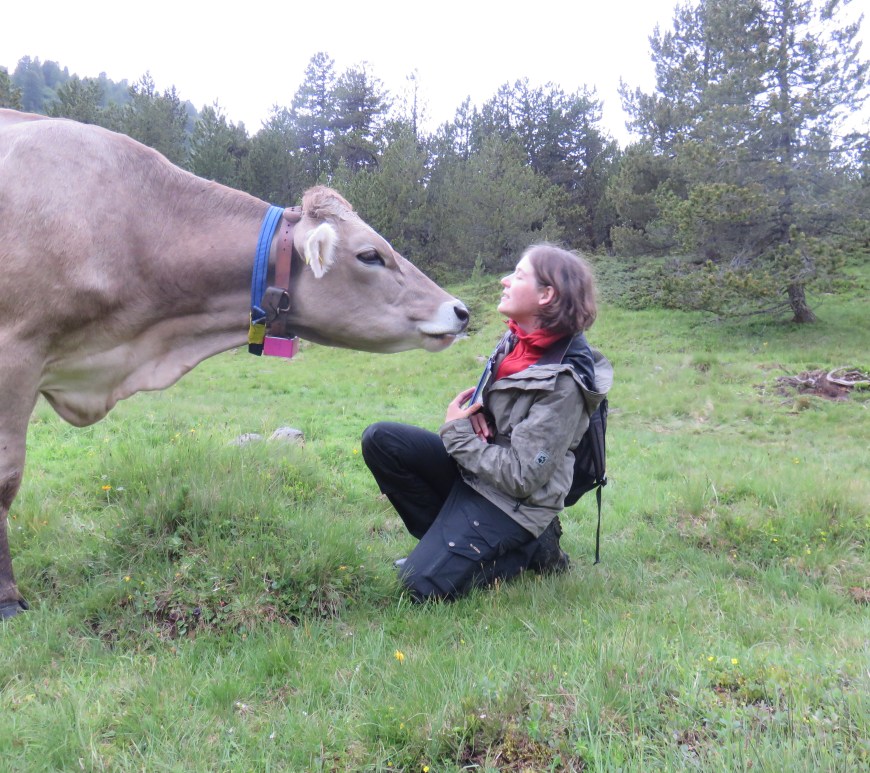
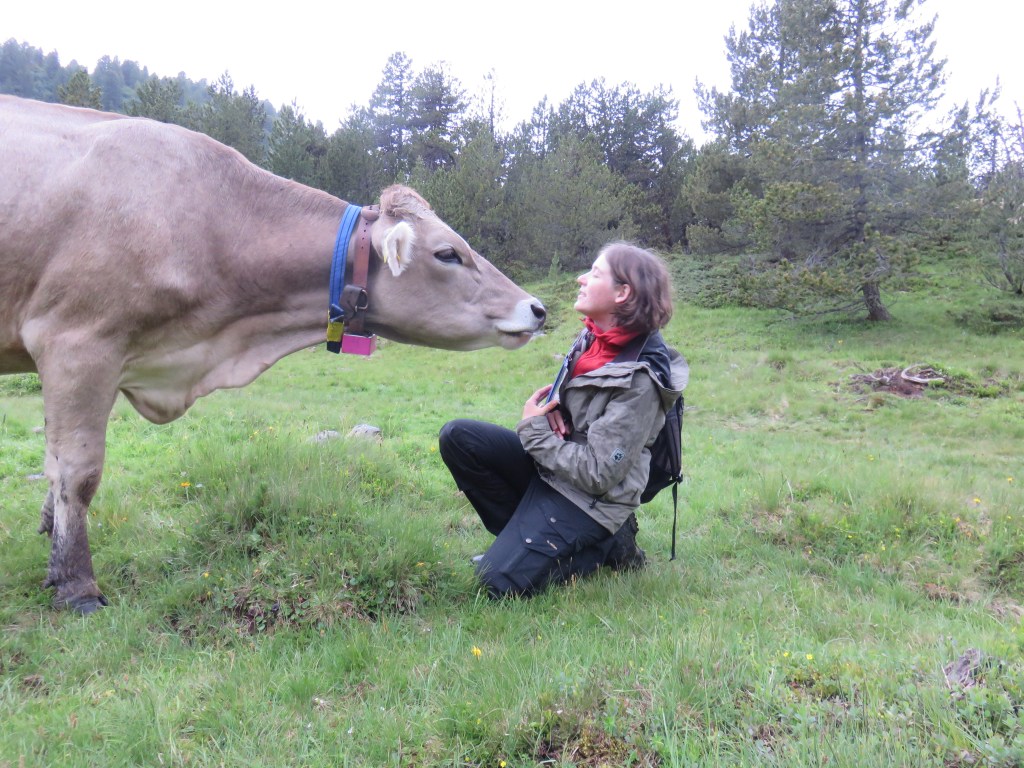
Caren Pauler enjoys working with cattle, especially in the harsh environmental conditions of her study area in the Swiss Alps (photo by Manuel Schneider).

Caren Pauler: Choosy grazers (Why plants are tasty to cattle and why Highland cattle eat almost everything)

Caren Pauler enjoys working with cattle, especially in the harsh environmental conditions of her study area in the Swiss Alps (photo by Manuel Schneider).

Caren Pauler is currently a Ph.D. student at Agroscope in Zürich and the Centre for Organismal Studies, University of Heidelberg. Caren will be defending her PhD this July. In this insight, Caren discusses with us her article “Choosy grazers: Influence of plant traits on forage selection by three cattle breeds” and how her interest in ecology was shaped.

Continue reading “Caren Pauler: Choosy grazers (Why plants are tasty to cattle and why Highland cattle eat almost everything)”

“Breaking down leaves is basically hard work, so if the fungi have the option of an easier life, they take it?” Ken Thompson interviews Hal Halvorson in our new podcast

“Breaking down leaves is basically hard work, so if the fungi have the option of an easier life, they take it?” Continue reading “Breaking down leaves is basically hard work, so if the fungi have the option of an easier life, they take it?” Ken Thompson interviews Hal Halvorson in our new podcast