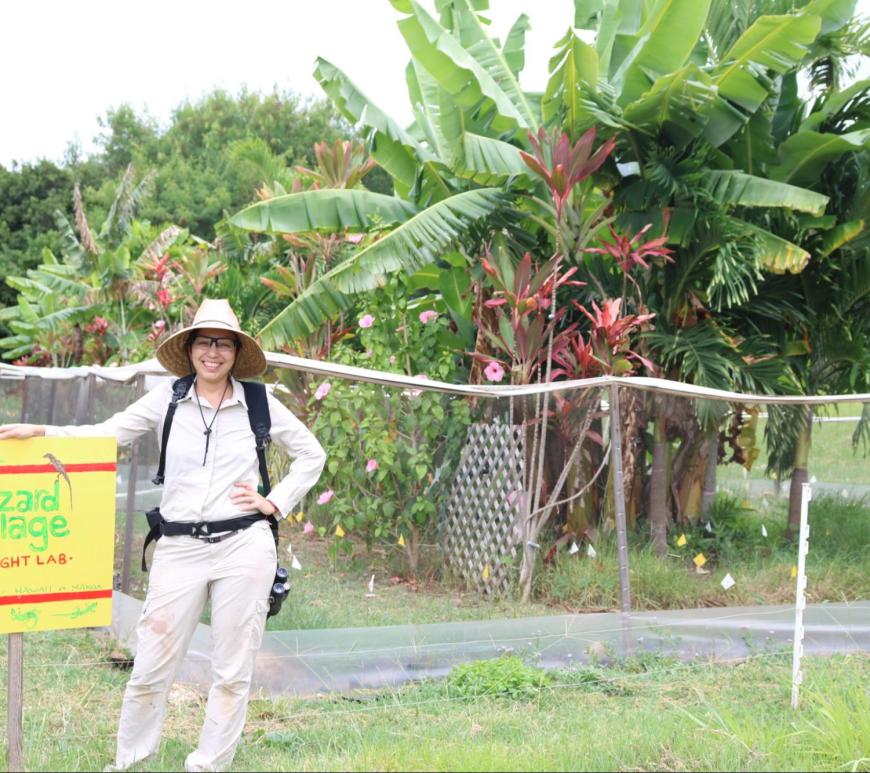
Lara Ferry

We welcome our new Executive Editor, Lara Ferry

Hello!  I am so thrilled to be able to write this post and introduce myself to you all!  Some of you have surely worked with me in the past several years as I have been a Senior Editor for the journal, Functional Ecology, for about four years now.  I am sure I will be getting to know even more of you soon.  I am excited … Continue reading We welcome our new Executive Editor, Lara Ferry

Amber Wright - Photo by Laci Gerhart-Barley

Amber Wright: Sticky toes and grippy claws

lizards use habitat in ways that match their clinging ability In this month’s cover image story we see that lizards vary in their ability to cling to different kinds of surfaces, and how this can lead to species sharing habitat.  How can lizards stick to smooth surfaces? Have you ever seen a lizard run up a window and wondered how they do it? Geckos and … Continue reading Amber Wright: Sticky toes and grippy claws

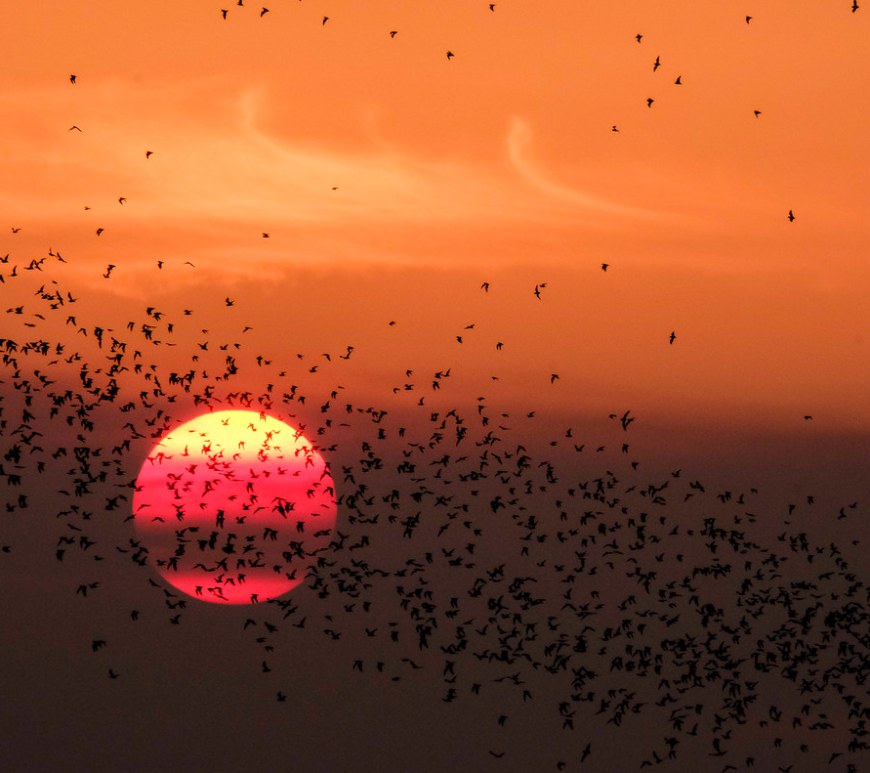
"Bat Sunset" by ejmc is licensed under CC BY-SA 2.0

Bat Week Quiz

It’s bat week this week, and we’re celebrating with a quiz all about our lovely winged relatives. Bats are some of the most fascinating and diverse groups of mammals, the only mammals to live on every continent on earth (except Antarctica) bats fly using wings that are highly adapted hands. Think you know all about our echolocating friends? Test your knowledge with this quiz then … Continue reading Bat Week Quiz

Figure: Me and my daughter on one of our little hikes with family. The photo has been taken a while ago because now I very rarely happen to be in front of the camera, but am mostly the one behind the camera taking the photos of the moments in our life.

Tsipe Aavik: The role of interactions must not be ignored during ecological restoration

In this post, assistant professor Tsipe Aavik from University of Tartu presents her collaborative perspective paper ‘The joint effect of host plant genetic diversity and arbuscular mycorrhizal fungal communities on restoration success’. She discusses the importance of looking at invisible components of biodiversity to improve restoration, the necessity of doing collaborative studies and her proud on transmitting science to general public.    About the paper … Continue reading Tsipe Aavik: The role of interactions must not be ignored during ecological restoration

Updated Animal Ethics Policy 

Originally posted on Animal Ecology in Focus:
We’ve recently updated our policy on animal research ethics for all the BES journals (Ecological Solutions and Evidence, Functional Ecology, Journal of Animal Ecology, Journal of Applied Ecology, Methods in Ecology and Evolution?and?People and Nature).?We’ve made this update to ensure we’re in line with the most up to date thinking on animal ethics, and to ensure all our… Continue reading Updated Animal Ethics Policy 

Victoria outside their grandmother's house in Nyssa, OR, USA

Victoria Luizzi: Is it worth it to smell nice? Allocation cost of plants floral fragrance under nutrient stress

In this post Victoria Luizzi, PhD candidate at University of Arizona, presents their work ‘Phenotypic plasticity in floral scent in response to nutrient, but not water, availability in the perennial plant Arabis alpina (Brassicaceae)’, discuss the importance phenotypic plasticity for plants and revisit their experience at Sweden before starting their PhD. About the paper Animal-pollinated plants use a variety of strategies to attract pollinators to … Continue reading Victoria Luizzi: Is it worth it to smell nice? Allocation cost of plants floral fragrance under nutrient stress

Dr. Tamir Klein

Road to COP26: Global warming but local heat exposure

What climate change means for India’s and Africa’s growing populations – Tamir Klein Climate change is here and is not showing any sign of moving away from the headlines. Headlines which come from every point on the globe, showing that the impact is indeed global. Wildfires in Australia are followed by heatwaves in North America, and so forth. However, as ecologists, we know that impacts … Continue reading Road to COP26: Global warming but local heat exposure

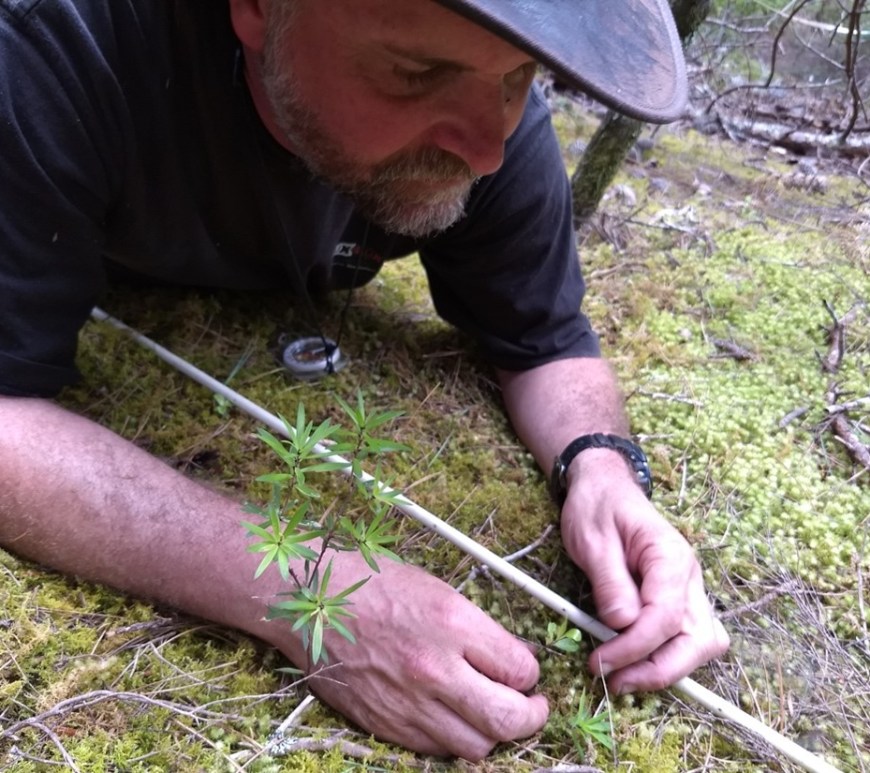
George Perry conducting research.

George Perry: So, how far might extinct birds have moved seeds?

In this instalment of “Behind the Paper”, Professor George Perry (he/him/his) of the University of Auckland shares with us the background of the paper “Reconstructing ecological functions provided by extinct fauna using allometrically informed simulation models: an in silico framework for ‘movement paleoecology”. About the paper Imagine if you could attach a high-resolution biotelemetric tracker on a dinosaur or a moa or a giant ground … Continue reading George Perry: So, how far might extinct birds have moved seeds?

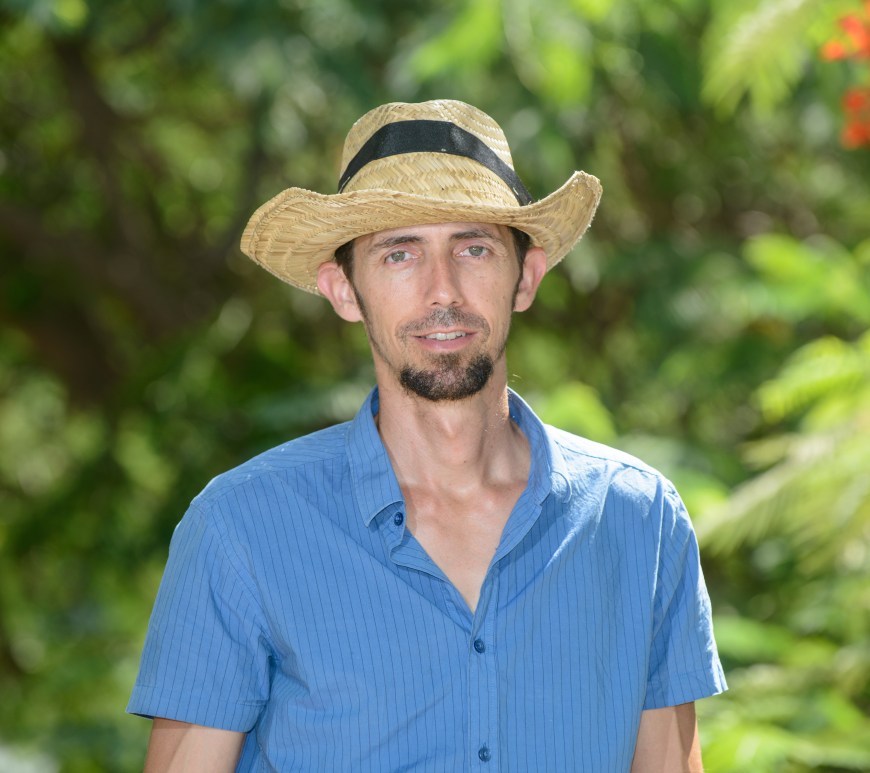
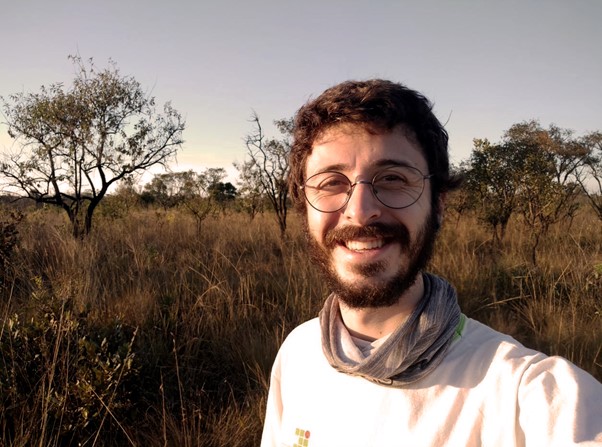
Marco Chiminazzo

Marco Chiminazzo: ‘your best buds are worth protecting’, plant strategies to cope with fire in Cerrado (Brazil)

In our latest post PhD candidate at Universidade Estadual Paulista, Marco Chiminazzo, presents his work ‘Your best buds are worth protecting: woody species exhibit different types of bud protection’, discuss about the importance of plant traits to cope with fire and shares how he got inspiration from Punk music to pursue his research career. About the paper In this paper we analysed how bud traits … Continue reading Marco Chiminazzo: ‘your best buds are worth protecting’, plant strategies to cope with fire in Cerrado (Brazil)

Author Xibin Sun, PhD Candidate, Sun Yat-sen University

Xibin Sun: Divergent responses of symbiotic and asymbiotic N2 fixation to seawater additions

In this post Xibin Sun, phd candidate at Sun Yat-sen University, shares the insights of his paper ‘Divergent responses of symbiotic and asymbiotic N2 fixation to seawater additions’, presents his future research plans and shows his love for their study site landscapes.    What’s your paper about? This paper reports responses of symbiotic N2 fixation (SNF) and asymbiotic N2 fixation (ANF) to seawater additions. We … Continue reading Xibin Sun: Divergent responses of symbiotic and asymbiotic N2 fixation to seawater additions