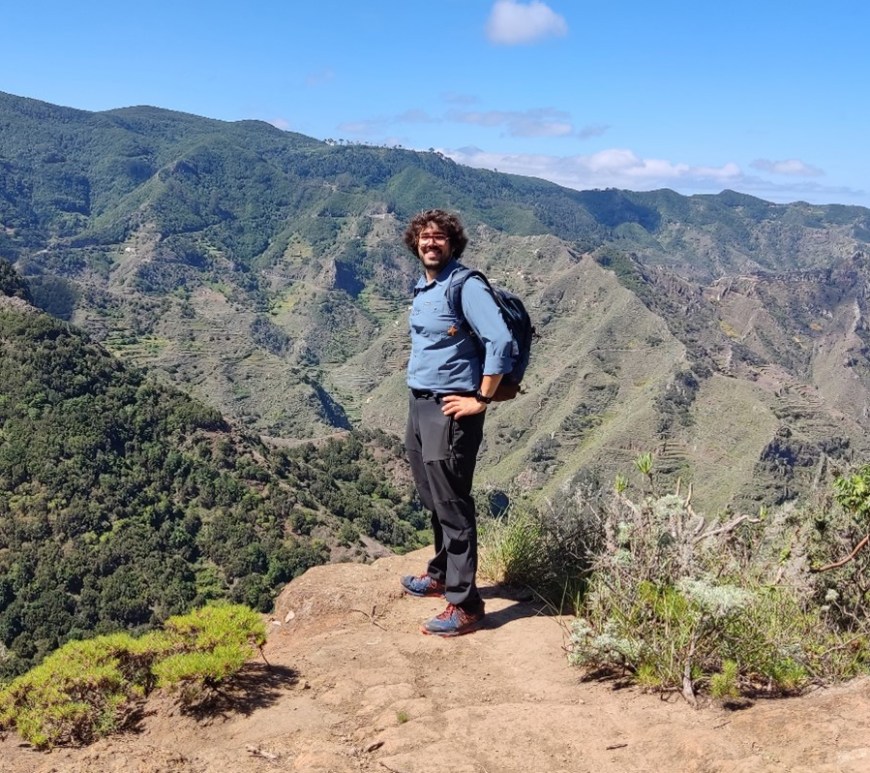
Sabine Nooten: Ant body size mediates functional performance and species interactions in carrion decomposer communities

In this blog post, Sabine Nooten, postdoctoral researcher at the University of Würzburg, Germany, presents her latest work ‘Ant body size mediates functional performance and species interactions in carrion decomposer communities‘. She highlights the importance of linking species traits to function in the community and ecological process, and discusses the power of field-based experiments in functional ecology. About the paper Ecological processes are driven by … Continue reading Sabine Nooten: Ant body size mediates functional performance and species interactions in carrion decomposer communities

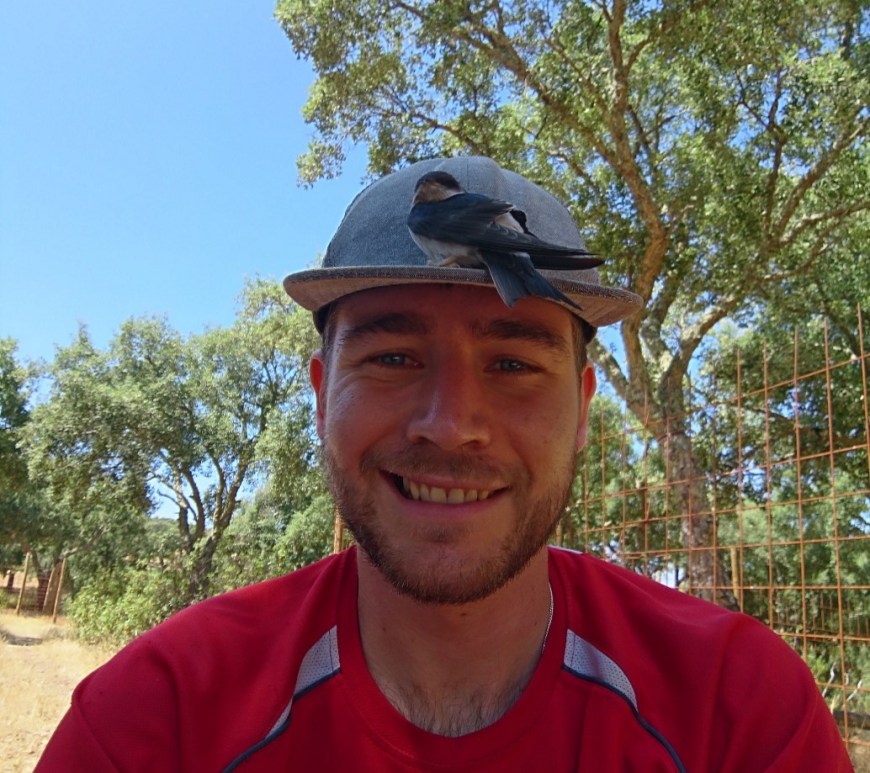
Javiera Benavente: Scaling of metabolism and excretion along a temperature gradient

In this blog post, Dr. Javiera Benavente, who recently graduated with their PhD from the University of Auckland, discusses with their recently accepted paper, “Plasticity and evolution shape the scaling of metabolism and excretion along a geothermal temperature gradient.” About the paper In this paper, we investigated how phenotypic plasticity and contemporary evolutionary adaptation can shape how the size- and temperature-dependence of metabolic and excretion … Continue reading Javiera Benavente: Scaling of metabolism and excretion along a temperature gradient

Tara-Lyn Camilleri: Parental sugar consumption modifies offspring life history and physiology

In this blog post, Tara-Lyn Camilleri, a Ph.D. candidate at Monash University in Australia, discusses her newly published paper, “Maternal and paternal sugar consumption interact to modify offspring life history and physiology”. About the paper Varying the environment of an organism can alter their physiology, which in turn alters their development time, lifespan, the rate they reproduce, the survival rate of their offspring, their body … Continue reading Tara-Lyn Camilleri: Parental sugar consumption modifies offspring life history and physiology

Bin Wei: External nitrogen inputs inhibit plant litter decomposition in an alpine steppe

In this new post, Bin Wei, a Ph.D. student from the Institute of Botany, Chinese Academy of Sciences, China, discusses his recently published paper, “Decreased ultraviolet radiation and decomposer biodiversity inhibit litter decomposition under continuous nitrogen inputs.” About the paper Anthropogenic nitrogen (N) inputs could alter key processes in terrestrial ecosystems. Of them, litter decomposition is a key process which functions as the main pathway … Continue reading Bin Wei: External nitrogen inputs inhibit plant litter decomposition in an alpine steppe

Yanjun Li: Herbivory increases the dominance of invasive alien species

In this post, Ms. Yanjun Li, PhD student at Northeast Institute of Geography and Agroecology, Chinese Academy of Sciences, China, presents her latest work: “Herbivory may mediate the effects of nutrients on the dominance of alien plants.” She discusses how the level and fluctuation of nutrient availability interacts with the trophic level to affect plant invasion. About the paper It is frequently assumed that increases … Continue reading Yanjun Li: Herbivory increases the dominance of invasive alien species

Author Dianye Zhang, Institute of Botany, Chinese Academy of Sciences.

Dianye Zhang: Nitrogen-induced changes in biodiversity and plant community composition affect soil respiration

Dr. Dianye Zhang, a postdoc from Prof. Yuanhe Yang’s Lab in the Institute of Botany, Chinese Academy of Sciences, discusses his recent paper “Changes in above-/below-ground biodiversity and plant functional composition mediate soil respiration response to nitrogen input” published in Functional Ecology. What is the background behind your paper? Intensified human activities accelerate the deposition of reactive nitrogen (N) into terrestrial ecosystems. Reactive N enrichment, … Continue reading Dianye Zhang: Nitrogen-induced changes in biodiversity and plant community composition affect soil respiration

A photo of Amy carrying out wild wood mouse fieldwork.

Amy Sweeny: Why is this mouse more infected than others?

In this new post Amy Sweeny, postdoctoral research at University of Edinburgh, presents her last work ‘Spatiotemporal variation in drivers of parasitism in a wild wood mouse population.’ She discusses the importance of recognising the forces behind parasitism, the difficulties behind field work and her career path on disease ecology. About the paper In natural populations, parasite infection is ubiquitous. However, some individuals within a … Continue reading Amy Sweeny: Why is this mouse more infected than others?

Li-ting Zheng, PhD Candidate, East China Normal University

Li-ting Zheng: Functionally diverse tree stands with intensive canopy packing reduce herbaceous diversity and productivity

In this post Li-ting Zheng, a PhD candidate at East China Normal University, presents her recently accepted paper “Functionally diverse tree stands reduce herbaceous diversity and productivity via canopy packing.” She discusses the importance of tree functional diversity in shaping the dynamics of the understorey herbaceous community during the early successional period, and the importance of communication for those pursuing a research career. About the … Continue reading Li-ting Zheng: Functionally diverse tree stands with intensive canopy packing reduce herbaceous diversity and productivity

Fernanda Barros

Fernanda Barros: What can plant life history tell us?

Fernanda Barros, postdoc at University of Exeter, talks in this new post about her recent paper ‘Phytogeographic origin determines Tropical Montane Cloud Forest hydraulic trait composition’. She highlights the importance of functional traits for ecology, discusses the importance of drought tolerance in tropical mountain cloud forests and calls for more efforts to reduce inequality in science. About the paper Our paper investigates traits of important … Continue reading Fernanda Barros: What can plant life history tell us?

2021 Haldane Prize Shortlist: Functional Ecology’s Award for Early Career Researchers

The Haldane Prize is awarded by the British Ecological Society each year for the best paper in Functional Ecology written by an early career author. Here is the shortlist for the 2021 Haldane Prize. Alexander Austin: Solitary bee larvae prioritize carbohydrate over protein in parentally provided pollen Audrey Barker Plotkin: Defoliated trees die below a critical threshold of stored carbon Bálint Uveges: Chemical defence effective against multiple … Continue reading 2021 Haldane Prize Shortlist: Functional Ecology’s Award for Early Career Researchers