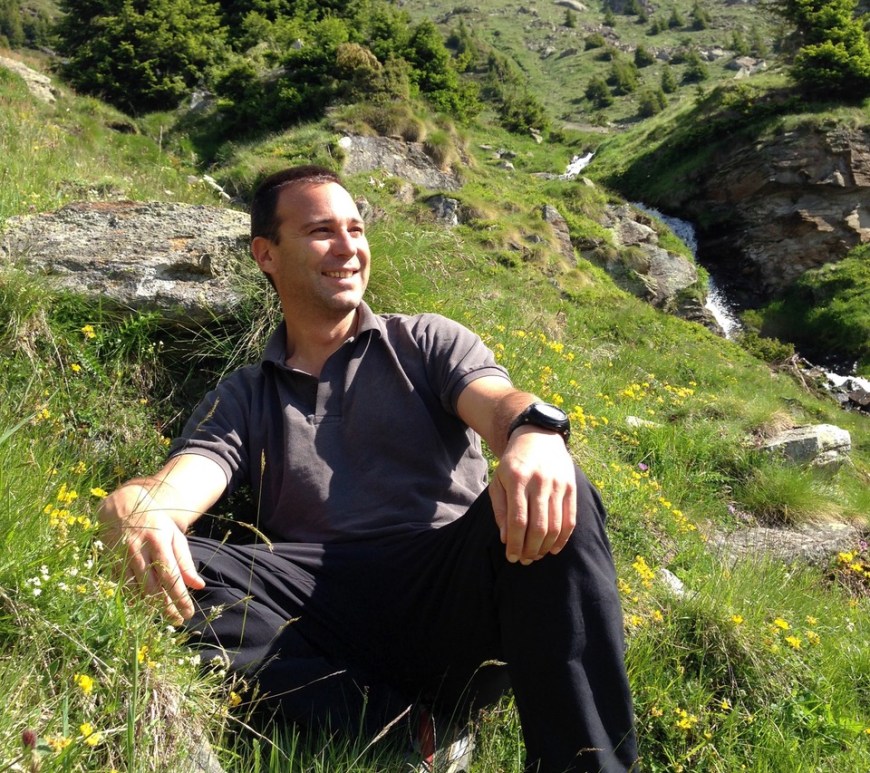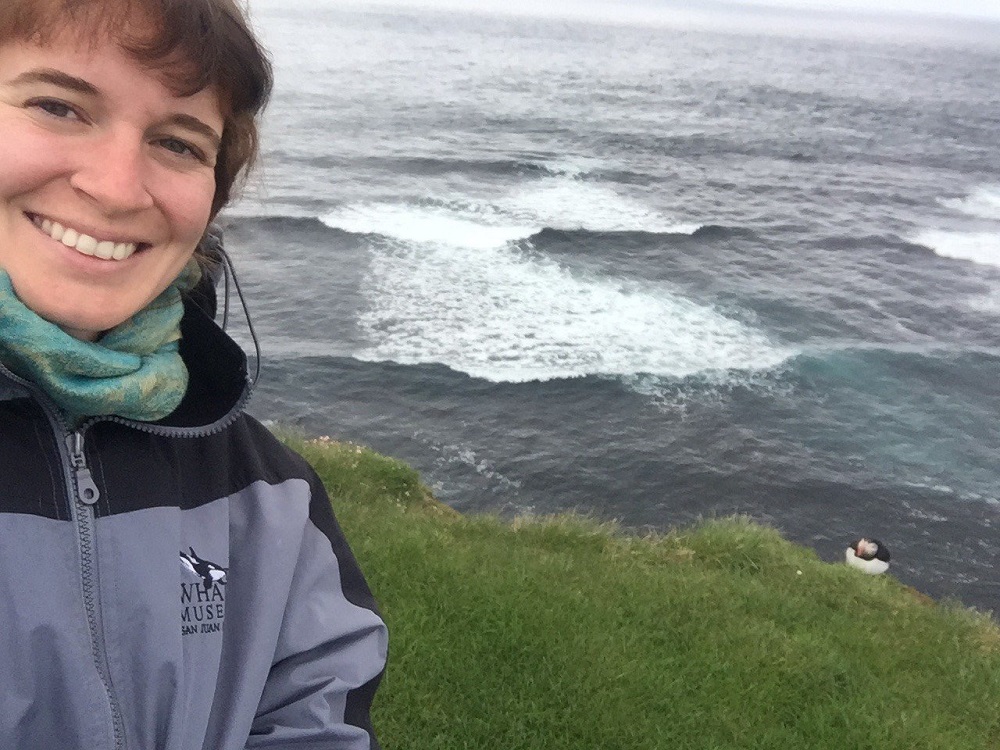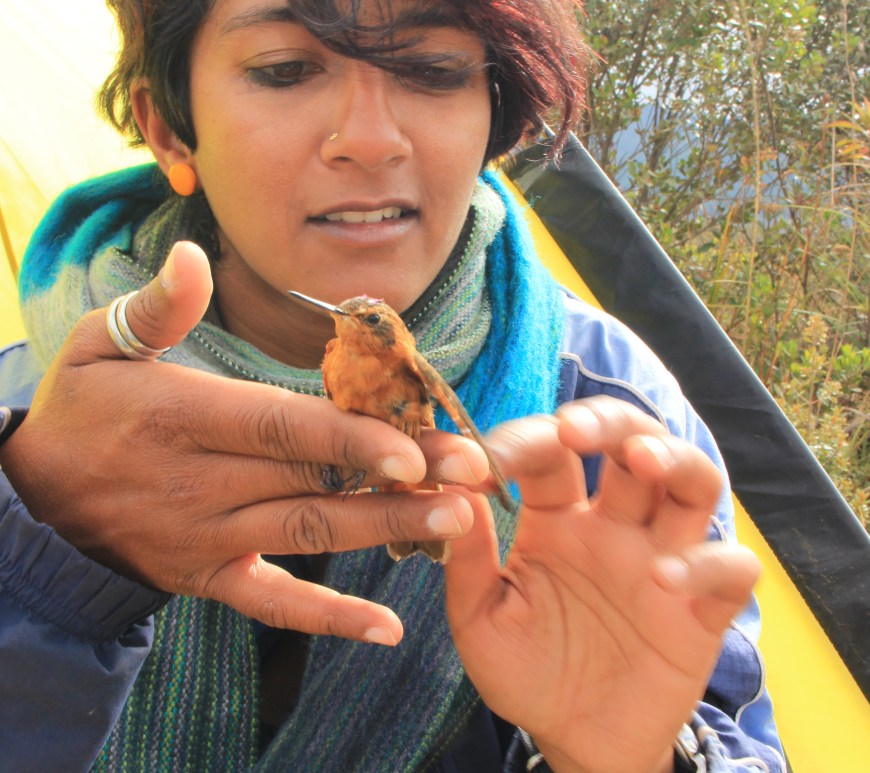
Anusha Shankar + hummingbird. Credit: Julisa Ricart

Anusha Shankar: Modelling energy budgets of hummingbirds

Dr. Anusha Shankar is a National Geographic Explorer and Young Leader, a Lewis and Clark Field Scholar, and a Postdoctoral Fellow at the University of Alaska at Fairbanks. In this insight, Dr. Shankar discusses her paper “Hummingbirds budget energy flexibly in response to changing resources”, how this work may be used for other species, and gives advice to fellow scientists.

Continue reading “Anusha Shankar: Modelling energy budgets of hummingbirds”

Marie-Caroline Prima: Empirically testing the robustness of a spatial network following habitat loss and fragmentation

Marie-Carolina Prima

In this insight, Dr. Marie-Caroline Prima discusses the paper, “A landscape experiment of spatial network robustness and space-use reorganisation following habitat fragmentation”, possible new research questions, and her involvement in ecology.

Continue reading “Marie-Caroline Prima: Empirically testing the robustness of a spatial network following habitat loss and fragmentation”

Stefano Mammola doing fieldwork in a cave. Photo by courtesy of Francesco Tomasinelli (http://www.isopoda.net/).

Stefano Mammola: Revisiting Janzen’s hypothesis using cave-dwelling spiders

In this insight, Dr. Stefano Mammola discusses his paper “Extending Janzen’s hypothesis to temperate regions: a test using subterranean ecosystems” as well his experience as a subterranean ecologist. What’s your paper about? This paper is about testing the underlying assumption of Janzen’s hypothesis in caves. Published in 1967 under the evocative title “Why Mountain Passes are Higher in the Tropics”, Janzen’s hypothesis is an important … Continue reading Stefano Mammola: Revisiting Janzen’s hypothesis using cave-dwelling spiders

Julie Marie van der Hoop: foraging amongst old data with the whales

Julie Marie van der Hoop has just finished up a Marie Sklodowska-Curie Postdoctoral Research Fellowship with the Marine Bioacoustics Lab at Aarhus University. In this Insight, she talks about her work on Foraging rates of ram-filtering North Atlantic right whales. In this paper, the authors used multi-sensor bio-logging tags to ask the questions: How much prey-laden water is filtered by right whales over the course … Continue reading Julie Marie van der Hoop: foraging amongst old data with the whales

Brian Gerber: Sage grouse and site-fidelity: moving beyond the win-stay:lose-switch rule.

Dr. Brian D. Gerber is an assistant professor at the University of Rhode Island in the department of Natural Resources Science (Lab Website, Google Scholar, ResearchGate). He focuses on understanding behavioral, population, and community ecology to conserve and manage wild animals. In this insight, Dr. Gerber discusses the background of the paper, “Extreme site fidelity as an optimal strategy in an unpredictable and homogeneous environment” … Continue reading Brian Gerber: Sage grouse and site-fidelity: moving beyond the win-stay:lose-switch rule.

Manuela Abelho

Manuela Abelho: fallen leaves and feeding streams

Manuela Abelho
Manuela Abelho

The journey is as important as the destination:  autumn-leaves as the main food source for stream communities

In this Insight, Manuela Abelho discusses her recent paper, Litter movement pathways across terrestrial–aquatic ecosystem boundaries affect litter colonization and decomposition in streams.

Continue reading “Manuela Abelho: fallen leaves and feeding streams”

Alex Strauss: disease, diversity and dilution

Dr Alex Strauss  is a Postdoctoral Research Assistant at the University of Minnesota and winner of the 2018 Haldane Prize for Early Career Researchers for his paper, Linking host traits, interactions with competitors and disease: Mechanistic foundations for disease dilution.

In this Insight, he talks about the background behind his paper, digs into disease, dilution and biodiversity, and what he wants to see happen next in this area.

Continue reading “Alex Strauss: disease, diversity and dilution”