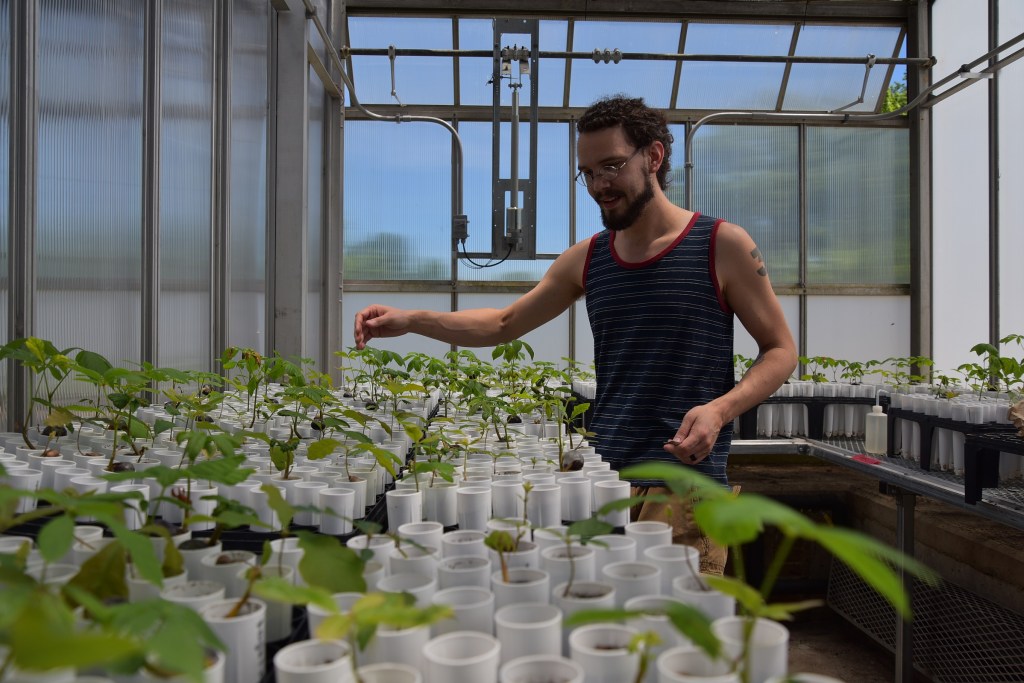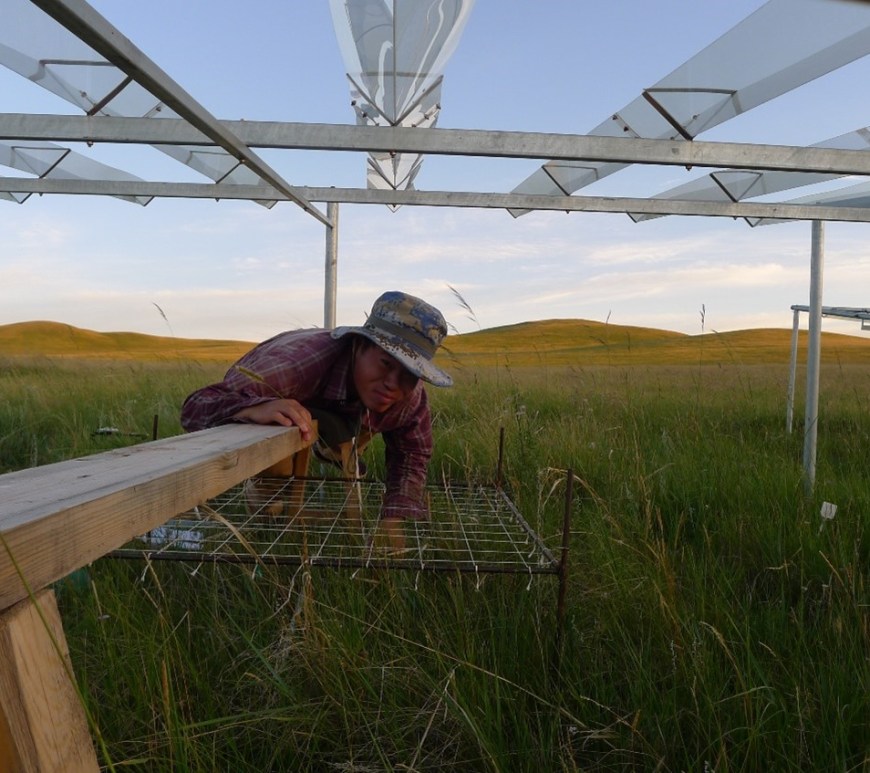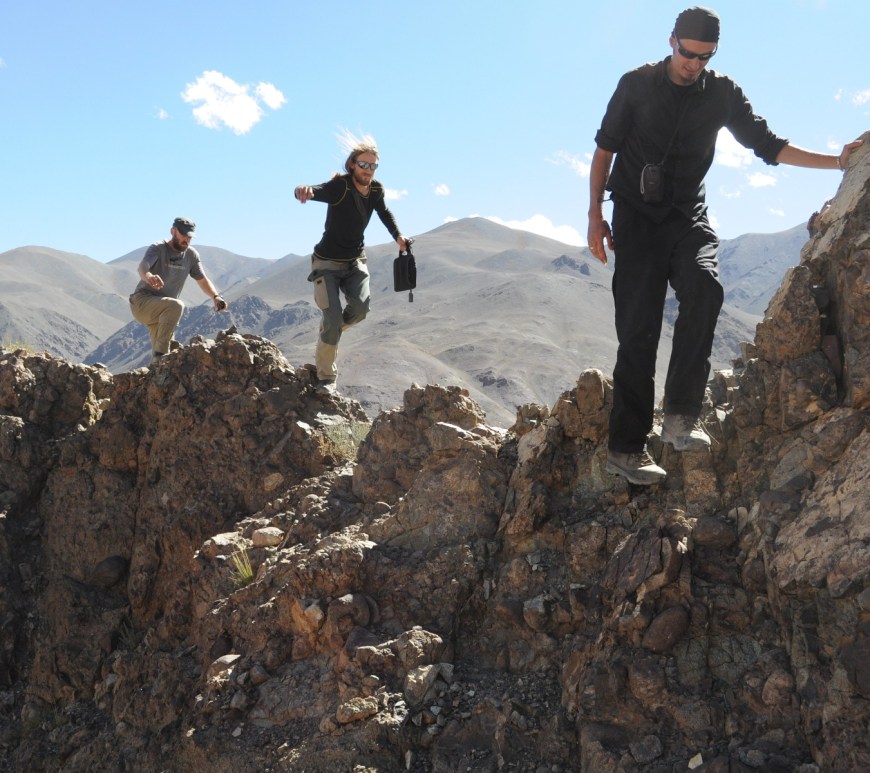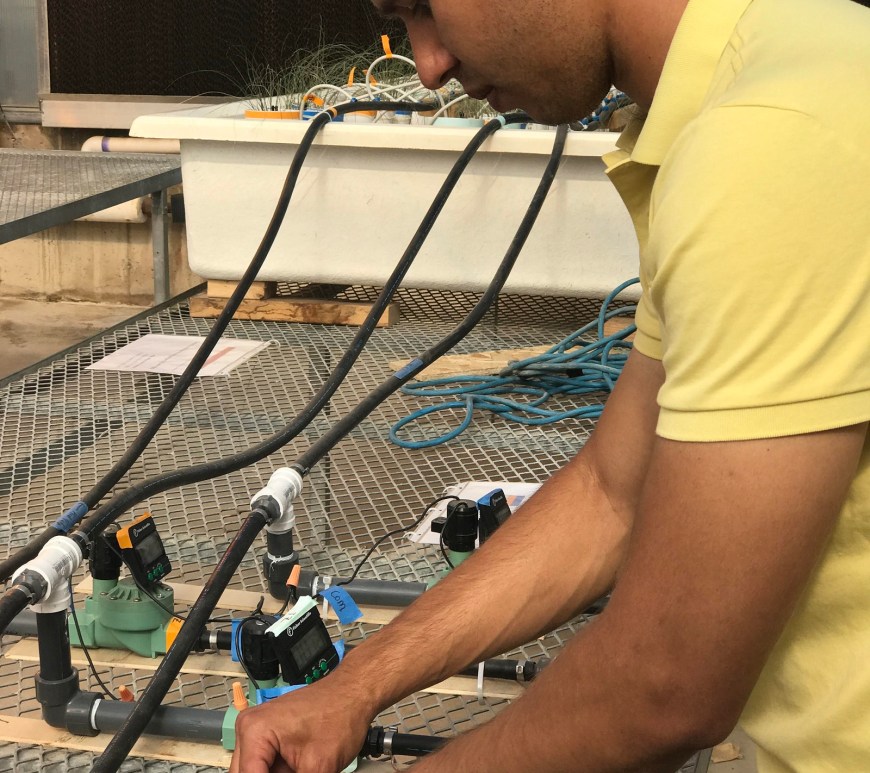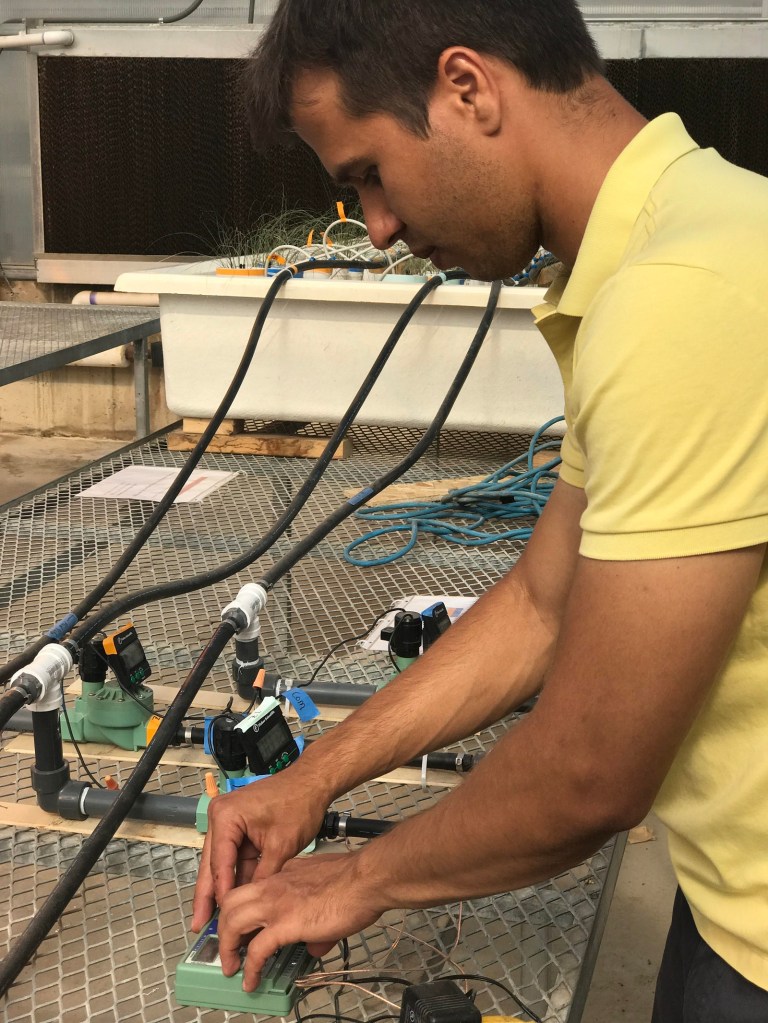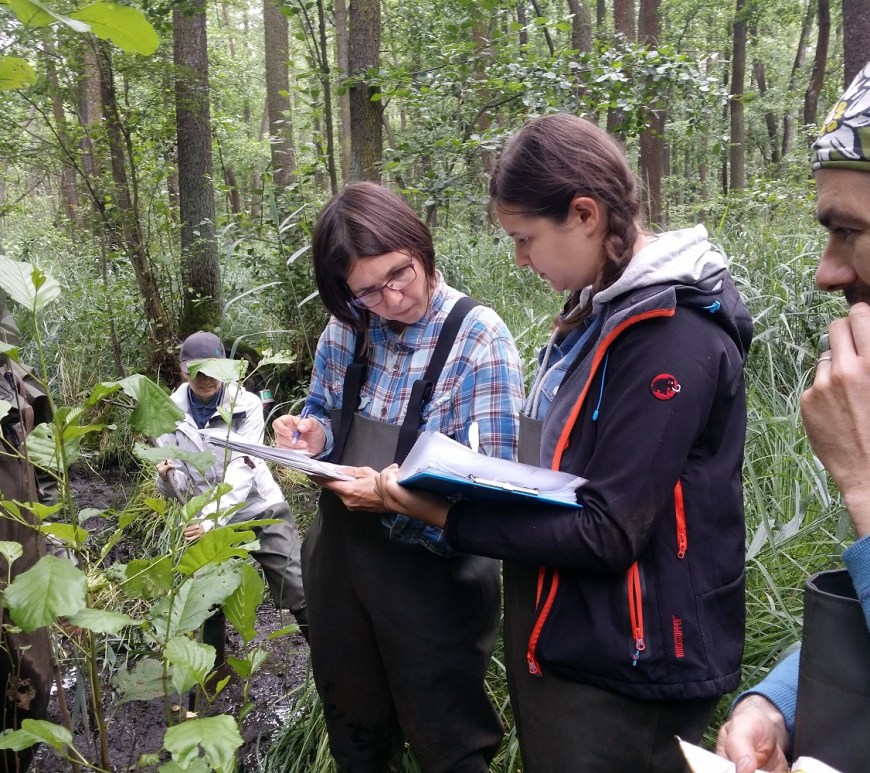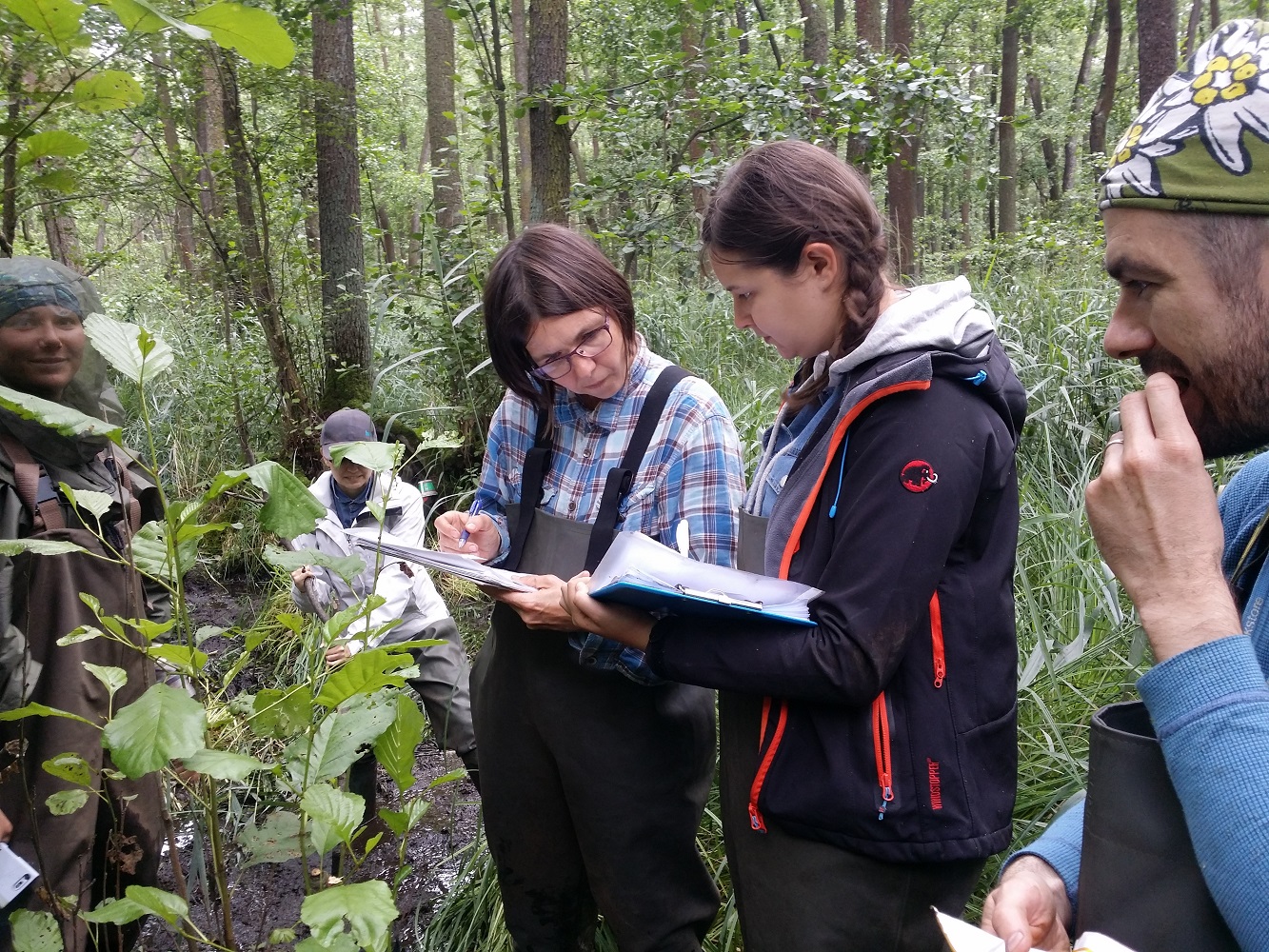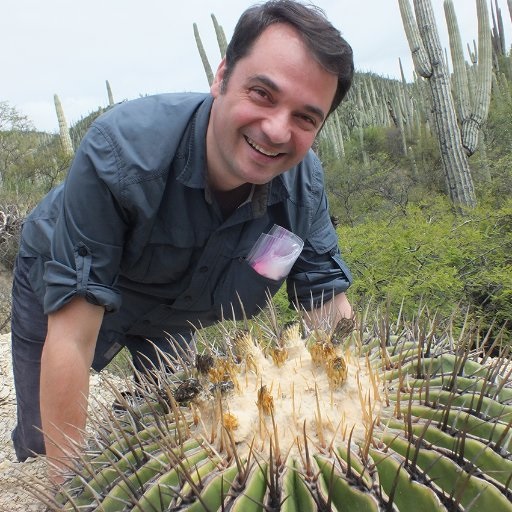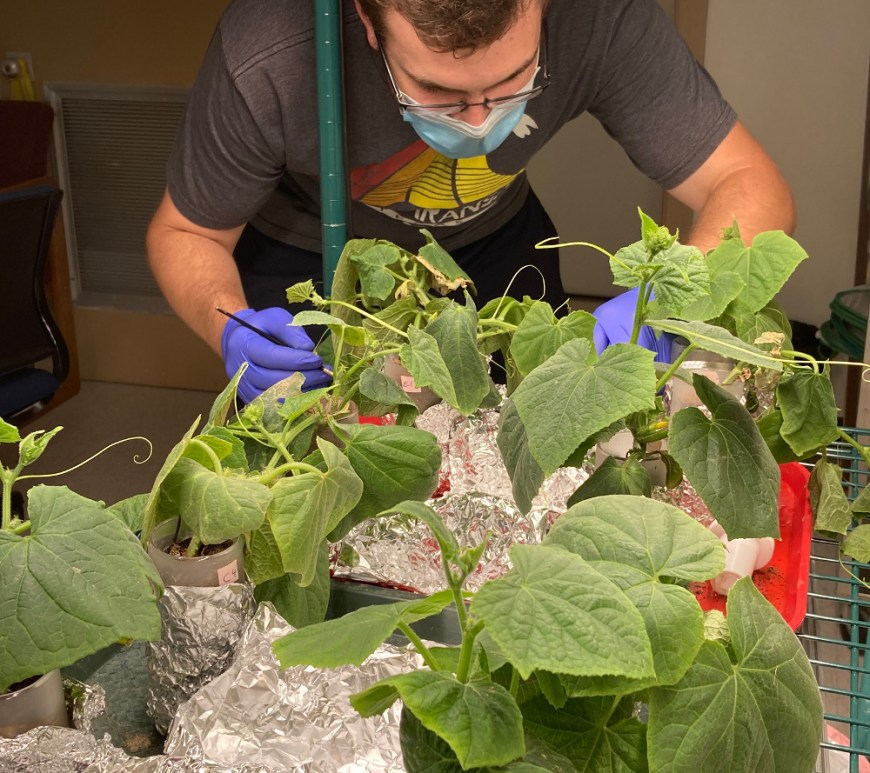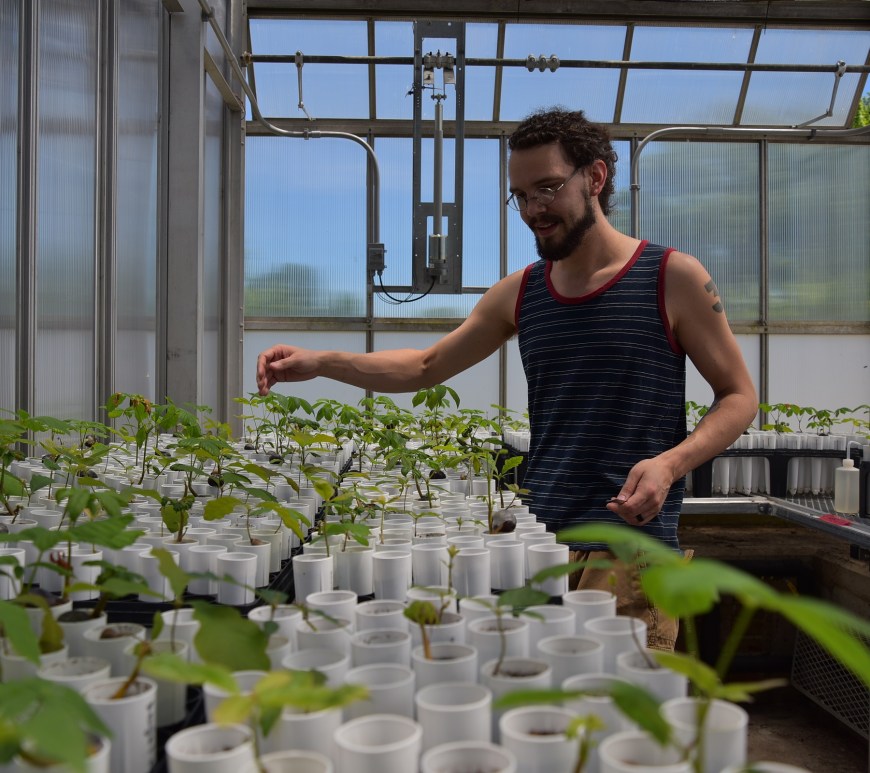
Andrii Zaiats during the experiment, Summer 2012.

Andrii Zaiats: Surface roots in a high desert shrub

2021 Update: The research discussed in this blog has been shortlisted for the 2020 Haldane Prize for early career researchers.

Andrii Zaiats, a PhD student at Boise State University, talks about his research into neighbouring plant interactions and competition for water, Intraspecific variation in surface water uptake in a perennial desert shrub – his first peer-reviewed publication.

Continue reading “Andrii Zaiats: Surface roots in a high desert shrub”
Zenon Czenze - In the Kalahari with a hot bird (Southern Yellow-Billed Hornbill)

Zenon Czenze: Hot birds -thermoregulation in heat has co-evolved with drinking behaviour

Dr. Zenon Czenze is a postdoctoral researcher at the University of Pretoria, soon to begin a Lecturer position at the University of New England in Armidale. Here, Dr. Czenze shares his team’s observations that led to the paper “Regularly-drinking desert birds have greater evaporative cooling capacity and higher heat tolerance limits than non-drinking species.”

Zenon Czenze - In the Kalahari with a hot bird (Southern Yellow-Billed Hornbill)
Zenon Czenze – In the Kalahari with a hot bird (Southern Yellow-Billed Hornbill)
Continue reading “Zenon Czenze: Hot birds -thermoregulation in heat has co-evolved with drinking behaviour”

Amy L. Brunton Martin: Sexually deceptive orchids elicit sperm wastage – a cost for pollinators!

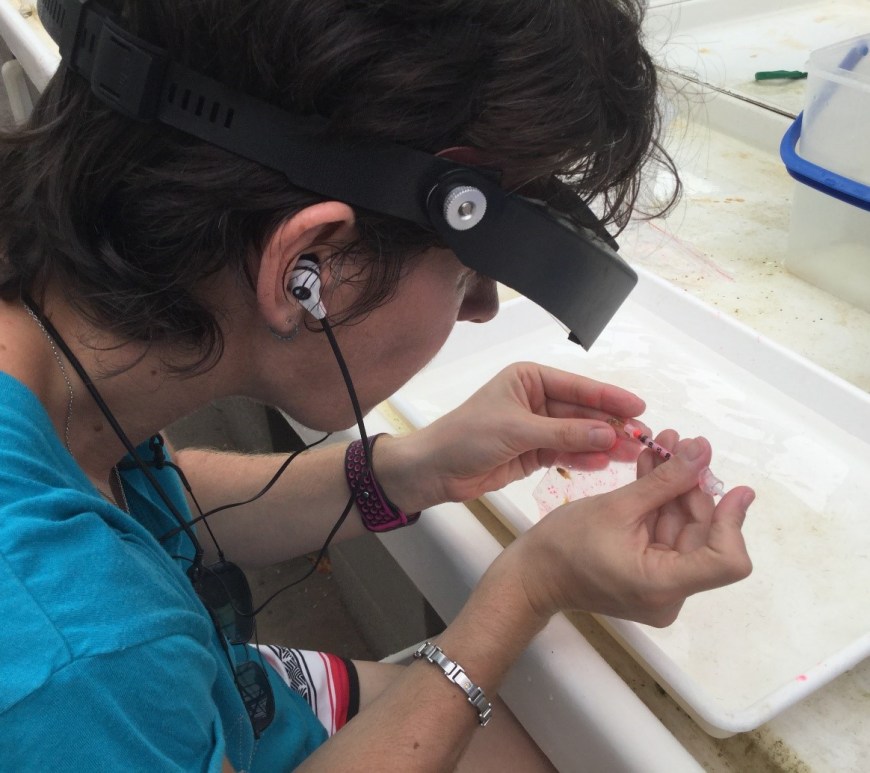
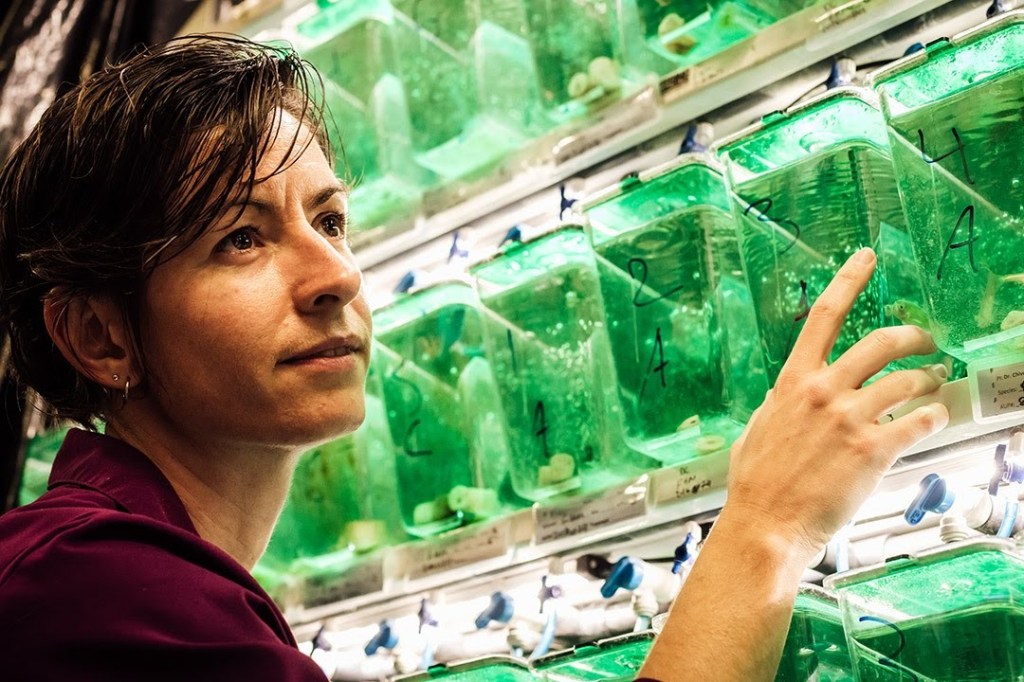
Amy Brunton Martin talks about her new paper, Orchid sexual deceit affects pollinator sperm transfer, which shows the costs of being fooled for an orchid pollinator, and highlights the importance of considering both sides of a relationship when looking at deceptive interactions in nature.   

Continue reading “Amy L. Brunton Martin: Sexually deceptive orchids elicit sperm wastage – a cost for pollinators!”
Yingying Wang

Yingying Wang: Phylogenetic structure of wildlife assemblages shapes patterns of infectious diseases

In this Insight, Yingying Wang, a Postdoctoral researcher at the University of Jyväskylä, discusses her  paper Phylogenetic structure of wildlife assemblages shapes patterns of infectious livestock diseases in Africa – recently shortlisted for the Haldane Prize for Early Career Researchers.

Yingying Wang
Yingying Wang
Continue reading “Yingying Wang: Phylogenetic structure of wildlife assemblages shapes patterns of infectious diseases”

Ximeng Li: More than iso/anisohydry

In this Insight, Ximeng Li talks about his paper More than iso/anisohydry: Hydroscapes integrate plant water use and drought tolerance traits in 10 eucalypt species from contrasting climates, recently shortlisted for Functional Ecology’s Haldane Prize. Ximeng recently finished his PhD at the Hawkesbury Institute for the Environment, Western Sydney University and has now returned to China, where he hopes to continue his research.

Continue reading “Ximeng Li: More than iso/anisohydry”

Noémie Pichon: decomposition disentangled

2021 Update – The paper discussed in this blog by Noémie Pichon is shortlisted for the 2020 Haldane Prize. This blog is also available in French.

Noémie A. Pichon, a PhD student in the Allan Lab, talks about her recent paper Decomposition disentangled: a test of the multiple mechanisms by which nitrogen enrichment alters litter decomposition, the background behind this paper and the next steps in this field.

Continue reading “Noémie Pichon: decomposition disentangled”
Elizabeth Mendoza. Photo credit: UC Irvine Graduate Division

Elizabeth Mendoza: Variation in jumping power in anurans

Elizabeth Mendoza, a PhD student at UC Irvine in the Department of Ecology and Evolutionary Biology, discusses with us her paper “What explains vast differences in jumping power within a clade? Diversity, ecology, and evolution of anuran jumping power”, along with her journey into ecology, her current research interests, and hobbies.

Elizabeth Mendoza. Photo credit: UC Irvine Graduate Division
Continue reading “Elizabeth Mendoza: Variation in jumping power in anurans”

Daniel Winkler: “Mixed-bag” strategies can help plant species cope with changing climate

In this Insight, Daniel Winkler, a Research Ecologist with the U.S. Geological Survey’s Southwest Biological Science Center, discusses his paper Earlier plant growth helps compensate for reduced carbon fixation after 13 years of warming – recently shortlisted for the Haldane Prize for Early Career Researchers.

Continue reading “Daniel Winkler: “Mixed-bag” strategies can help plant species cope with changing climate”
Casey Hall in the glasshouse, with the grass Brachypodium distachyon growing in hydroponics

Casey Hall: Plant defence against insects in a changing climate

Casey Hall is a postdoctoral researcher at The Hawkesbury Institute for the Environment, Western Sydney University looking at plant defence against insects in a changing climate. In this Insight, she talks about her erecent paper Elevated atmospheric CO2 suppresses jasmonate and silicon‐based defences without affecting herbivores.

Continue reading “Casey Hall: Plant defence against insects in a changing climate”