Rafael Dias: The spatial scaling of multiple dimensions of functional diversity in habitat islands

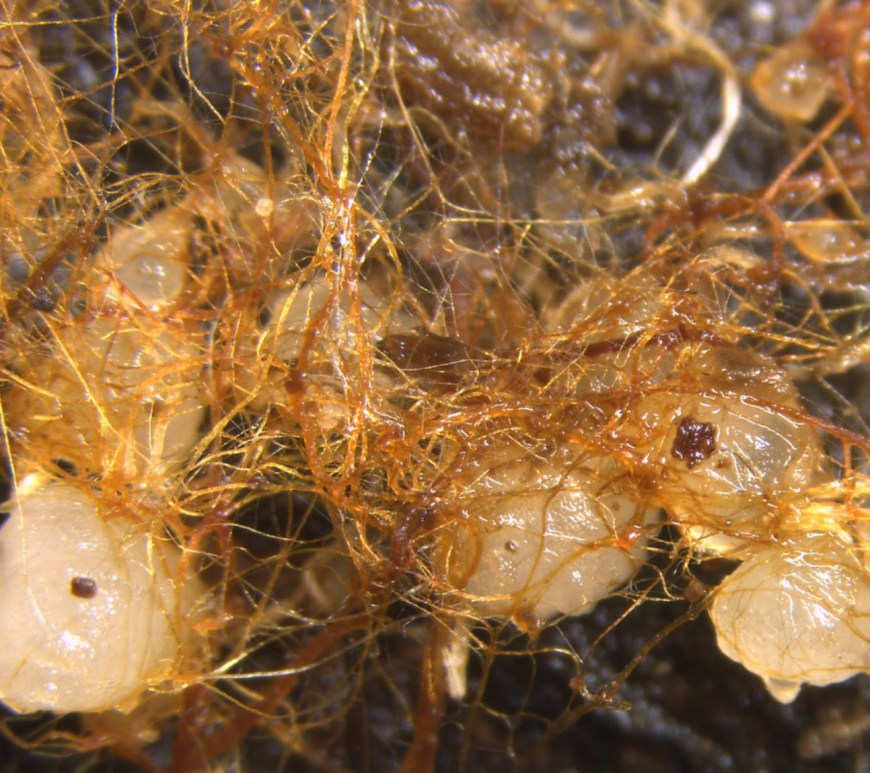
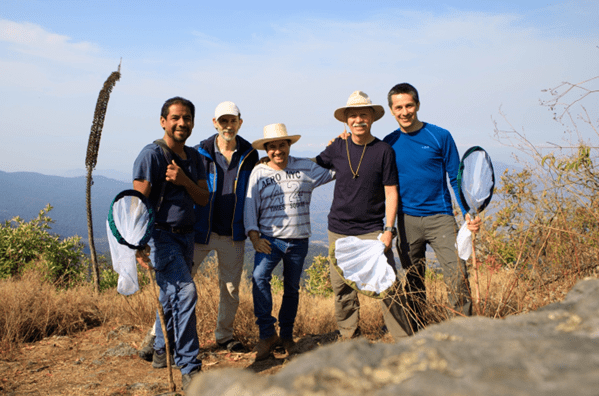
In this blog post, author Rafael Dias delves into the world of avian abundance and richness, with a ‘Behind the Paper’ look at his research article “The spatial scaling of multiple dimensions of functional diversity in habitat islands“. Rafael explains why small places can matter in big ways for functional diversity, shares the logistics of organizing cross-country research efforts, and discusses balancing research, teaching and … Continue reading Rafael Dias: The spatial scaling of multiple dimensions of functional diversity in habitat islands

Violine Ossola: Clearwing butterflies are cool! Impact of wing transparency on heating capacities along altitudinal gradients in tropical butterflies 

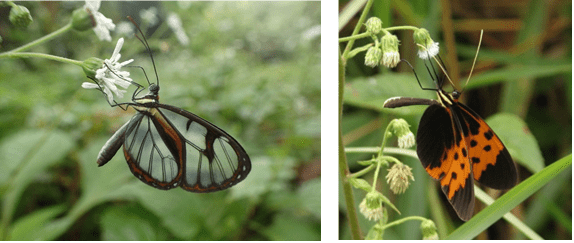
In this week’s blog post we’re getting transparent about temperature regulatory processes in clear wing butterflies! Violine Ossola and team explore the sensitivities around thermal regulation in the neotropical tribe of butterflies known as Ithomiini. In their paper, “It’s cool to be clear:  transparency induces a thermal cost in clearwing butterflies”, they describe how clearwing and opaque butterflies tackle temperature gradients via different behavioural and … Continue reading Violine Ossola: Clearwing butterflies are cool! Impact of wing transparency on heating capacities along altitudinal gradients in tropical butterflies 

Bruno Bellisario, From Refuge to Buffet: Decoding Fish Roles in Seagrass Ecosystems 

In this week’s blog post, we’re getting served an interesting dish all about seagrass! Author Dr. Bruno Bellisario explains the fascinating world of seagrass meadows from the article: “The fingerprint of functional strategies in Mediterranean seagrass fish assemblages”. Bruno discusses the importance of seagrass ecosystems on fish communities, and the complexity behind how they’re used, highlighting why we shouldn’t say seagrasses have a singular ecological … Continue reading Bruno Bellisario, From Refuge to Buffet: Decoding Fish Roles in Seagrass Ecosystems 

Carolina Olguín Jacobson, cuando el océano se calienta: lo que 15 años de monitoreo liderado por la comunidad revelaron sobre las áreas marinas protegidas en los bosques de kelp (Español)

Sobre el artículo:  Imagina que una ola de calor extrema llega a tu ciudad, pasan unos días, luego meses y luego años. Ahora imagina que no puedes escapar de la ciudad. Esa es la realidad que enfrentan los organismos marinos durante las olas de calor marinas (MHW, por sus siglas en inglés): periodos prolongados de temperaturas oceánicas anormalmente cálidas. Estos eventos son cada vez más … Continue reading Carolina Olguín Jacobson, cuando el océano se calienta: lo que 15 años de monitoreo liderado por la comunidad revelaron sobre las áreas marinas protegidas en los bosques de kelp (Español)

Carolina Olguín Jacobson on when the ocean heats up: what 15 years of community-led monitoring revealed about marine protected areas in kelp forest

In this week’s blog post we’re discussing tackling climate change through 15 years of community-led exploration of underwater kelp forests. Carolina Olguín Jacobson, author of “Recovery mode: Marine protected areas enhance resilience of invertebrate species from marine heatwaves”, shares insight into the effects of heatwaves on kelp-related species and how monitoring and conservation efforts like Sirenas de Natividad and the Marine Protected Areas (MPAs) of … Continue reading Carolina Olguín Jacobson on when the ocean heats up: what 15 years of community-led monitoring revealed about marine protected areas in kelp forest

Théo Bodineau: The impact of nocturnal warming and prey availability during reproduction in a viviparous lizard

In this week’s blog post, we’re checking our calendars and addressing how climate change is causing shifts in breeding dates for reptiles! Discussing the article “A multi-trait evaluation of patterns and fitness consequences of breeding phenology plasticity with nocturnal warming and food restriction in a lizard”, Théo Bodineau explains just how sensitive the natural world can be to thermal changes from climate change and how … Continue reading Théo Bodineau: The impact of nocturnal warming and prey availability during reproduction in a viviparous lizard

Jennifer Apland: does flower temperature affect pollinator behaviour?

In this week’s blog post, we learn what’s the buzz about pollinators and their affinity to heat. Through her recently published paper: “Isolating the effects of floral temperature on visitation and behavior of wild bee and fly pollinators”, Jennifer explores how traits and behaviours of insect pollinators can shift according to varying flower temperatures under different environmental conditions. This work is crucial to help us … Continue reading Jennifer Apland: does flower temperature affect pollinator behaviour?

Caroline Isaksson: Combined light & traffic noise exposure enhances songbirds’ antioxidant capacity & lowers damage

In our latest post, author Caroline Isaksson explores the impacts of urban pollutants on songbirds! In their recent paper: “Effects of short-term multi-pollutant exposure on the oxidative stress status of captive songbirds”, Caroline investigates how three urban pollutants impacts Zebra finches physiologically. Caroline also shares the surprising results that will promote deeper research into this dynamic. Amid her experiments, Caroline imparts advice we all need … Continue reading Caroline Isaksson: Combined light & traffic noise exposure enhances songbirds’ antioxidant capacity & lowers damage

Tim Forrester: Weight loss in female birds – an adaptive strategy

In this blog post, Tim Forrester helps answer a weighty question: Does weight loss help or hurt nesting birds? Based on his recent paper with Tom Martin, “Observational and experimental evidence that rapid mass loss is consistent with the flight efficiency hypothesis and not caused by reproductive effort in three passerine bird species”, Tim shares the fascinating physiological adaptations undergone by songbirds in anticipation of … Continue reading Tim Forrester: Weight loss in female birds – an adaptive strategy

Junghyuk Keum: Smart bird catches the worm

In this week’s blog post, we delve into the intelligent mechanisms behind how and why the smart bird catches the worm! Author Junghyuk Keum gives us a glimpse into the Cognitive Buffer Hypothesis – a theory they used to explore seabird ecology in their recently published paper: “Does brain size matter? Linking cognitive and ecological traits to climate change vulnerability in seabirds.” Junghyuk expands on … Continue reading Junghyuk Keum: Smart bird catches the worm