Amy Kirkham: Hormones reflect the impacts of reproductive rest on subsequent pregnancy in a marine predator

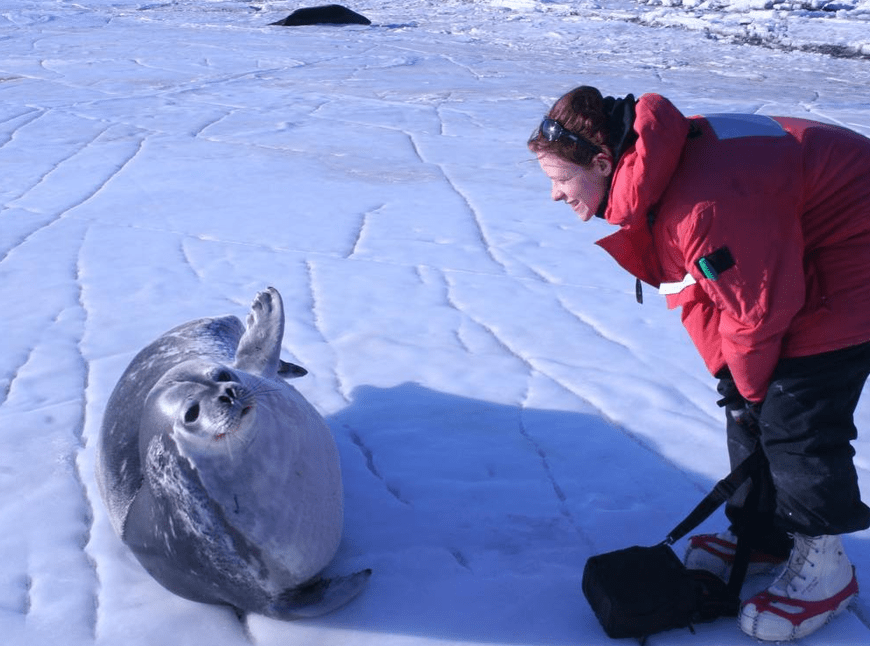
In this ‘Behind the Paper’ blog post, we’re doing things the Weddell seal way! In her recently published paper: “Hormones reflect the impacts of reproductive rest on subsequent pregnancy in a marine predator“, author Amy Kirkham, a biologist for the US Fish and Wildlife Service’s Marine Mammals Management program in Alaska, shares interesting perspectives on optimal birth timings for Weddell seals. Read about the trade-off … Continue reading Amy Kirkham: Hormones reflect the impacts of reproductive rest on subsequent pregnancy in a marine predator

Dana Liebke | How spiders respond to changes in the agricultural landscape

In this week’s ‘Behind the Paper’ blog post, we’re making a web to catch some knowledge on spiders and their habitats. From their new paper “Landscape diversity can promote functional diversity of spider assemblages while habitat characteristics filter for specific traits“, Dana Liebke, a museum educator and public relations manager at the Museum of Natural History in Magdeburg, and co-authors explore an often hidden and … Continue reading Dana Liebke | How spiders respond to changes in the agricultural landscape

Edith Singini | How rising CO2 reshapes savannas: Why some trees thrive while others struggle

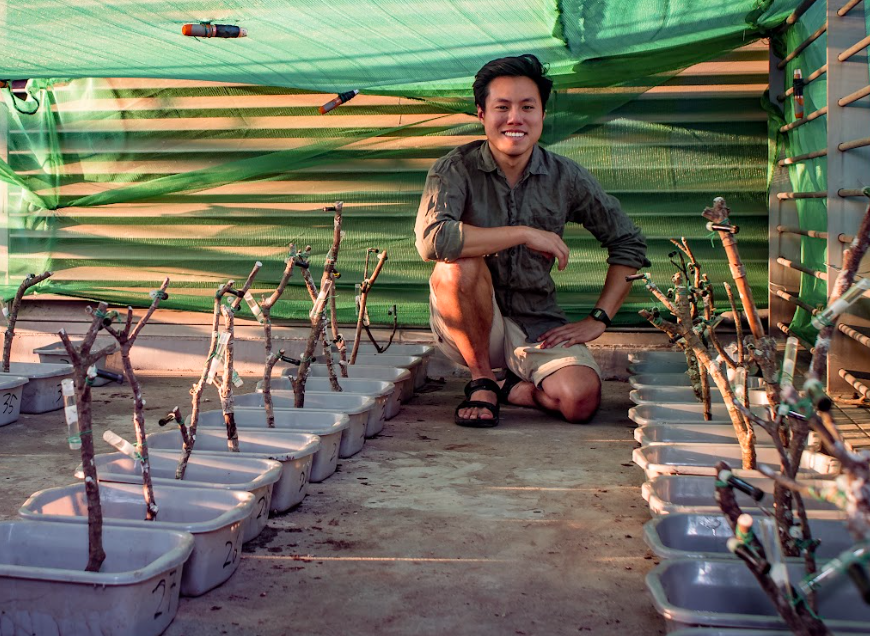
In this ‘Behind the Paper’ blog post, author Dr. Edith Singini, a lecturer at Rhodes University, delves into her new paper ‘Savanna tree species show contrasting acclimation responses to elevated atmospheric CO2 concentration and drought’. Edith shares her team’s research into why some trees are winning the encroachment race and discusses the logistical demands of a year-long experiment. 1. About the Paper Across Africa’s grass-dominated … Continue reading Edith Singini | How rising CO2 reshapes savannas: Why some trees thrive while others struggle

Qiwen Guo | Do trees adjust their underground schedule when living with different species?

In this ‘Behind the Paper’ blog post, author Qiwen Guo, a PhD student in the Institute of Forest Ecology at BOKU University in Vienna, discusses her new article  ‘Above- and below-ground phenology of four tree species in mixed forests and monospecific stands’. Qiwen Guo delves into the underground world of roots, asking “do trees adjust their underground schedule when living with different species?”. She also … Continue reading Qiwen Guo | Do trees adjust their underground schedule when living with different species?

Kai Shi | Between Drought and Grazing: The Ecological Secret Behind Solanum rostratum Invasion

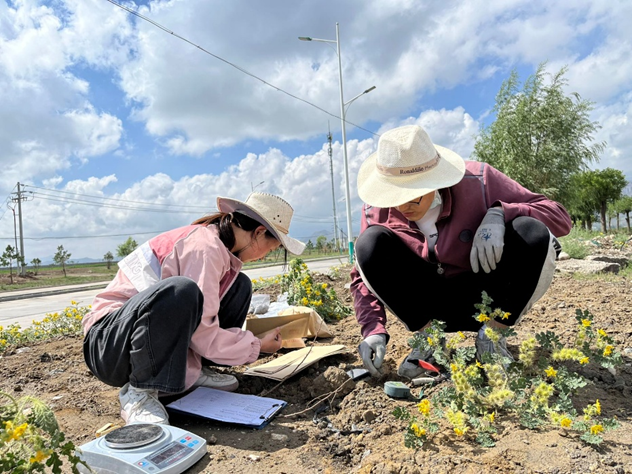
In this ‘Behind the Paper’ blog post, author Kai Shi, a PhD student at Xinjiang Institute of Ecology and Geography, Chinese Academy of Sciences, delves into their article ‘Aridity and grazing are associated with reduced trait complementarity and higher invasion intensity of Solanum rostratum in native plant communities‘. Kai discusses how healthy, diverse plant communities are a natural defense against invasions and shares the unpredictable … Continue reading Kai Shi | Between Drought and Grazing: The Ecological Secret Behind Solanum rostratum Invasion

Lisieux Fuzessy | Beyond coevolution: The flexible rules of fruit-frugivore interactions 

Have you ever wandered through a tropical forest and observed the incredible variety of fruits it contains? From tiny berries to very large, hard-shelled pods, this fruity menu supports a vast array of animals, like bats, birds, monkeys, and more. In exchange for food, these animals disperse the seeds, facilitating forest regeneration. This mutualistic relationship is the engine of tropical forest resilience and diversity. A … Continue reading Lisieux Fuzessy | Beyond coevolution: The flexible rules of fruit-frugivore interactions 

Barbara Bignon | In good form: Morphological adaptations to burrowing lifestyles in cockroaches

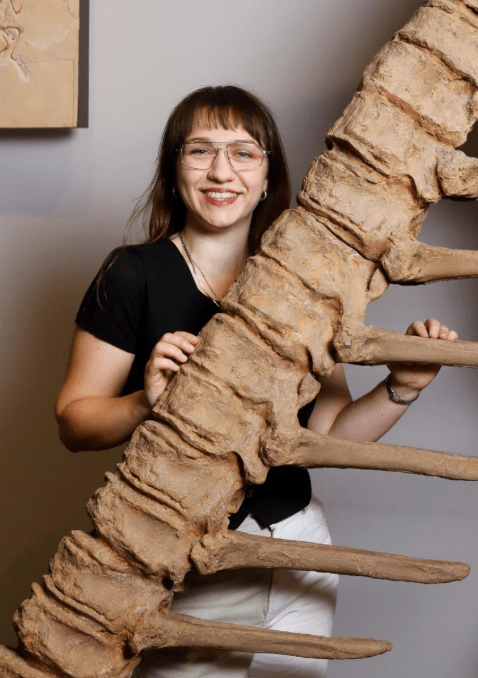
In this blog post, we’re looking at a familiar (and often un-welcomed) six-legged friend – the cockroach! Discussing the recently published paper: “In good form: morphological adaptations to burrowing lifestyles in cockroaches (Dictyoptera: Blattodea)“, author Barbara Bignon helps challenge our perspective on roaches by exploring where they like to hang out! By focusing on the ecomorphological correlations of where cockroaches are recorded, Barbara shares fascinating … Continue reading Barbara Bignon | In good form: Morphological adaptations to burrowing lifestyles in cockroaches

Kenji Suetsugu | Deadwood is not dead: a carbon gateway for orchid seedlings on dark forest floors 

In our new post, Kenji Suetsugu, professor at Kobe University (Japan), discusses his research article ‘The nexus of decay and birth: Ecological and evolutionary significance of wood-decaying fungi in green Calypsoinae orchid germination‘. Kenji’s research presents new work on green Calypsoinae orchids and the wood-decaying fungi that power their beginnings.   About the paper Why Do Orchids Sprout Beside Rotting Logs?  Have you ever wondered why … Continue reading Kenji Suetsugu | Deadwood is not dead: a carbon gateway for orchid seedlings on dark forest floors 

Mario Vallejo-Marín | The buzz of pollination and how plants stave off greedy bees 

In this week’s blog post, we’re learning all about buzz pollination between Bombus terrestris and Solanum rostratum! Author Mario Vallejo-Marín explains one of the most striking examples of evolutionary convergence in floral form – buzz pollinated flowers: “Gradual pollen release in a buzz-pollinated plant: Investigating pollen presentation theory under bee visitation”.   1. About the Paper In this paper, we used nectarless, buzz pollinated flowers, … Continue reading Mario Vallejo-Marín | The buzz of pollination and how plants stave off greedy bees 

Ricardo Sánchez Martín | Functional generalism in plant-hummingbird interactions: causes and consequences from a plant perspective

In this week’s blog post, we’re learning all about the causes and consequences of functional generalism! Author Ricardo Sánchez Martín explains the fascinating fit between hummingbirds and the plants they pollinate: “Functional generalism in plant-hummingbird interactions: causes and consequences from a plant perspective”. 1. About the Paper Scientists have long been fascinated by the apparent tight fit between hummingbirds and the flowers they pollinate: long-billed … Continue reading Ricardo Sánchez Martín | Functional generalism in plant-hummingbird interactions: causes and consequences from a plant perspective