Sam Ross: Listening for the answers to fundamental questions

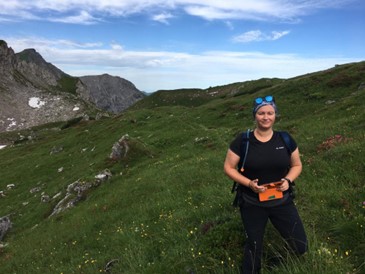
In this new post, Sam Ross—a Postdoc at the Okinawa Institute of Science and Technology Graduate University, Japan—presents his review paper ‘Passive acoustic monitoring provides a fresh perspective on fundamental ecological questions’. He discusses how acoustic monitoring isn’t just for applied ecology and conservation, and some of developments on the horizon. About the paper From a bleary-eyed dawn chorus, to magnificent symphonies of whale song, … Continue reading Sam Ross: Listening for the answers to fundamental questions

Thierry Grandmont: Le stress expérimental dans la migration influence la décision de se reproduire ou non

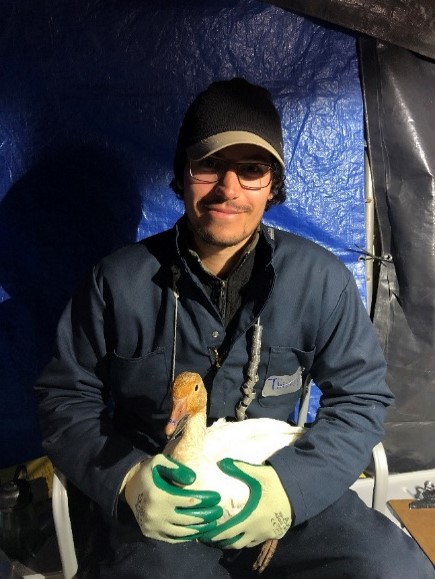
Dans cette nouvelle publication, Thierry Grandmont, un étudiant au doctorat à l’Université Laval, discute de son article récemment accepté “Should I breed or should I go? Manipulating individual state during migration influences breeding decisions in a long-lived bird species”. Il discute du lien entre la reproduction et la migration, des défis (et opportunités!) d’effectuer de la recherche pendant la pandémie et de comment l’observation d’oiseaux … Continue reading Thierry Grandmont: Le stress expérimental dans la migration influence la décision de se reproduire ou non

Thierry Grandmont: Experimental stress in migration influences decision to breed or not

In this new post, Thierry Grandmont—a Ph.D. candidate at Laval University, Quebec, Canda—discusses with us his recently accepted paper, “Should I breed or should I go? Manipulating individual state during migration influences breeding decisions in a long-lived bird species.” He talks about the link between breeding and migration, challenges (and opportunities!) of conducting research during the pandemic, and how birdwatching was a formative experience. Une … Continue reading Thierry Grandmont: Experimental stress in migration influences decision to breed or not

Tao Sun: A noteworthy element when assessing the effect of habitat loss on plant reproduction: The movement strategy of pollinators

In our new post, Professor Tao Sun—from the School of Environment, Beijing Normal University, China—presents his latest work ‘Density-dependent dispersal strategy of pollinator moderates the adverse effect of habitat loss on plant reproduction: An integrated model based on pollinators’ behavioural response’. He discusses the importance of looking at details to understand animal behavior, shows the development of his model, and elucidates his research interest in … Continue reading Tao Sun: A noteworthy element when assessing the effect of habitat loss on plant reproduction: The movement strategy of pollinators

Alice Risely: Why time of day matters when studying host-microbe interactions

In our new post, Dr. Alice Risely—who will start a Research Fellowship at Salford University, UK in March—discusses her recently published paper, “Circadian rhythms of hosts and their gut microbiomes: implications for animal physiology and ecology.” Alice elucidates on the link between gut microbiomes and circadian rhythms, ideas for future research, and reminisces on her childhood fascination with animals. About the paper So many processes … Continue reading Alice Risely: Why time of day matters when studying host-microbe interactions

Géraldine Hildbrand: Why some plants are better able to adapt to climate change

In this new post, Géraldine Hildbrand—Scientific collaborator, BFH-HAFL, Switzerland—presents her latest work ‘Above- and below-ground responses to experimental climate forcing in two forb species from montane wooded pastures in Switzerland’. She highlights the importance of ecophysiological traits, discusses the relevance of plasticity to cope with environmental changes, and explains how she can balance research while moving to teaching. About the paper It is undeniable that … Continue reading Géraldine Hildbrand: Why some plants are better able to adapt to climate change

Hannah Meier: Transgenerational behavioral plasticity in Chlamydomonas reinhardtii

In this new post, Hannah Meier from Reed College (USA), presents her work ‘Temperature mediated transgenerational plasticity influences movement behavior in the green algae Chlamydomonas reinhardtii’. She highlights the importance of historical effects on organisms, discusses the implications of climate change, and emphasizes the importance of good mentorship in STEM. Eine Deutsche übersetzung dieses artikels ist hier verfügbar! About the Paper In this paper we … Continue reading Hannah Meier: Transgenerational behavioral plasticity in Chlamydomonas reinhardtii

Hannah Meier: Transgenerational behavioral plasticity in Chlamydomonas reinhardtii (German translation)

Hannah Meier, Reed College, Portland USA, erläutert in diesem Artikel ihre Arbeit zu “Temperature mediated transgenerational plasticity influences movement behavior in the green algae Chlamydomonas reinhardtii.” Dabei hebt sie die Bedeutung der Erfahrungen- am Beispiel der Algen – aus der Vergangenheit für unsere Gestaltungsmöglichkeiten in der Gegenwart hervor und zeigt die Auswirkungen des Klimawandels auf. An English version of this blogpost is available here! Über … Continue reading Hannah Meier: Transgenerational behavioral plasticity in Chlamydomonas reinhardtii (German translation)

Laura Ortiz Díaz: Biological soil crusts and neighbour plants strongly affects annual plants living in gypsum drylands

In our latest post, Laura Ortiz Díaz—A PhD student at Universidad Rey Juan Carlos, Spain—presents her new study ‘Functional diversity of experimental annual plant assemblages drives plant responses to biological soil crusts in gypsum systems’. Laura tells us where the idea of the study came from, the importance of biological soil crust for drylands ecology, and how she became hooked on ecology from an early … Continue reading Laura Ortiz Díaz: Biological soil crusts and neighbour plants strongly affects annual plants living in gypsum drylands

Laura Ortiz Díaz: La costra biológica del suelo y las plantas vecinas afectan al establecimiento y desarrollo de las plantas anuales que viven en ambientes yesíferos semiáridos.

En este post Laura Ortiz Díaz, estudiante de doctorado de la Universidad Rey Juan Carlos (España), nos presenta su trabajo ‘Functional diversity of experimental annual plant assemblages drives plant responses to biological soil crusts in gypsum systems’ Laura nos cuenta de dónde surgió la idea del trabajo, la importancia que la costra biológica puede tener en zonas áridas y cómo la ecología le atrapó desde … Continue reading Laura Ortiz Díaz: La costra biológica del suelo y las plantas vecinas afectan al establecimiento y desarrollo de las plantas anuales que viven en ambientes yesíferos semiáridos.