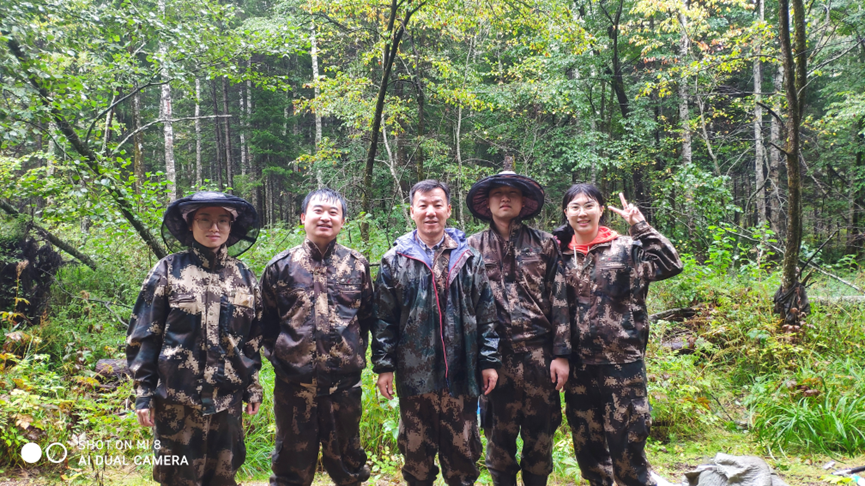
Fuqiang Song: The effects of long-term in situ N addition on the Korean pine plantation soil microbes and their regulation of soil priming effect 

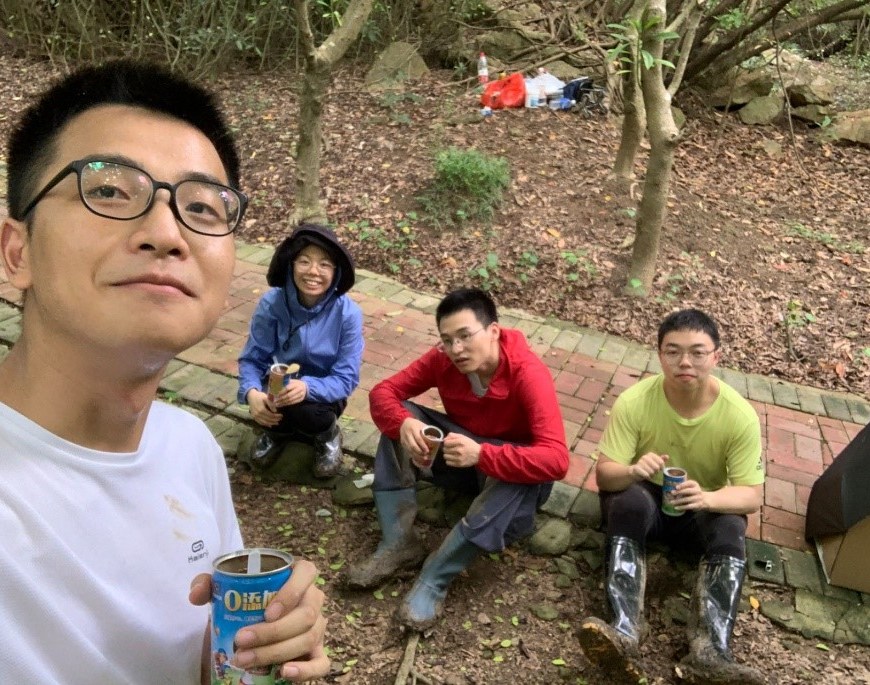
In this new post, Professor Fuqiang Song of Heilongjiang University presents his work ‘Nitrogen addition suppresses soil positive priming effect in temperate plantations: evidence from an 8-year in situ field experiment’. He shows the effects of long-term in situ N addition on temperate plantation soil microbes and their regulation of soil priming effect.  About the paper  The rate of soil organic carbon decomposition is altered … Continue reading Fuqiang Song: The effects of long-term in situ N addition on the Korean pine plantation soil microbes and their regulation of soil priming effect 

Pablo Castro Sánchez-Bermejo: Tree and mycorrhizal fungal diversity affect leaf functional traits in trees 

In this blog post, Pablo Castro Sánchez-Bermejo presents his work ‘Tree and mycorrhizal fungal diversity drive intraspecific and intraindividual trait variation in temperate forests: Evidence from a tree diversity experiment’. He discusses the effects of tree and mycorrhizal fungal diversity on leaf functional traits, the challenges of leaf sampling in tall trees, and how his love for the outdoors has led to an interest in … Continue reading Pablo Castro Sánchez-Bermejo: Tree and mycorrhizal fungal diversity affect leaf functional traits in trees 

Tim Herkenrath: Hungry herbivores and thirsty plants: How does wildlife shape tree transpiration in a Namibian savanna?

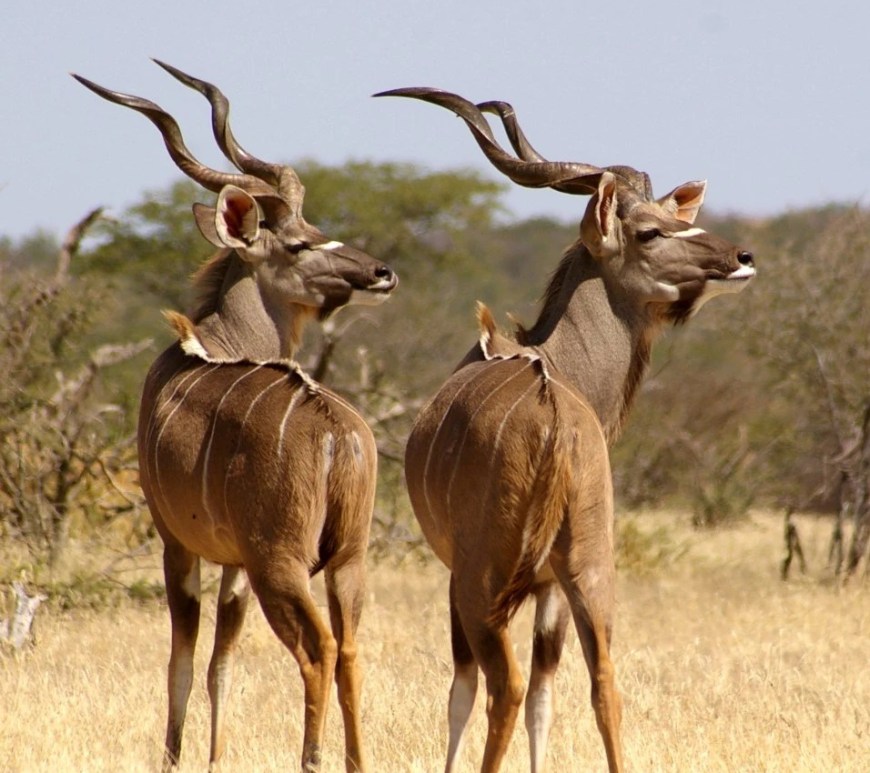
In our latest post Tim Herkenrath, PhD candidate at Potsdam University, presents his work ‘Hungry Herbivores and Thirsty Plants: Browsing Wildlife Shape Savanna Tree Transpiration Independently of Water Use Strategies’. He explains the connection between biotic interactions and physiology, shares the pain and pleasure of fieldwork in Namibia, and shows his path from northern woodlands to southern savannas.  About the paper Since their first encounter … Continue reading Tim Herkenrath: Hungry herbivores and thirsty plants: How does wildlife shape tree transpiration in a Namibian savanna?

Guangqi Zhang: A whole-tree perspective on the role of non-structural carbohydrates in resource allocation trade-offs along the tree economics spectrum 

In our latest blog post, Guangqi Zhang, postdoc at INRAE (France), presents his paper “Not all sweetness and light: non-structural carbohydrate storage capacity in tree stems is decoupled from leaf but not root economics”. He discusses the importance of considering multiple traits, shares his happiness for the publication of his research, and encourages ecologists to keep moving with eastern philosophy.  About the paper  Plant functional … Continue reading Guangqi Zhang: A whole-tree perspective on the role of non-structural carbohydrates in resource allocation trade-offs along the tree economics spectrum 

Guoming Qin: Unlocking the Secrets of Soil Carbon Storage in Mangrove Ecosystems 

In this post, Guoming Qin—a postdoc at the South China Botanical Garden, Chinese Academy of Sciences—share his recently published paper: “Contributions of Plant- and Microbial-Derived Residues to Mangrove Soil Carbon Stocks: Implications for Blue Carbon Sequestration”. He underscores the importance of this research in advancing our understanding of carbon accumulation in mangrove ecosystems, shares his initial experiences with mangrove sampling, and expresses gratitude to his … Continue reading Guoming Qin: Unlocking the Secrets of Soil Carbon Storage in Mangrove Ecosystems 

Ximena Cibils-Stewart: Silicon and endophyte defences in tall fescue reduce feeding and weaken immunity of an insect herbivore.

Ximena Cibils-Stewart completed her doctoral dissertation at the Hawkesbury Institute for the Environment, Western Sydney University, and works as an adjunct scientist at the Instituto Nacional de Investigación Agropecuaria in Uruguay. During her doctoral research, her primary focus revolved around assessing the impact of silicon supplementation coupled with beneficial symbionts, such as endophytes, on bolstering grass resistance against insect pests. In this blog post, she … Continue reading Ximena Cibils-Stewart: Silicon and endophyte defences in tall fescue reduce feeding and weaken immunity of an insect herbivore.

Myrsky Eero: The warming arctic, herbivore outbreaks and the importance of long-term field studies

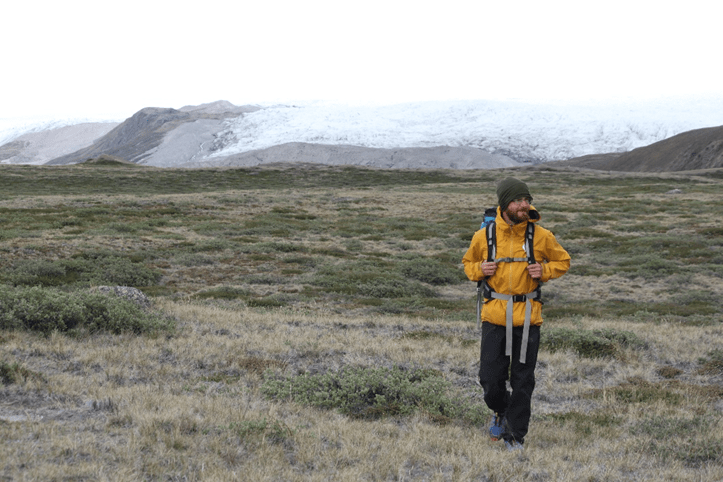
In our latest post, Myrsky Eero, a PhD student at the University of Helsinki, presents his work ‘Higher vascular plant abundance associated with decreased ecosystem respiration after 20 years of warming in the forest-tundra -ecotone’. He discusses the importance of long term research, presents the complex trade-offs happening in ecology and shares his passion for cold places. About the Paper The Arctic is warming as … Continue reading Myrsky Eero: The warming arctic, herbivore outbreaks and the importance of long-term field studies

Explore the root advantages of invasive plants under nutrient enrichment

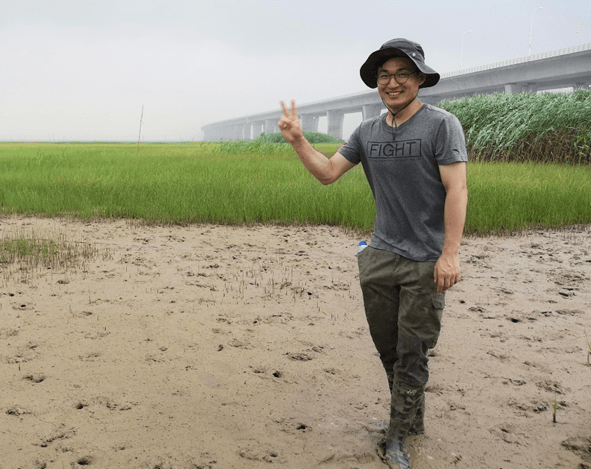
In this new post, Hao Liu—a postdoc from Fudan University, China—presents his work ‘Root plasticity benefits a global invasive species in eutrophic coastal wetlands’. Here he discusses the importance in plasticity for invasive species success, highlights the cohesion required to work in the mud, and shares his journey in ecology. About the paperInvasive species usually benefit more than native species from increases in nutrient availability. … Continue reading Explore the root advantages of invasive plants under nutrient enrichment

Jakub Štenc: Matching plants and pollinators in Czech grasslands

In this post, Zdeněk Janovský and Jakub “Kuba” Štenc —from Charles University, Prague, Czech Republic—share their work ‘Pollinator community and generalisation of pollinator spectra changes with plant niche width and local dominance’. They discuss how they gathered hundreds of thousands of plant-pollinator visits, showed beekeepers the magic of the scientific method, and share their passion in politics and reggaeton.  Read the Czech version of this … Continue reading Jakub Štenc: Matching plants and pollinators in Czech grasslands

Jakub Štenc: Matching plants and pollinators in Czech grasslands: Czech Version

O článku Příběh tohoto článku se začal psát někdy před dvanácti lety, když Zdeněk viděl plakát Českého svazu včelařského, že 95 % rostlin opyluje včela medonosná a pouze zbylých 5 % opylují divocí opylovači. Toto tvrzení odporovalo jeho zkušenostem z terénu, ale uvědomoval si, že k vyvrácení tvrzení včelařské lobby bude potřeba komplexního datového souboru a ne jen terénní zkušenosti. Začal dohledávat články s publikovanými … Continue reading Jakub Štenc: Matching plants and pollinators in Czech grasslands: Czech Version