Matthew Lattanzio: UV behavioral regulation in eastern fence lizards

In this new post, Dr. Matthew Lattanzio—an Assistant Professor in the Organismal and Environmental Biology Department at Christopher Newport University, USA—discusses his recently accepted paper, “Active regulation of ultraviolet light exposure overrides thermal preference behavior in eastern fence lizards“ About the paper Imagine for a moment you’re outside in a park, on a warm sunny day, enjoying a hike or just a relaxing break outside. … Continue reading Matthew Lattanzio: UV behavioral regulation in eastern fence lizards


Benjamin Mueller: Bringing light into the dark – Night-DOM release by turf algae

In this new post, Benjamin Mueller, a postdoctoral researcher at the University of Amsterdam, The Netherlands, and the University of Hawai’i at Manoa, USA, discusses his recently accepted paper, “Nocturnal dissolved organic matter release by turf algae and its role in the microbialization of reefs,” and warns against discarding results that go against expectations. About the paper Our paper sheds light on the role of … Continue reading Benjamin Mueller: Bringing light into the dark – Night-DOM release by turf algae

Chen Ye: Active revegetation does not impact nitrogen removal efficiency in a riparian zone

In this new post, Dr. Chen Ye—a Professor of Ecology at Wuhan Botanical Garden, Chinese Academy of Sciences, China—discusses her recently accepted paper, “Soil denitrification rates are more sensitive to hydrological changes than restoration approaches in a unique riparian zone”. About the paper The riparian zone is defined as the aquatic-terrestrial interface. This zone can improve water quality by removing nitrogen via denitrification processes. The … Continue reading Chen Ye: Active revegetation does not impact nitrogen removal efficiency in a riparian zone

Simulated winter warming negatively impacts survival of Antarctica’s only endemic insect: Podcast Transcript

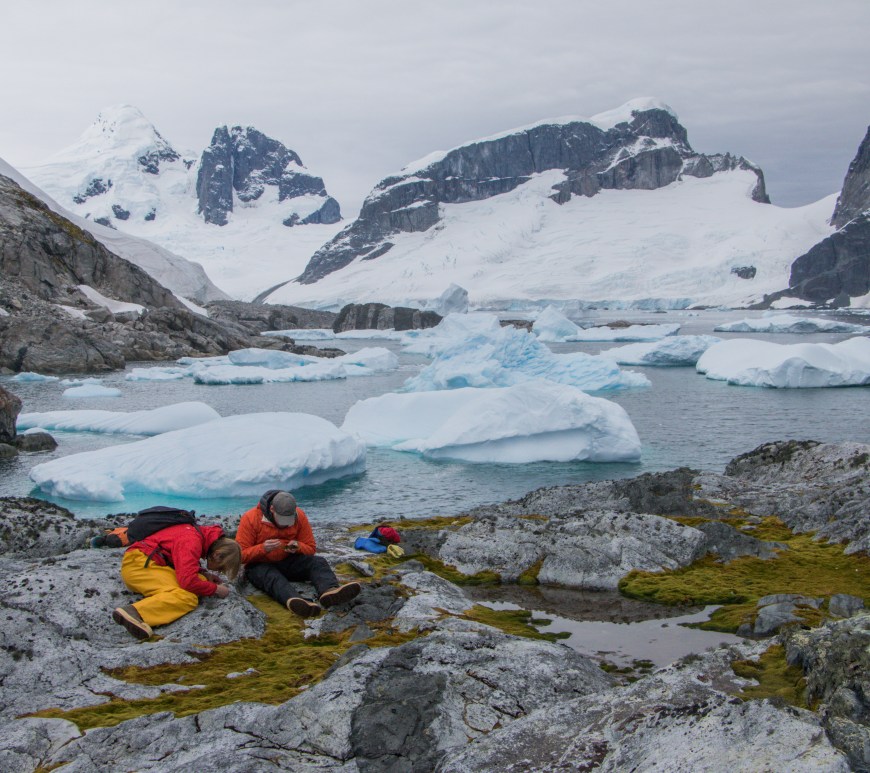
In this podcast for Functional Ecology, Assistant Editor, Frank Harris, sits down with Jack J. Devlin—an early career researcher from the University of Kentucky—to discuss his recently published paper ‘Simulated winter warming negatively impacts survival of Antarctica’s only endemic insect.’ With warmer winters expected to become more common with climate change, this study’s results indicate that winter warming could negatively impact cold-adapted insects like the … Continue reading Simulated winter warming negatively impacts survival of Antarctica’s only endemic insect: Podcast Transcript

David Bartholomew: Revealing the niche of the world’s tallest tropical trees

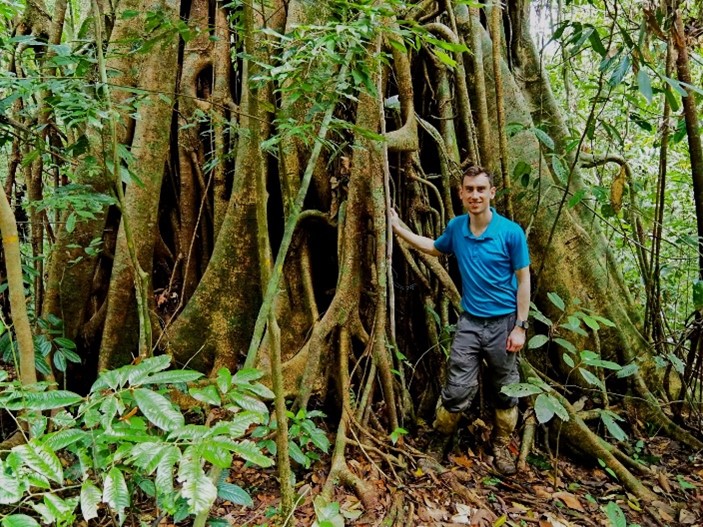
In this new post, David Bartholomew presents his last work ‘Differential nutrient limitation and tree height control leaf physiology, supporting niche partitioning in tropical dipterocarp forests’, shares the difficulties of working in tropical forests and invites everyone to help any ecologists seeking for help. About the paper In the rainforests of north Borneo in South-East Asia exist the world’s tallest tropical trees. These are the … Continue reading David Bartholomew: Revealing the niche of the world’s tallest tropical trees

Emerging relationships among microbes, soil carbon storage and climate change: Podcast transcript

In this podcast for Functional Ecology, Assistant Editor, Frank Harris, sits down with two Guest Editors—Pablo García-Palacios and Ji Chen— to discuss our recently published Special Feature on soil carbon storage. The Special Feature identifies emerging findings from soil microbial ecology and climate change research that can be used to reduce uncertainty if incorporated into theory and models. Frank: Today, I have Pablo García-Palacios and … Continue reading Emerging relationships among microbes, soil carbon storage and climate change: Podcast transcript

Numair Masud: People of Colour

To celebrate UK Pride Month, the British Ecological Society journals have re-launched ‘Rainbow Research’ – a blog series which aims to promote the visibility of STEM researchers from the LGBTQ+ community by connecting each post to a theme represented by one of the colours shown in the Progress Pride flag. In this new post, Numair Masud, a Senior Research Technician from Cardiff University, UK, discusses … Continue reading Numair Masud: People of Colour

Kyle McCulloch: Harmony

To celebrate UK Pride Month, the British Ecological Society journals have re-launched ‘Rainbow Research’ – a blog series which aims to promote the visibility of STEM researchers from the LGBTQ+ community by connecting each post to a theme represented by one of the colours shown in the Progress Pride flag. In this new post, Kyle McCulloch, an evolutionary biologist from the University of Minnesota, USA, … Continue reading Kyle McCulloch: Harmony

Jessica Burrows: Hungry Bees-ness—Radiation exposure in contaminated landscapes such as the Chernobyl Exclusion Zone increases bumblebee feeding and metabolism

In this new post, Jessica Burrows—a fourth year PhD student based at the University of Stirling, Scotland—discusses her new paper ‘Ecologically relevant radiation exposure triggers elevated metabolic rate and nectar consumption in bumblebees’. Jessica’s PhD research is funded by the NERC IAPETUS doctoral training programme, and focuses on the effects of radiation levels found in the Chernobyl Exclusion Zone on invertebrates. About the Paper There … Continue reading Jessica Burrows: Hungry Bees-ness—Radiation exposure in contaminated landscapes such as the Chernobyl Exclusion Zone increases bumblebee feeding and metabolism

Lara Ferry: Research in Many Languages

Hello Readers! Wonderful to be saying hello to you again, as Senior Editor, and to be able highlight some really fun items in Functional Ecology (couldn’t resist). In this blog post, I will actually be focusing on the blog itself. You might have noticed recently that some of the blog posts, particularly those under the “Behind the Paper” tab, are written in languages other than English. … Continue reading Lara Ferry: Research in Many Languages