Hannah Meier: Transgenerational behavioral plasticity in Chlamydomonas reinhardtii (German translation)


Hannah Meier, Reed College, Portland USA, erläutert in diesem Artikel ihre Arbeit zu “Temperature mediated transgenerational plasticity influences movement behavior in the green algae Chlamydomonas reinhardtii.” Dabei hebt sie die Bedeutung der Erfahrungen- am Beispiel der Algen – aus der Vergangenheit für unsere Gestaltungsmöglichkeiten in der Gegenwart hervor und zeigt die Auswirkungen des Klimawandels auf. An English version of this blogpost is available here! Über … Continue reading Hannah Meier: Transgenerational behavioral plasticity in Chlamydomonas reinhardtii (German translation)

Hannah Meier: Transgenerational behavioral plasticity in Chlamydomonas reinhardtii

In this new post, Hannah Meier from Reed College (USA), presents her work ‘Temperature mediated transgenerational plasticity influences movement behavior in the green algae Chlamydomonas reinhardtii’. She highlights the importance of historical effects on organisms, discusses the implications of climate change, and emphasizes the importance of good mentorship in STEM. Eine Deutsche übersetzung dieses artikels ist hier verfügbar! About the Paper In this paper we … Continue reading Hannah Meier: Transgenerational behavioral plasticity in Chlamydomonas reinhardtii

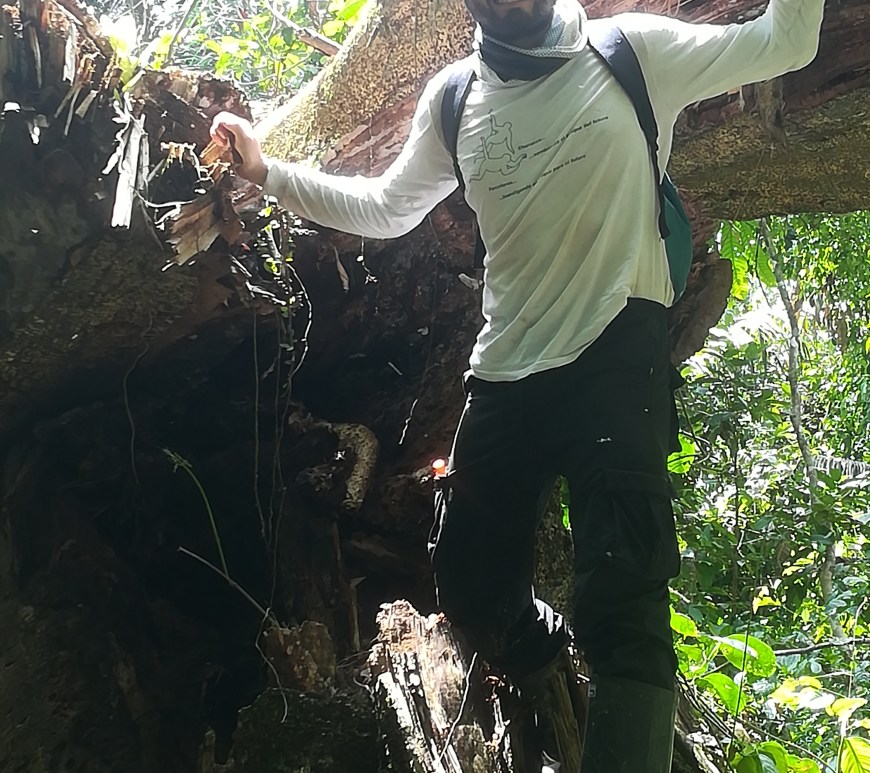
Mariam Hamzat: The Disappearance of Beauty, Biodiversity and a Bard: How Forest Degradation is Endangering Nigeria’s Ibadan Malimbe

In this new post, Mariam Hamzat—a 5th year student of Pure and Applied Biology at Ladoke Akintola University of Technology—discusses how forest degradation and increased agricultural activities have contributed to the disappearance of the Ibadan Malimbe—an endangered bird endemic to Nigeria.  Endemic to Nigeria is a bird of critical ecosystem importance—the Ibadan malimbe (Malimbus ibadanensis). This rare species of bird belongs to the Ploceidae family … Continue reading Mariam Hamzat: The Disappearance of Beauty, Biodiversity and a Bard: How Forest Degradation is Endangering Nigeria’s Ibadan Malimbe

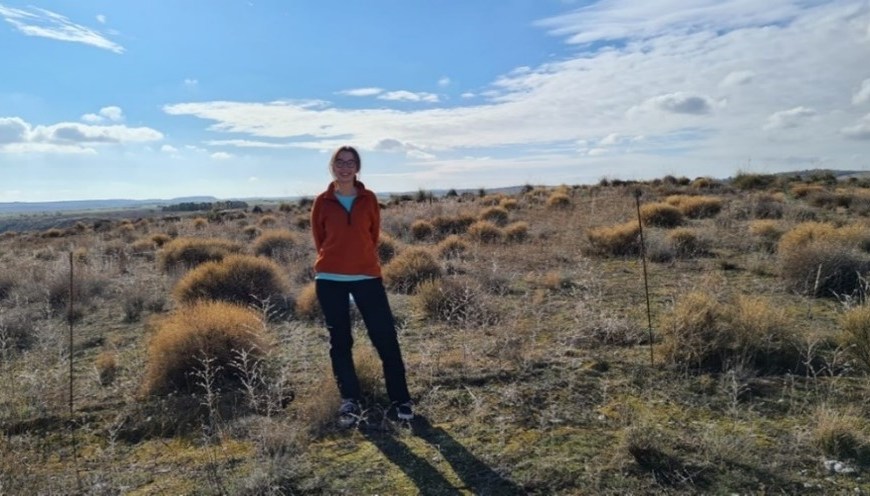
Laura Ortiz Díaz: La costra biológica del suelo y las plantas vecinas afectan al establecimiento y desarrollo de las plantas anuales que viven en ambientes yesíferos semiáridos.

En este post Laura Ortiz Díaz, estudiante de doctorado de la Universidad Rey Juan Carlos (España), nos presenta su trabajo ‘Functional diversity of experimental annual plant assemblages drives plant responses to biological soil crusts in gypsum systems’ Laura nos cuenta de dónde surgió la idea del trabajo, la importancia que la costra biológica puede tener en zonas áridas y cómo la ecología le atrapó desde … Continue reading Laura Ortiz Díaz: La costra biológica del suelo y las plantas vecinas afectan al establecimiento y desarrollo de las plantas anuales que viven en ambientes yesíferos semiáridos.

Laura Ortiz Díaz: Biological soil crusts and neighbour plants strongly affects annual plants living in gypsum drylands

In our latest post, Laura Ortiz Díaz—A PhD student at Universidad Rey Juan Carlos, Spain—presents her new study ‘Functional diversity of experimental annual plant assemblages drives plant responses to biological soil crusts in gypsum systems’. Laura tells us where the idea of the study came from, the importance of biological soil crust for drylands ecology, and how she became hooked on ecology from an early … Continue reading Laura Ortiz Díaz: Biological soil crusts and neighbour plants strongly affects annual plants living in gypsum drylands

Kristiina Visakorpi: The future of Alpine meadows: Can we predict winners and losers in a warmer climate?

In this new post Kristiina Visakorpi—a postdoc at the Norwegian University of Science and Technology—discusses her last research ‘Eco-physiological and morphological traits explain alpine plant species’ response to warming’. She considers the connections between functional traits and climate change, highlights the importance of eco-physiological traits, and provides some thoughts to fight apathy towards our current environmental crises. About the paper In our paper we investigated … Continue reading Kristiina Visakorpi: The future of Alpine meadows: Can we predict winners and losers in a warmer climate?

Animal Functional Traits: A Functional Ecology Special Focus

In this post, Functional Ecology provides an introduction to each article that can be found in our Animal Functional Traits Special Focus. This collection of studies shows how precise measurements of morphological or physiological traits can increase mechanistic understanding of community assembly across trophic levels, particularly of the mechanisms underpinning large-scale biodiversity patterns. Further, a clearer picture is emerging of systematic animal responses to environmental … Continue reading Animal Functional Traits: A Functional Ecology Special Focus

Rebecca Hewitt: A focus on root-associated fungi informs predictions of plant-soil feedbacks in the boreal forest after fire

In our new post Rebecca Hewitt—Assistant Professor at Amherst College, MA, USA—presents her work ‘Wildfire impacts on root-associated fungi and predicted plant-soil feedbacks in the boreal forest: research progress and recommendations’. She discusses the importance of plant-fungal interactions to cope with fire disturbance and shares her fascination for environmental research. About the paper We wrote a review paper that synthesizes what is currently known about … Continue reading Rebecca Hewitt: A focus on root-associated fungi informs predictions of plant-soil feedbacks in the boreal forest after fire

Daniel Zuleta: Do small-scale changes in topography affect functional trait variability in an aseasonal Amazon forest?

In our newest post Daniel Zuleta—a postdoc researcher at Smithsonian ForestGEO—presents his last work ‘Interspecific and intraspecific variation of tree branch, leaf, and stomatal traits in relation to topography in an aseasonal Amazon forest’. He presents the huge Amacayacu Forest Dynamics Plot, findings about the major impact that tree size exerts on tree functional traits, and how he changed his interests from forest plantations industry … Continue reading Daniel Zuleta: Do small-scale changes in topography affect functional trait variability in an aseasonal Amazon forest?

Luca Carisio: How much nectar is produced when the effect of flower-visiting insects is considered?

About the paper Our paper describes how to estimate the nutritional contribution of plants to pollinators and to other flower-visiting insects. The nutritional contribution of plants to pollinators is usually estimated by measuring—using a mesh bag—the nectar volume produced by flowers isolated for a 24 h period from flower-visiting insects. Many studies adopted this 24 h measure as a proxy of plant nectar production. When … Continue reading Luca Carisio: How much nectar is produced when the effect of flower-visiting insects is considered?