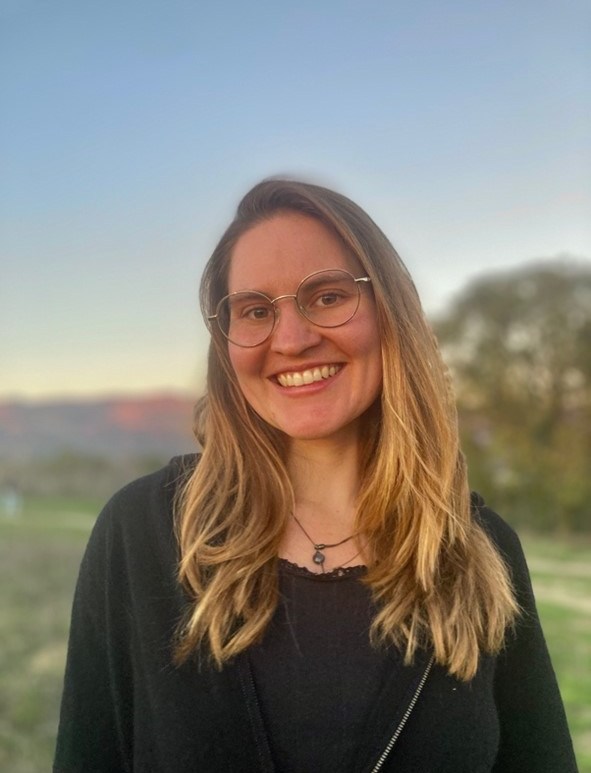
Ikegwu Chukwudi Michael: The journey of a conservation biologist

In this new post, Ikegwu Chukwudi Michael—from the Faculty of Biology, Universitas Jenderal Soedirman, Indonesia—discusses seeking opportunities to implement the theories concerning biological principles and practices, and working to develop fundamental skills and progress towards delivering best outcomes. Ikegwu wishes to become an active part of biological research involving biodiversity, conservation, and ecology. Profile My love and passion for life led me to study Biology … Continue reading Ikegwu Chukwudi Michael: The journey of a conservation biologist

Gil Rilov: Invasive engineers—global drivers of ecological change

In this post, Prof. Gil Rilov—Senior Scientist at the National Institute of Oceanography, Israeli Limnological and Oceanographic Research (IOLR), as well as Associate Professor, at the University of Haifa, Israel—discusses his recently published review paper ‘Ecological impacts of invasive ecosystem engineers: A global perspective across terrestrial and aquatic systems’. Gil discusses the impacts, positive and negative, of alien invasions, his love of diving, and what … Continue reading Gil Rilov: Invasive engineers—global drivers of ecological change

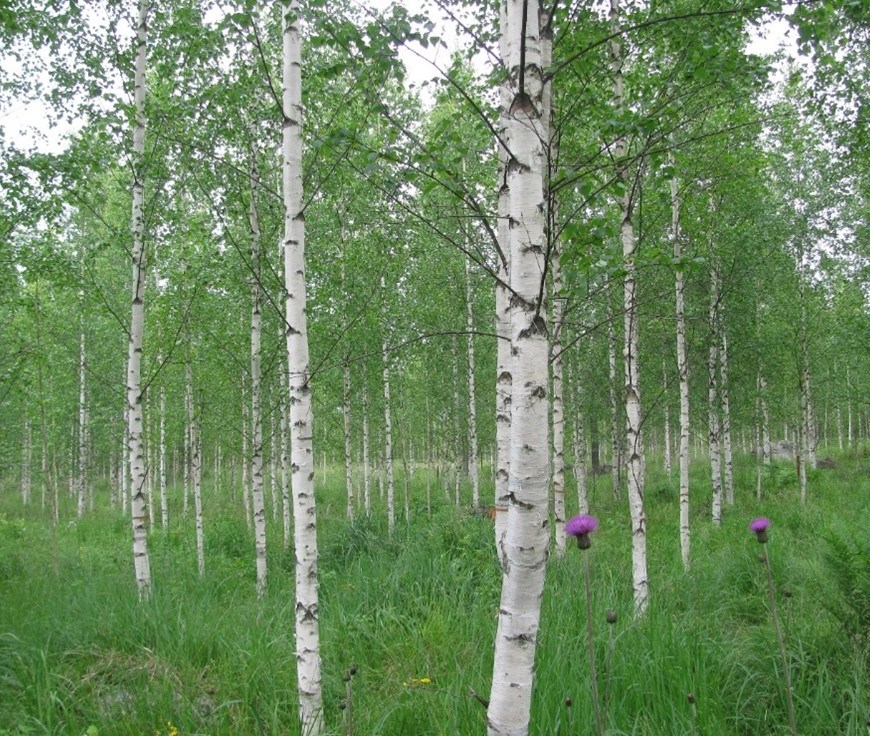
Julia Koricheva: Exploring the hidden links—tree diversity effects in Finnish boreal forests

In our new post, Julia Koricheva—a researcher at Royal Holloway University of London, UK—discusses her interest in effects of plant diversity on ecosystem functioning. Having worked extensively on long-term forest diversity experiments in Finland, Julia is particularly interested in the biodiversity and functionality of boreal forest ecosystems. She also works on the evolution and ecology of plant-herbivore interactions, including mechanisms of plant defense.  As more … Continue reading Julia Koricheva: Exploring the hidden links—tree diversity effects in Finnish boreal forests

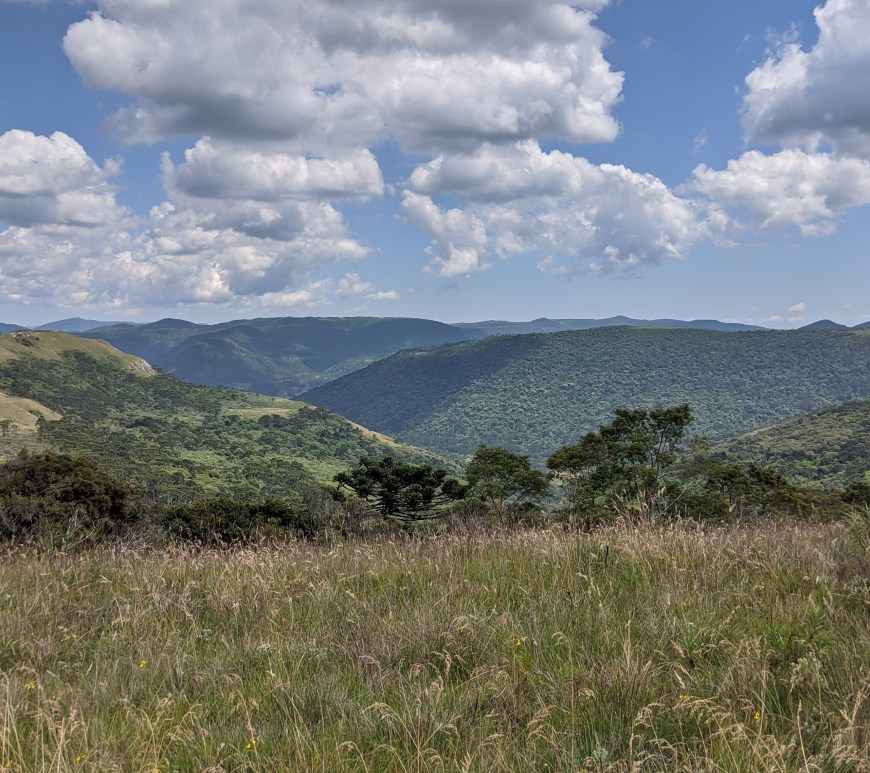
Ana Porto: Brazil isn’t just trees—working in grasslands in a country conventionally seen as a big forest

In this blogpost, Ana Porto—from the Federal University of Santa Catarina (UFSC), Brazil—describes their interest in grasslands restoration ecology. Ana is particularly interested in grassland restoration techniques using hay and direct seeding. Ana is also interested in the community vegetation of this ecosystem, mainly following its development after endogenous and exogenous disturbances (e.g. grazing, fire, afforestation, and biological invasions). Profile I arrived at this topic … Continue reading Ana Porto: Brazil isn’t just trees—working in grasslands in a country conventionally seen as a big forest

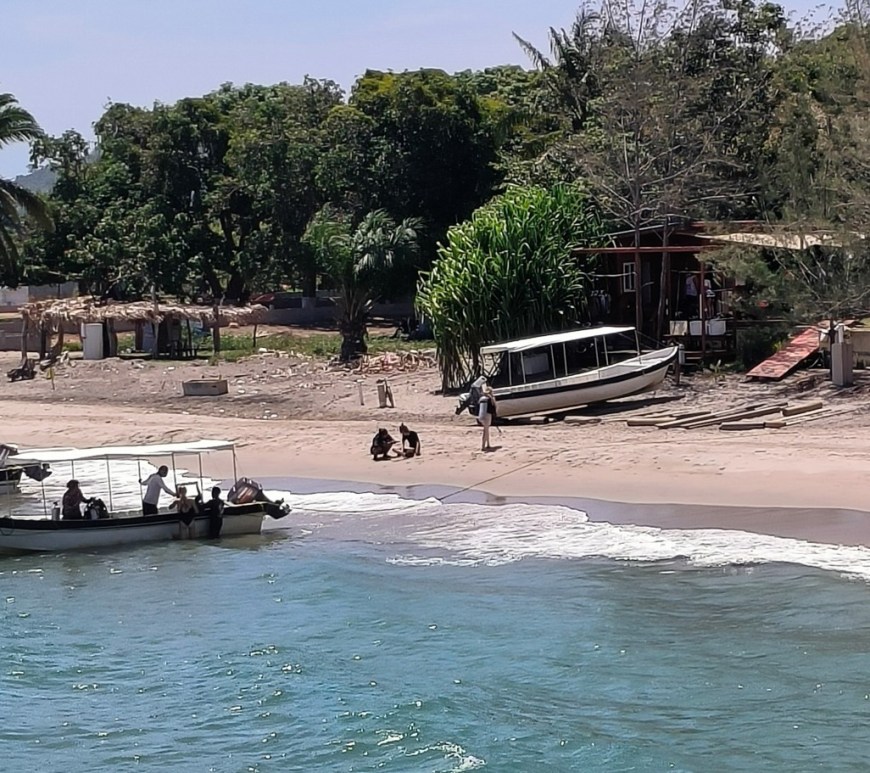
Monica McCard: Exploring Lionfish Ecology—A Research Expedition in Honduras

In this new post, Monica McCard, from Liverpool John Moore University, discusses working on many different non-native aquatic species, with a particular focus on the feeding impacts of invasive lionfish (Pterois volitans). For over three decades, lionfish have emerged as one of the most devastating invasive aquatic species in history. Throughout the Western Atlantic, these venomous fish have wreaked havoc on reefs and disrupted ecosystems, … Continue reading Monica McCard: Exploring Lionfish Ecology—A Research Expedition in Honduras

Postcards From The Field: Contribute to our new blog series!

It’s deep into summertime for those north of the equator. With many ecologists taking to the field, Functional Ecology are excited to announce a new blog series titled: Postcards From The Field. The aim of this blog series is to provide visibility to both researcher and field site. We want to hear all about what you love about your field site, the problems that the … Continue reading Postcards From The Field: Contribute to our new blog series!

Meet The Editor: Michael P. Moore

Current Institution: University of Colorado Denver, USA Research interests: I study how physiology and ontogeny limit the ways that organisms adapt to their environments. I am especially interested in using information about these constraints to better forecast how organisms will respond to global change. Why did you choose to study your particular area of research? When I started graduate school, there was a ton of … Continue reading Meet The Editor: Michael P. Moore

Eva Janíková: How to find species potentially able to withstand the specific conditions of a site?

In this new post, Eva Janíková—a postdoc at the University of South Bohemia (Czech Republic)—presents her latest work: ‘Methods of species pool determination as predictors of survival in seeding and transplanting experiments’. She discusses the mechanisms behind species community composition, highlights the complexity of ecological research, and shares how working in ecology is the perfect match for her love for nature. About the paper When … Continue reading Eva Janíková: How to find species potentially able to withstand the specific conditions of a site?

Dan Buonaiuto: Understanding the effects of temperature and light in ecological experiments—the delicate balance between complexity and inference

Dr. Dan Buonaiuto—currently a postdoc in the Department of Environmental Conservation at the University of Massachusetts-Amherst, USA—discusses his recently published Commentary “Experimental designs for testing the interactive effects of temperature and light in ecology: The problem of periodicity.” In this post, Dan discusses the serendipitous nature of this paper, the importance of interdisciplinary research and collaboration, and being in nature. About the paper Experiments in … Continue reading Dan Buonaiuto: Understanding the effects of temperature and light in ecological experiments—the delicate balance between complexity and inference

程昌锦: 评估群落结构对生产力影响的新视角: 植株个体邻域空间聚集效应

An English version of this blogpost is available to read here. 关于论文 植物群落结构与生态系统功能的关系一直是生态学界关注的焦点之一。过去几十年多样性-生态系统功能关 (BEF) 的研究已经被大量报道。然而,近些年不少学者对BEF能否为我们应对全球变化提供有价值的信息提出了质疑。质疑的一个重要基础:BEF的观测和控制实验的结果并不一致。尽管许多研究人员认为在物种相互作用十分强烈的局域群落,多样性参数与群落动态的薄弱联系是 (BEF) 结果不统一的重要原因;但是,目前人们还并未找到合适的解决方案。面对这一科学难题,我们提出可从植株个体邻域空间结构的视角,重新审视群落结构与生产力的关系。理论上,对于固着的植物而言,植物之间的相互作用主要发生在其邻域空间尺度;因此,植株个体邻居的身份(同种或异种)将与群落动态及生产力密切相关。 关于研究 本研究首次将每株检尺定位的方式应用于草地生态系统的野外样带调查。并基于2个温带草原(黄土高原和蒙古高原)和1个高寒草原(青藏高原)上125,726株植物在1m2样方内的相对位置坐标,阐明了植物邻域空间聚集的构建机制以及其与地上净初级生产力(ANPP)的关系。 研究结论验证了如下两个科学假设:(1)在海拔相对较低的温带草原(黄土和蒙古高原),更多的无性繁殖投入是种内聚集的主导因素(内源过程主导);而在拥有极端环境条件的青藏高原,高强度的环境过滤效应导致的物种多样性差异主导了邻域空间结构的变异(外源过程主导);(2)与物种多样性和系统发育多样性相比,邻域空间结构对ANPP空间变异的影响更大。 关于作者 我是北京林业大学生态与自然保护学院的一名博士生。对大自然的观察是我科研灵感的最大来源。我想知道这些现象背后正在发生什么,为什么发生,以及它对生态系统意味着什么。我认为自然界中一个非常耐人寻味的现象是植物能够通过自组织行为创造适应环境的空间结构(尽管采用固着的生活方式),进而影响物种共存和生态系统功能。这个视角将是我未来研究工作的重点。 中科院地理资源所何念鹏团队与北京林业大学孙建新团队联合完成了本项研究。其中,何念鹏团队创新性地发展了植物功能性状网络 (Plant trait networks, PTNs), 植物群落性状 (Plant community traits, PCTs), 生态系统功能性状 (Ecosystem traits, ESTs) 以及基于植物群落功能性状预测生产力的理论框架 (Traits-based Productivity, TBP)。如果您也对这方面的研究感兴趣,可以与他联系交流。 喜欢这篇博文吗?在这里阅读研究 Continue reading 程昌锦: 评估群落结构对生产力影响的新视角: 植株个体邻域空间聚集效应