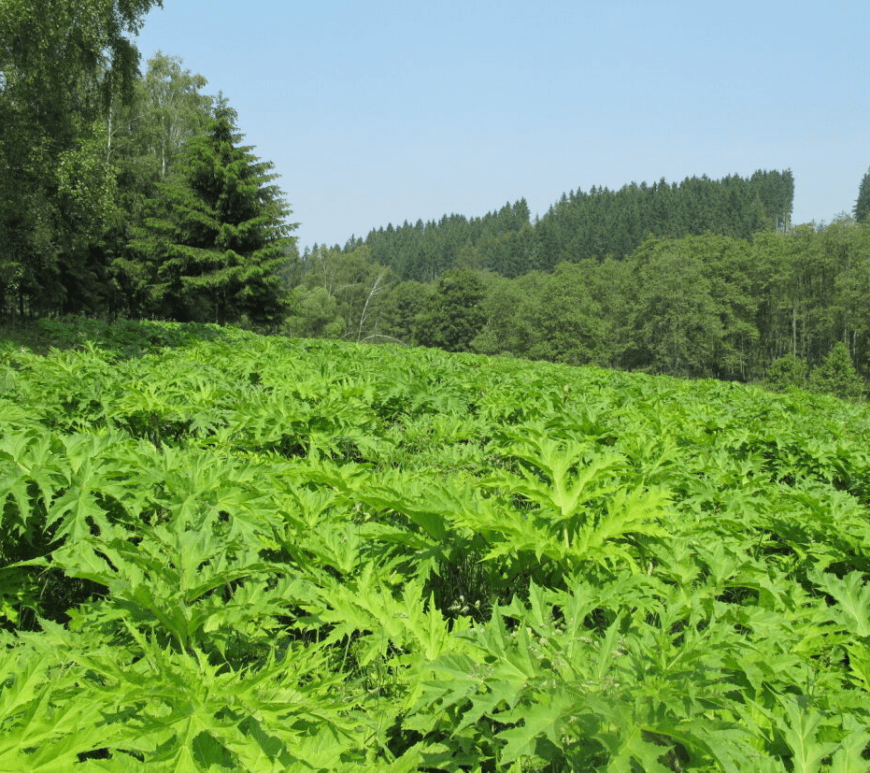
Key Concepts in Ecology: Mutualisms and Facilitation 

This blog post on ‘Mutualisms and facilitation’ is part of the BES ‘Key Concepts in Ecology’ series, designed to help ecologists in learning the key topics in ecology. See the full blog series for a list of key topics that you might typically find in an ecology textbook, each providing a short introduction to the topic, and a list of suggested papers for students to … Continue reading Key Concepts in Ecology: Mutualisms and Facilitation 

RESCHEDULED! Increasing the Reach of Your Research: A Two-Part Workshop for Latin American Researchers

Speaker: Emma Sayer Workshop 1: 6th February, 3:00-4:30 GMT (PM) – REGISTER HERE Workshop 2: 14th February 3:00-4:30 GMT (PM) – REGISTER HERE Are you a researcher in Latin America that wishes to maximise the impact of your research? Senior Editor for Functional Ecology, Emma Sayer, will be holding a two-part online workshop that will cover core writing skills for ensuring that your research reaches … Continue reading RESCHEDULED! Increasing the Reach of Your Research: A Two-Part Workshop for Latin American Researchers

Nate Anderson: My unexpected path to academia

In our latest post, Nate Anderson—a researcher at the University of Western Australia—discusses the healing and regenerative benefits of time spent in nature, working in majestic Red Tingle forests, and the dangerous aspects of fieldwork in his study site. Profile I have followed a roundabout path to research. In 2008, my best friend committed suicide. I didn’t know how to process my grief or come … Continue reading Nate Anderson: My unexpected path to academia

Chaoqing Song: Tree demography in a moist tropical forest: Response to water stress and associations with plant functional traits

In this new post, PhD candidate at University of Sun Yat-sen University, Chaoqing Song, presents his work ‘Differential tree demography mediated by water stress and functional traits in a moist tropical forest’. He shows the importance of water for tree survivability, highlights how functional traits can help us to understand demography, and thanks data collectors who help to enable science to advance.  About the paper … Continue reading Chaoqing Song: Tree demography in a moist tropical forest: Response to water stress and associations with plant functional traits

Camila Madeiros: What are you doing in a place like this? Connecting plants’ climate preferences with functional traits

Camila Medeiros—a post-doc at University of California Los Angeles, USA—presents her work ‘Predicting plant species climate preferences on the basis of mechanistic traits’. She discusses the connection between traits and niches, shows how to do ecology with small budgets, and highlights the need to transfer scientific knowledge to general audiences. About the paper By using mechanistic traits, our paper improves the ability to predict plant … Continue reading Camila Madeiros: What are you doing in a place like this? Connecting plants’ climate preferences with functional traits

Indra Boving: Plants and flammability—Deep inside the mechanisms of wild fires

In our newest post, Indra Boving—a PhD candidate at University of California-Santa Barbara, USA—shares her latest work ‘Live fuel moisture and water potential exhibit differing relationships with leaf-level flammability thresholds’. She explains when plants become most flammable, the challenges of making fires in a lab, and shares her journey in ecology. About the paper Our paper was inspired by patterns observed across the landscape in … Continue reading Indra Boving: Plants and flammability—Deep inside the mechanisms of wild fires

Camille Bernery & Clara Marino : Explorer le profil des poissons envahissants pour mieux comprendre leur dynamique

Dans cet article, Camille Bernery et Clara Marino, respectivement post-doctorante et doctorante au laboratoire Ecologie, Systématique et Evolution (ESE) (Université Paris-Saclay, CNRS, AgroParisTech), partagent leur article récemment publié intitulé : Relative importance of exotic species traits in determining invasiveness across levels of establishment : Example of freshwater fish. Elles discutent des caractéristiques qui expliquent les différences dans le succès d’invasion des poissons d’eau douce, des … Continue reading Camille Bernery & Clara Marino : Explorer le profil des poissons envahissants pour mieux comprendre leur dynamique

Camille Bernery & Clara Marino: Exploring the profile of fish invaders in order to better understand their dynamics

In this new post, Camille Bernery and Clara Marino—a Post doctorate and PhD student, respectively, at the Ecology, Systematic and Evolution (ESE) lab, Université Paris-Saclay, CNRS, AgroParisTech, Gif-sur-Yvette, France—share their recently published paper titled: Relative importance of exotic species traits in determining invasiveness across levels of establishment: Example of freshwater fish. They discuss the characteristics that explain differences in invasion success of freshwater fish, challenges … Continue reading Camille Bernery & Clara Marino: Exploring the profile of fish invaders in order to better understand their dynamics

Curtis Lubbe: Trash or treasure—rhizomes as a vital plant organ

In our new post, Curtis Lubbe from the Institute of Botany, Czech Academy of Sciences, Czech Republic, presents his latest work ‘Trash or Treasure: Rhizome conservation during drought’. Curtis discusses the wonders of the rhizome, elucidates his research on senescence, and shares some lovely whimsical drawings of plants. About the paper Many herbaceous perennial plants use rhizomes (stem-derived belowground storage organs) to store resources, grow, … Continue reading Curtis Lubbe: Trash or treasure—rhizomes as a vital plant organ