Noah Leith: Understanding how thermoregulation affects insect survival and reproduction in the face of climate change 

In this ‘Behind the Paper’ blog post, Noah Leith – a PhD candidate in the Fowler-Finn Lab at Saint Louis University – discusses his research article Thermoregulation enhances survival but not reproduction in a plant-feeding insect, which was recently published in Functional Ecology. Noah discusses the impacts of thermoregulation on treehopper survival and reproduction, the joys of temperature models, and how his interest in animal … Continue reading Noah Leith: Understanding how thermoregulation affects insect survival and reproduction in the face of climate change 

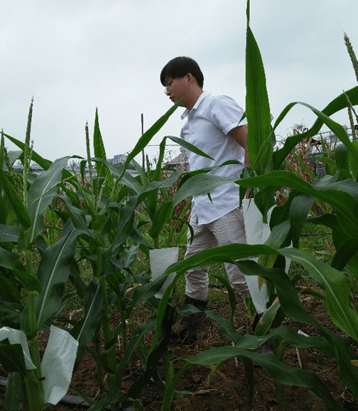
Zhenlong Xing: Plants may exploit herbivore-induced flavonoids to regulate AM fungal symbiosis 

In our latest post, Zhenlong Xing—a researcher at Henan University, Kaifeng, China—presents his work ‘Foliar herbivory modifies arbuscular mycorrhizal fungal colonization likely through altering root flavonoids’. He discusses the inspiration behind this paper and the path he took to become an ecologist.  About the paper  In June 2018, I obtained my PhD degree and I was lucky to start my new research career in Jianqing … Continue reading Zhenlong Xing: Plants may exploit herbivore-induced flavonoids to regulate AM fungal symbiosis 

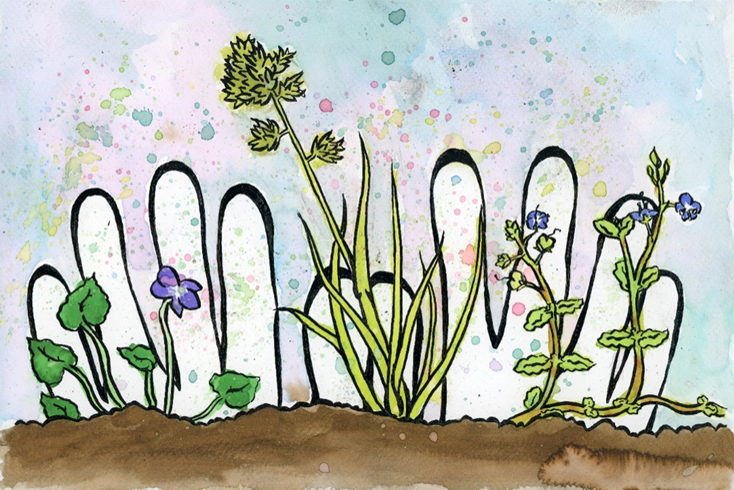
Wayne Dawson: Unearthing the ‘hidden half’ of plant trait variation in a globally widespread herb.

In our new post, Professor Wayne Dawson from the University of Liverpool presents his work ‘Root traits vary as much as leaf traits and have consistent phenotypic plasticity among 14 populations of a globally widespread herb’. He highlights the importance of belowground traits, discusses the role of AMF on plants, and shares the relaxing power of greenhouse and lab work. About the paper Our study … Continue reading Wayne Dawson: Unearthing the ‘hidden half’ of plant trait variation in a globally widespread herb.

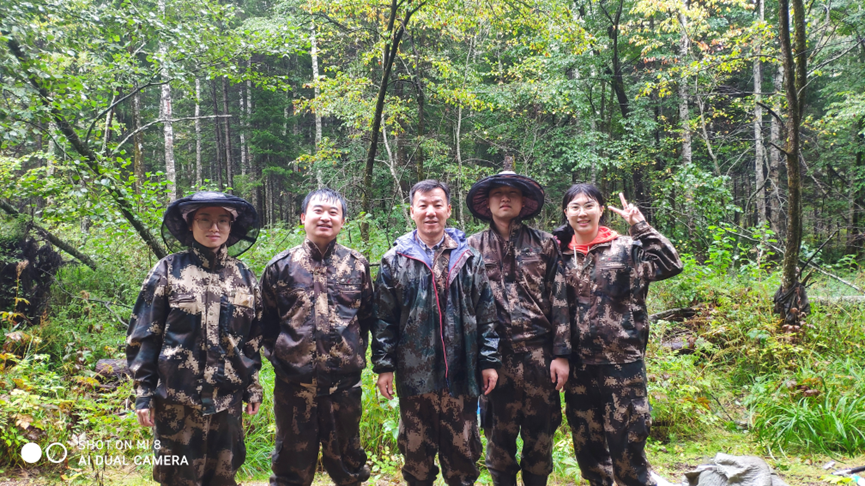
Fuqiang Song: The effects of long-term in situ N addition on the Korean pine plantation soil microbes and their regulation of soil priming effect 

In this new post, Professor Fuqiang Song of Heilongjiang University presents his work ‘Nitrogen addition suppresses soil positive priming effect in temperate plantations: evidence from an 8-year in situ field experiment’. He shows the effects of long-term in situ N addition on temperate plantation soil microbes and their regulation of soil priming effect.  About the paper  The rate of soil organic carbon decomposition is altered … Continue reading Fuqiang Song: The effects of long-term in situ N addition on the Korean pine plantation soil microbes and their regulation of soil priming effect 

Associate Editor (Blog) – Functional Ecology

Functional Ecology is seeking a new Editor to help run its highly successful blog site, Functional Ecologists We are currently looking for a new Blog Editor, with a broad interest in animal ecology, to continue delivering high-quality content on the blog. As well as highlighting journal content, the blog is a platform for discussing topics of more general interest to our readership and ecologists in general. … Continue reading Associate Editor (Blog) – Functional Ecology

Pablo Castro Sánchez-Bermejo: Tree and mycorrhizal fungal diversity affect leaf functional traits in trees 

In this blog post, Pablo Castro Sánchez-Bermejo presents his work ‘Tree and mycorrhizal fungal diversity drive intraspecific and intraindividual trait variation in temperate forests: Evidence from a tree diversity experiment’. He discusses the effects of tree and mycorrhizal fungal diversity on leaf functional traits, the challenges of leaf sampling in tall trees, and how his love for the outdoors has led to an interest in … Continue reading Pablo Castro Sánchez-Bermejo: Tree and mycorrhizal fungal diversity affect leaf functional traits in trees 

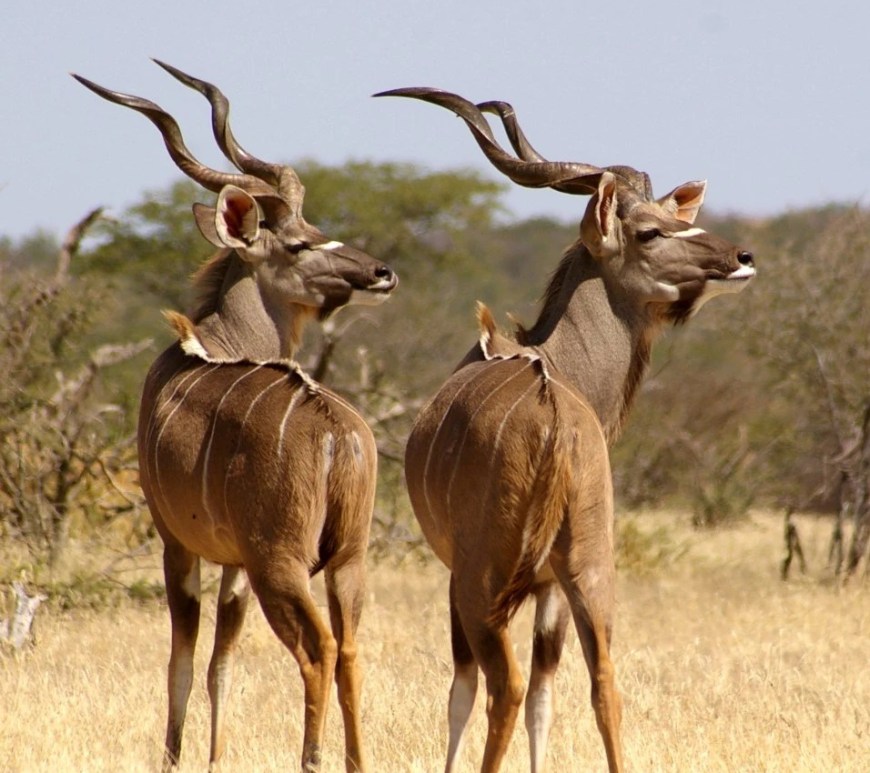
Tim Herkenrath: Hungry herbivores and thirsty plants: How does wildlife shape tree transpiration in a Namibian savanna?

In our latest post Tim Herkenrath, PhD candidate at Potsdam University, presents his work ‘Hungry Herbivores and Thirsty Plants: Browsing Wildlife Shape Savanna Tree Transpiration Independently of Water Use Strategies’. He explains the connection between biotic interactions and physiology, shares the pain and pleasure of fieldwork in Namibia, and shows his path from northern woodlands to southern savannas.  About the paper Since their first encounter … Continue reading Tim Herkenrath: Hungry herbivores and thirsty plants: How does wildlife shape tree transpiration in a Namibian savanna?

Curtis Lubbe: Going Belowground in Central European Meadows

In our latest post, Curtis Lubbe – a researcher at the Institute of Botany of the Czech Academy of Sciences – discusses the fascinating subterranean world of roots, the diversity of plant forms and species in meadows, and what the future in this field may bring. Profile I am completely fascinated by the variety of subterranean plant organs and their traits, especially those involved in … Continue reading Curtis Lubbe: Going Belowground in Central European Meadows

Congratulations to Indra Boving, winner of the 2023 Haldane Prize!

Functional Ecology is delighted to announce that the winner of the 2023 Haldane Prize is Indra Boving! The Haldane Prize is awarded annually for the best paper published in the journal by an early career researcher. Winner: Indra Boving Research: Live fuel moisture and water potential exhibit differing relationships with leaf-level flammability thresholds In this blog post, we ask Indra some questions about her research … Continue reading Congratulations to Indra Boving, winner of the 2023 Haldane Prize!

Yunxian Xu: Mycorrhizal fungi alter root exudation to cultivate a beneficial microbiome for plant growth

In this blog post, Yunxian Xu discusses his study “Mycorrhizal fungi alter root exudation to cultivate a beneficial microbiome for plant growth“, which has been shortlisted for Functional Ecology’s 2023 Haldane Prize for Early Career Researchers. About the paper: Arbuscular mycorrhizal (AM) fungi are a class of soil microorganisms that are widespread in terrestrial ecosystems and can form a reciprocal symbiotic relationship with most terrestrial … Continue reading Yunxian Xu: Mycorrhizal fungi alter root exudation to cultivate a beneficial microbiome for plant growth