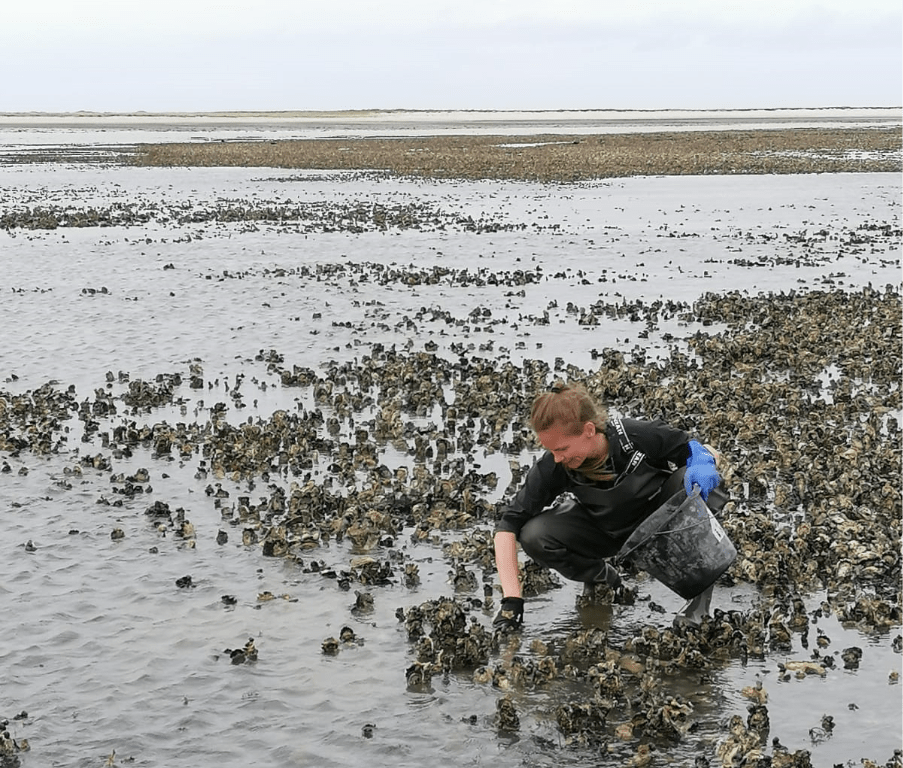
In this Behind the Paper blog post, author Rosa Jolma – a PhD candidate at Utrecht University – discusses the paper “Acute heat tolerance (CTmax) of two invasive parasitic copepods differs across species, life cycle stages and acclimation temperatures“, which was published in Functional Ecology in August 2026. Rosa discusses how parasites tolerate heatwaves, working with these parasites in very small volumes of water, and how an interest in exotic pet medicine led to a project on paraite ecology!
About the paper
We investigated how parasites tolerate heatwaves: if their acute heat tolerance is similar with their hosts, if it differs across similar parasites that infect the same hosts but have different origins, across different parasite life cycle stages and across different seasons. All these aspects are relevant for understanding how heatwaves affect the balance between hosts and parasites in real ecosystems that are impacted by climate change. We investigated this with experiments on two invasive species of parasitic copepods that infect mussels in a temperate coastal ecosystem.
We found that the parasites tolerated heatwaves as well or even better than their hosts and that their heat tolerance differed by species, life cycle stage and the temperature they had acclimated to. Only the infective free-living stages of the parasite species that has had almost a century to adapt to the temperate coastal climate were sensitive enough to be affected by current heatwaves. However, even their heat tolerance was insufficient only when heatwaves occurred in spring before summer heat acclimation.
Our results mean that the heat tolerance of parasites is not necessarily the same as that of their hosts and it can also differ by the life cycle stage and season. Climate change increases both the severity and occurrence of heatwaves, and if they affect hosts more than their parasites this may jeopardise the balance between parasites and hosts.
About the research
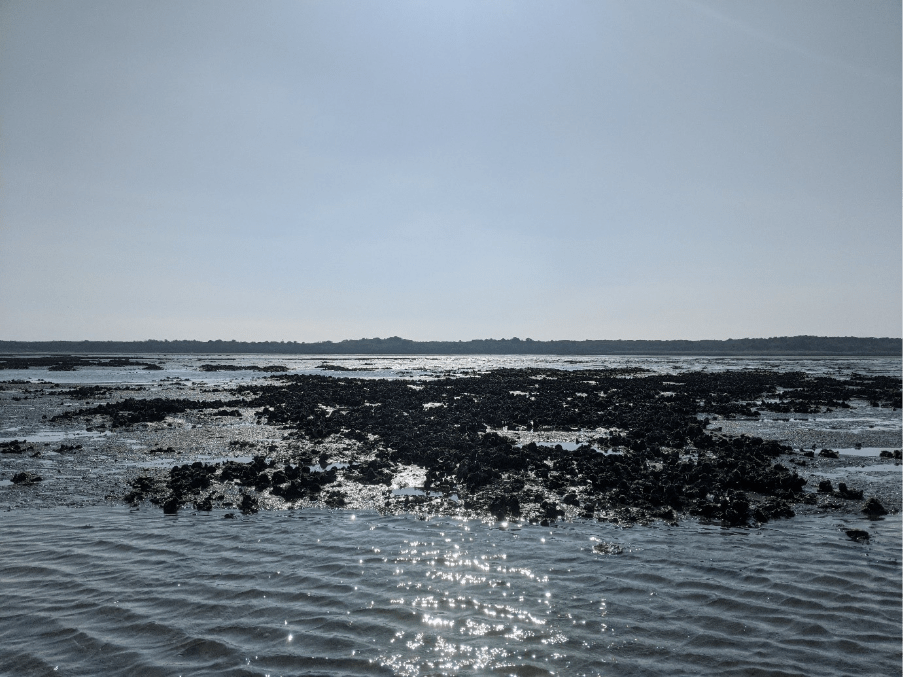
We collected parasites by dissecting them out of mussel intestines in spring and summer. Some of those parasites were used for experiments immediately; from others we collected eggs and did experiments on the free-living infectious stages that hatched out of them. In the experiments we heated the parasites at the same speed that occurs during heatwaves in the ecosystem the mussels were collected from and marked the temperature at which they stopped reacting as their critical thermal maximum (CTmax).
Planning the experiments required some thinking about basic physics. For example: how to ensure that the small amount of water each parasite floats in heats with the rate we wanted; how to minimise heat loss when checking parasite responses; how to avoid excess evaporation so that the salt water would not get too concentrated for the parasites and so cause the loss of response instead of the heat? In the early planning it became clear that the tiny free-living stages had to be kept in very small volumes of water for us to be able to find them and even then we lost some. It was frustrating not to be able to find a tiny infectious stage in the tiny volume of water I knew it to be in.
We were surprised by the clear difference between the two species that live in the same ecosystem in the same hosts. It is not possible to differentiate the species of adult male parasites based on how they look and thus PCR analysis is needed for their reliable identification. PCR takes time and is not possible in all situations. We did not know the species of the adult males we did the experiments on but as their heat tolerances were the same as the heat tolerances of the adult females of the two species, it seems that in situations where PCR is not feasible to do, it might be possible to assess the species of males simply by heating them up and checking at what temperature they stop reacting.
About the author

I am actually a veterinarian even though I am currently wrapping up a project on parasite ecology. The path here started when this Finnish small animal vet first became interested in exotic pet medicine (anything other than dogs and cats; even rabbits count). Rabbits were my mainstay for several years, even though I identified as a reptile vet due to a special fascination with them. I tried to do research back then, first on reptile arenaviruses and then on reptile macroparasites as a hobby, but because I had no success getting funding for those projects they never took off. Sadly, it is difficult to get funding for the basic research on animals humans don’t eat, don’t share many pathogens with and most humans don’t consider cute. Attending conferences on exotic pet medicine resulted in meeting interesting zoo and wildlife colleagues, which led to grabbing an opportunity to move to Armenia to work as a zoo vet for a year. During that memorable year I started online studies in conservation medicine at Edinburgh, which helped to open doors to a wildlife population health residency in London. There I worked on African bat viruses and British badger tuberculosis, which then logically led to a PhD investigating climate change impacts on mussel parasites in the Netherlands. It all makes sense for a person who is fascinated by infectious organisms in natural systems, their impacts on wildlife populations and how human-made stressors affect it all.
When not working, I enjoy hiking and foraging in the nature whenever possible. As an everyday unwinding, exercise in various formats is a necessity and I also like to dive into a good book. Also hunting for good used books can probably be considered as a hobby.

