Angela Illuminati: A closer look to roots in drylands

In this new post Angela Illuminati, postdoc at University Rey Juan Carlos, Spain, presents her work ‘Functional differences between herbs and woody species in a semiarid Mediterranean plant community: a whole-plant perspective on growth, nutrient-use and size’. She talks about the many gaps existing in dryland plant ecology, shows the amazing distances that roots systems cover, and shares how science strengthens her family bonds.  About … Continue reading Angela Illuminati: A closer look to roots in drylands

Explore the root advantages of invasive plants under nutrient enrichment

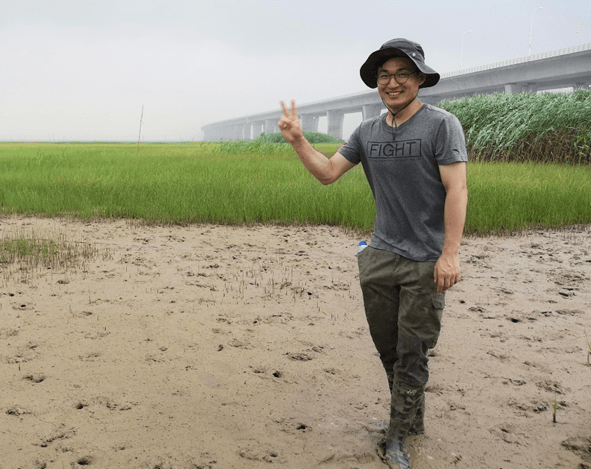
In this new post, Hao Liu—a postdoc from Fudan University, China—presents his work ‘Root plasticity benefits a global invasive species in eutrophic coastal wetlands’. Here he discusses the importance in plasticity for invasive species success, highlights the cohesion required to work in the mud, and shares his journey in ecology. About the paperInvasive species usually benefit more than native species from increases in nutrient availability. … Continue reading Explore the root advantages of invasive plants under nutrient enrichment

Manjunatha H. Chandregowda: Grasses adjust their root traits during drought to reduce the negative impacts on aboveground productivity

In this new post, Manjunatha H. Chandregowda—a new ecological researcher working at the Hawkesbury Institute for the Environment, Western Sydney University, Australia—discusses his paper: Root trait shifts towards an avoidance strategy promote productivity and recovery in C3 and C4 pasture grasses under drought—recently shortlisted for the 2022 Haldane Prize for Early Career Researchers. About the research Human disruption of global carbon and nitrogen cycles has … Continue reading Manjunatha H. Chandregowda: Grasses adjust their root traits during drought to reduce the negative impacts on aboveground productivity