Meet the Editor: Alison K Brody

In this blog post, we hear from Associate Editor Alison Brody, Emeritus Professor of Biology at the University of Vermont. Walking along a trail at the Rocky Mountain Biological Laboratory in Gothic, Colorado, USA, a foul, rotten smell caught my attention. I looked around to find the source and noticed a large plant – Heracleum maximum (Apiacea) also called “Cow Parsnip” – covered in flies which … Continue reading Meet the Editor: Alison K Brody

Tomonari Matsuo: Herbaceous species and dry forest species have more acquisitive leaf traits than woody species and wet forest species

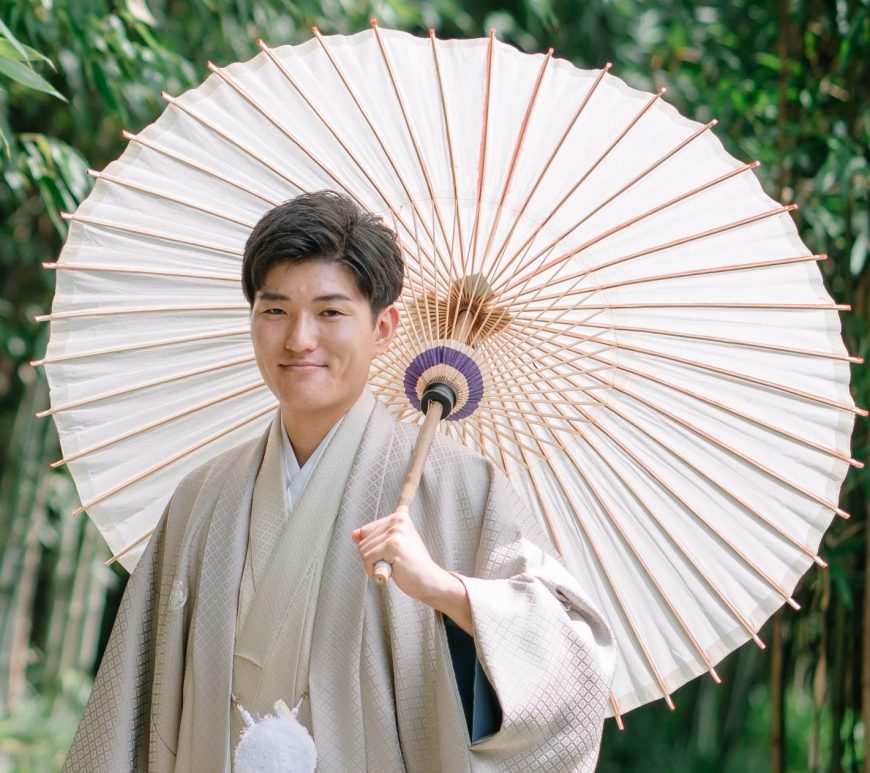
2024 HALDANE PRIZE SHORTLIST: Tomonari Matsuo discusses his paper “Herbaceous species and dry forest species have more acquisitive leaf traits than woody species and wet forest species“, which has been shortlisted for Functional Ecology’s 2024 Haldane Prize for Early Career Researchers: About the author Having grown up in the mountainous region of Saitama, Japan, I developed a deep appreciation for nature from an early age. … Continue reading Tomonari Matsuo: Herbaceous species and dry forest species have more acquisitive leaf traits than woody species and wet forest species

Franziska Zahn: Beyond Photosynthesis: Do small trees in the understory of tropical forest gain additional carbon from fungi? 

Franziska Zahn, postdoc at University of Bayreuth (Germany), presents her work “Stable isotope analysis indicates partial mycoheterotrophy in arbuscular mycorrhizal woody seedlings in tropical forests”. She discusses the collaborative network established between plants and fungi, how little we know about C-transfer in plants, and advises everyone to focus on their research despite the fascinating questions ecology offers to us.  Thinking of plants, we often picture … Continue reading Franziska Zahn: Beyond Photosynthesis: Do small trees in the understory of tropical forest gain additional carbon from fungi? 

Diana Tataru: Studying at my Dream Site

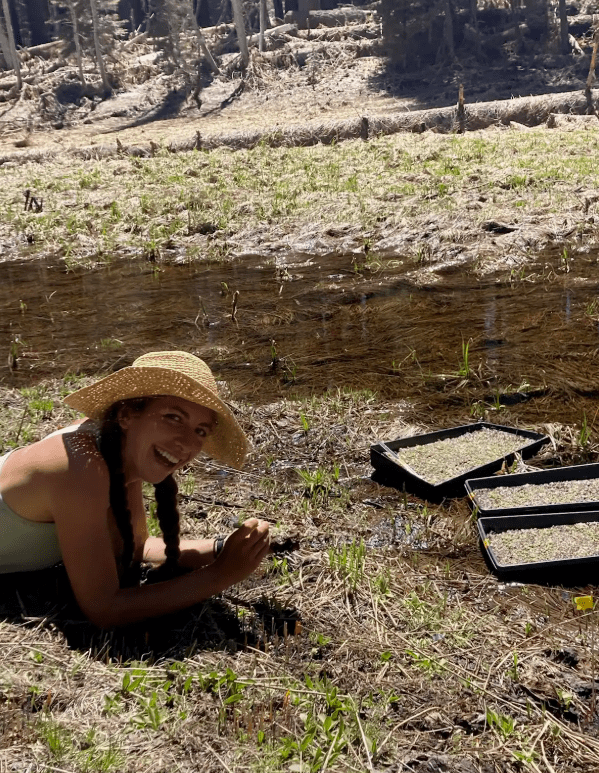
In this ‘Postcards from the Field’ blog post, Dr Diana Tataru – based at Tulane University – discusses their work on monkeyflowers in the beautiful Yosemite National Park, California! Diana shares plant-level perspectives, top tips for fieldwork, and future studies in the Eastern Sierra Nevadas. Profile I am interested in how plants adapt and survive in changing environments! I’m especially interested in extreme environments, like … Continue reading Diana Tataru: Studying at my Dream Site

Pablo Urbaneja-Bernat: A herbivore-induced defense-related plant protein in honeydew enhances natural enemy fitness

In this post, Pablo Urbaneja-Bernat, tenure track at Institute of Agrifood Research and Technology (Spain), presents his work ‘Not just candy: A herbivore-induced defense-related plant protein in honeydew enhances natural enemy fitness’. He talks about unexpected interactions in ecological communities, the application of ecological research to agricultural management and the importance of inclusivity to overcome the many challenges in the path of research.  About the … Continue reading Pablo Urbaneja-Bernat: A herbivore-induced defense-related plant protein in honeydew enhances natural enemy fitness

Caicai Zhang: Growth-mortality trade-off in tropical tree seedlings is determined by stem elongation and soil fertility.

In this new post Caicai Zhang, from Xishuangbanna Tropical Botanical Garden, Chinese Academy of Sciences, and the Institute of Eastern-Himalaya Biodiversity Research at Dali University, shares insights from her recently published paper, ‘Functional traits and ecological niches as correlates of the interspecific growth–mortality trade-off among seedlings of 14 tropical tree species‘. She emphasizes the importance of biomass allocation traits, particularly specific stem length (SSL) and … Continue reading Caicai Zhang: Growth-mortality trade-off in tropical tree seedlings is determined by stem elongation and soil fertility.

Manjunatha H. Chandregowda: Grasses adjust their root traits during drought to reduce the negative impacts on aboveground productivity

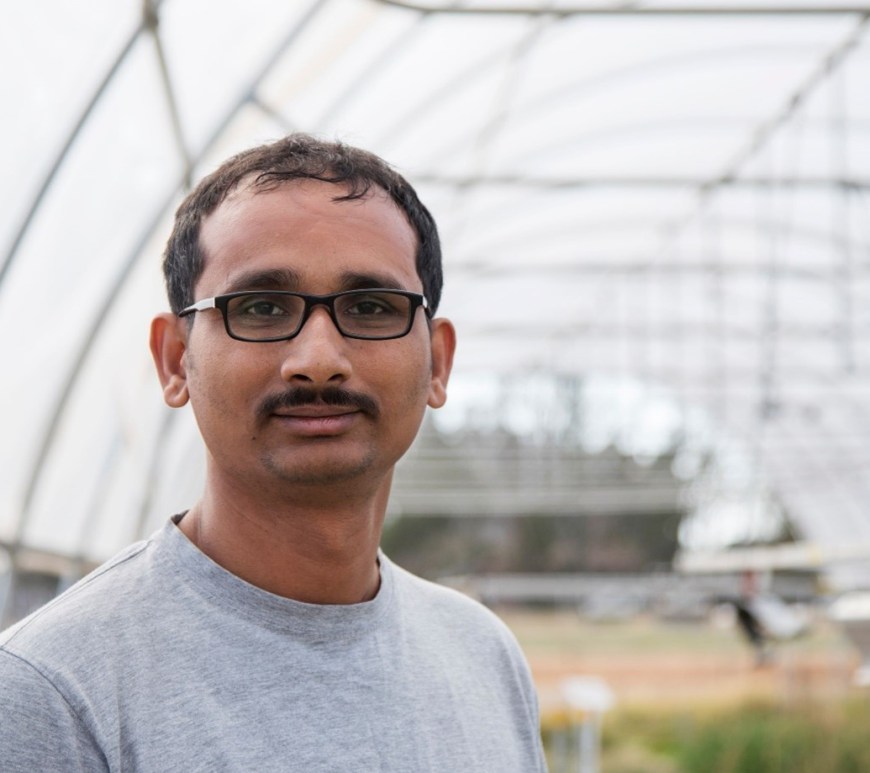
In this new post, Manjunatha H. Chandregowda—a new ecological researcher working at the Hawkesbury Institute for the Environment, Western Sydney University, Australia—discusses his paper: Root trait shifts towards an avoidance strategy promote productivity and recovery in C3 and C4 pasture grasses under drought—recently shortlisted for the 2022 Haldane Prize for Early Career Researchers. About the research Human disruption of global carbon and nitrogen cycles has … Continue reading Manjunatha H. Chandregowda: Grasses adjust their root traits during drought to reduce the negative impacts on aboveground productivity

Kristiina Visakorpi: The future of Alpine meadows: Can we predict winners and losers in a warmer climate?

In this new post Kristiina Visakorpi—a postdoc at the Norwegian University of Science and Technology—discusses her last research ‘Eco-physiological and morphological traits explain alpine plant species’ response to warming’. She considers the connections between functional traits and climate change, highlights the importance of eco-physiological traits, and provides some thoughts to fight apathy towards our current environmental crises. About the paper In our paper we investigated … Continue reading Kristiina Visakorpi: The future of Alpine meadows: Can we predict winners and losers in a warmer climate?

Wei Xue: Born with a silver spoon? How light condition experienced by parent plants influences the response of offspring to light

In this new post, Wei Xue from Taizhou University, China, presents his latest work ‘Light condition experienced by parent plants influences the response of offspring to light via both parental effects and soil legacy effects’. He discusses the importance of parental effects, soil legacy effects, and current light availability in driving clonal plant population growth. About the paper It is a common notion in humans, … Continue reading Wei Xue: Born with a silver spoon? How light condition experienced by parent plants influences the response of offspring to light

Pieter Arnold: How an alpine plant species responds to temperature stress depends on the type of trait and life stage

In this new post, Pieter Arnold, Research Fellow at The Australian National University (ANU), presents his latest work ‘Patterns of phenotypic plasticity along a thermal gradient differ by trait type in an alpine plant’. Pieter discusses the challenges of his group’s experimental design, highlights the importance of looking at plants along their entire life cycle, and also advises everyone to expand their horizons when looking … Continue reading Pieter Arnold: How an alpine plant species responds to temperature stress depends on the type of trait and life stage