He Wanci | How extra nitrogen helps Alternanthera philoxeroides avoid herbivores and attract predators 

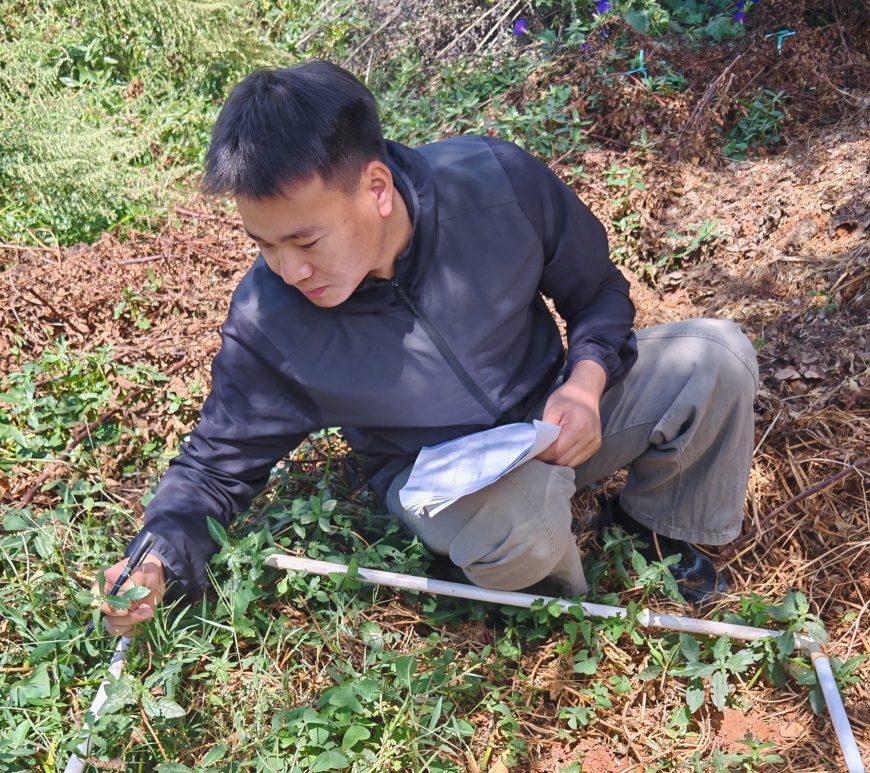
In this behind the paper blog post, author He Wanci – a PhD student at the State Key Laboratory for Vegetation Structure, Functions and Construction, Yunnan University, China – discusses the article “Elevated nitrogen deposition protects an invasive plant from herbivory through altering leaf volatile-mediated tritrophic interactions“, which was recently published in Functional Ecology. He Wanci discusses the impact of atmospheric nitrogen on volatile communication, … Continue reading He Wanci | How extra nitrogen helps Alternanthera philoxeroides avoid herbivores and attract predators 

Evan Perkowski | Sabotage in the understory: garlic mustard’s late-season havoc on native plant photosynthesis

In this blog post, author Evan Perkowski – a postdoctoral research associate at Texas Tech University – delves into his research article “The negative effects of an allelopathic invader on native plant photosynthesis are amplified after tree canopy closure“, which was published in Functional Ecology in July 2026. Evan shares how garlic mustard “sows the seeds” of havoc on native plant photosynthesis, the challenges of … Continue reading Evan Perkowski | Sabotage in the understory: garlic mustard’s late-season havoc on native plant photosynthesis

Explore the root advantages of invasive plants under nutrient enrichment

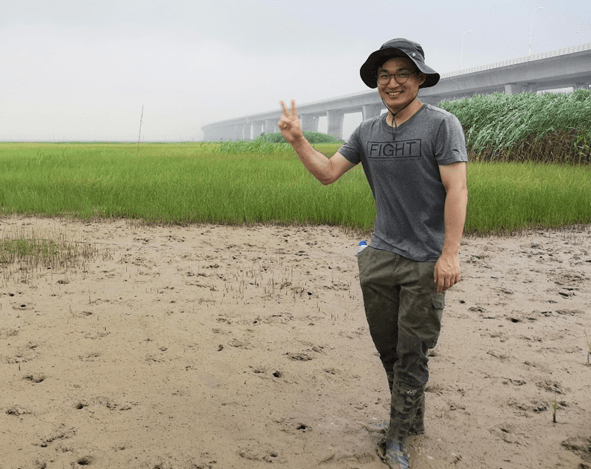
In this new post, Hao Liu—a postdoc from Fudan University, China—presents his work ‘Root plasticity benefits a global invasive species in eutrophic coastal wetlands’. Here he discusses the importance in plasticity for invasive species success, highlights the cohesion required to work in the mud, and shares his journey in ecology. About the paperInvasive species usually benefit more than native species from increases in nutrient availability. … Continue reading Explore the root advantages of invasive plants under nutrient enrichment