Chloé Chaubaud | Les Lézards assoiffés peuvent-ils encore percevoir le danger?

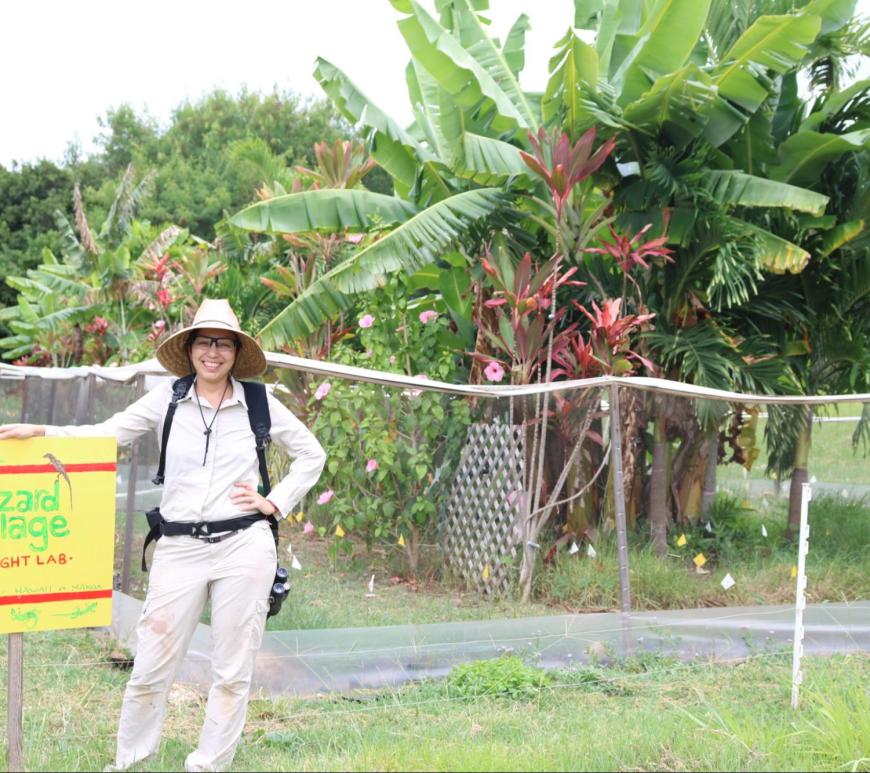
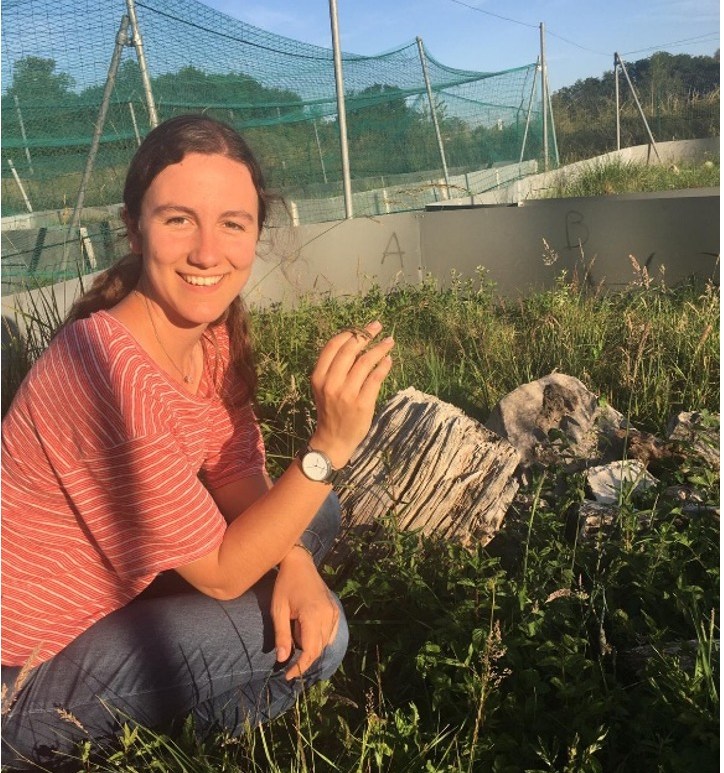
Vous êtes-vous déjà demandé si les lézards assoiffés pouvaient encore percevoir le danger ? Eh bien, dans l’article de blog de cette semaine, nous avons la réponse ! Dans son article intitulé  ”Percevoir le danger : coûts énergétiques et hydriques de la chimioréception chez un lézard” , l’auteure Chloé Chabaud partage ses travaux fascinants sur la chimioréception chez Zootoca vivipara. Elle a découvert que les mouvements de langue … Continue reading Chloé Chaubaud | Les Lézards assoiffés peuvent-ils encore percevoir le danger?


Chloé Chabaud | Can thirsty lizards still sense danger?

Ever wondered if thirsty lizards can still sense danger? In this week’s Behind the Paper blog post, we’ve got an answer! From their paper: “Sensing danger: energetic and hydric costs of chemoreception in a lizard”, author Chloé Chabaud shares her fascinating work exploring chemoreception in Zootoca vivipara. She found that tongue flicking in lizards is dependent on hydration levels and the more dehydrated the lizard, … Continue reading Chloé Chabaud | Can thirsty lizards still sense danger?

Matthew Lattanzio: UV behavioral regulation in eastern fence lizards

In this new post, Dr. Matthew Lattanzio—an Assistant Professor in the Organismal and Environmental Biology Department at Christopher Newport University, USA—discusses his recently accepted paper, “Active regulation of ultraviolet light exposure overrides thermal preference behavior in eastern fence lizards“ About the paper Imagine for a moment you’re outside in a park, on a warm sunny day, enjoying a hike or just a relaxing break outside. … Continue reading Matthew Lattanzio: UV behavioral regulation in eastern fence lizards

Martha Muñoz: Vulnerability of tropical anoles to environmental warming

In this blog post, Dr. Martha Muñoz, Assistant Professor of Ecology and Evolutionary Biology at Yale University, USA, discusses her recent paper, “The multidimensional (and contrasting) effects of environmental warming on a group of montane tropical lizards.” Este blog también está disponible en español aquí. About the paper Our study centred around exploring vulnerability to environmental warming in a group of montane tropical anoles (lizards) … Continue reading Martha Muñoz: Vulnerability of tropical anoles to environmental warming

Martha Muñoz: Vulnerabilidad de los anolis tropicales al calentamiento ambiental

En esta publicación de blog, la Dra. Martha Muñoz, profesora asistente de Ecología y Biología Evolutiva en la Universidad de Yale, EE. UU., analiza su artículo reciente, “The multidimensional (and contrasting) effects of environmental warming on a group of montane tropical lizards.” Una versión en inglés de esta publicación de blog está disponible para leer aquí. Sobre el papel Nuestro estudio se centró en la … Continue reading Martha Muñoz: Vulnerabilidad de los anolis tropicales al calentamiento ambiental

Amber Wright - Photo by Laci Gerhart-Barley

Amber Wright: Sticky toes and grippy claws

lizards use habitat in ways that match their clinging ability In this month’s cover image story we see that lizards vary in their ability to cling to different kinds of surfaces, and how this can lead to species sharing habitat.  How can lizards stick to smooth surfaces? Have you ever seen a lizard run up a window and wondered how they do it? Geckos and … Continue reading Amber Wright: Sticky toes and grippy claws

Sam van Wassenbergh at the computer at University of Antwerp, Department of Biology.

Sam van Wassenbergh: aerodynamics behind lizards resistance to hurricanes

In our latest post, Sam van Wassenbergh from the University of Antwerp discusses his latest work ‘An aerodynamic perspective on hurricane-induced selection on Anolis lizards’. He presents the importance of functional traits trade-offs in species adaptations, highlights the need to use multidisciplinary approaches in science and shares his pride on working with his student. About the paper In our paper, we wanted to understand why … Continue reading Sam van Wassenbergh: aerodynamics behind lizards resistance to hurricanes